EPISODE 1-Illustration Trends 2027: 7 Powerful Forces Reshaping Visual Creativity This Year
Discover why 2027 marks a pivotal moment for illustration. Explore the 7 cultural, technological and commercial forces driving visual creativity's evolution.
 🔍 COVER PLATE — CLICK TO EXPAND
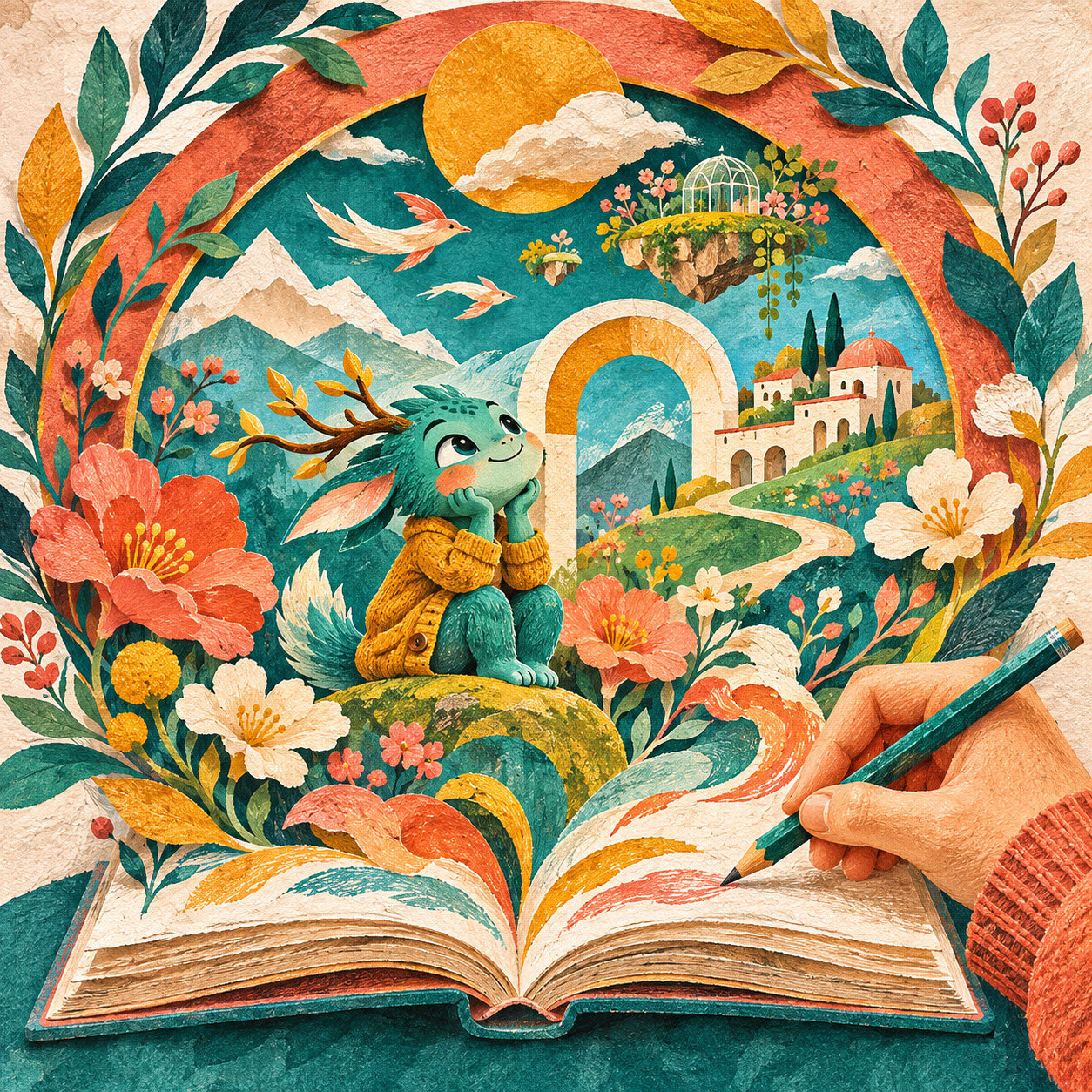
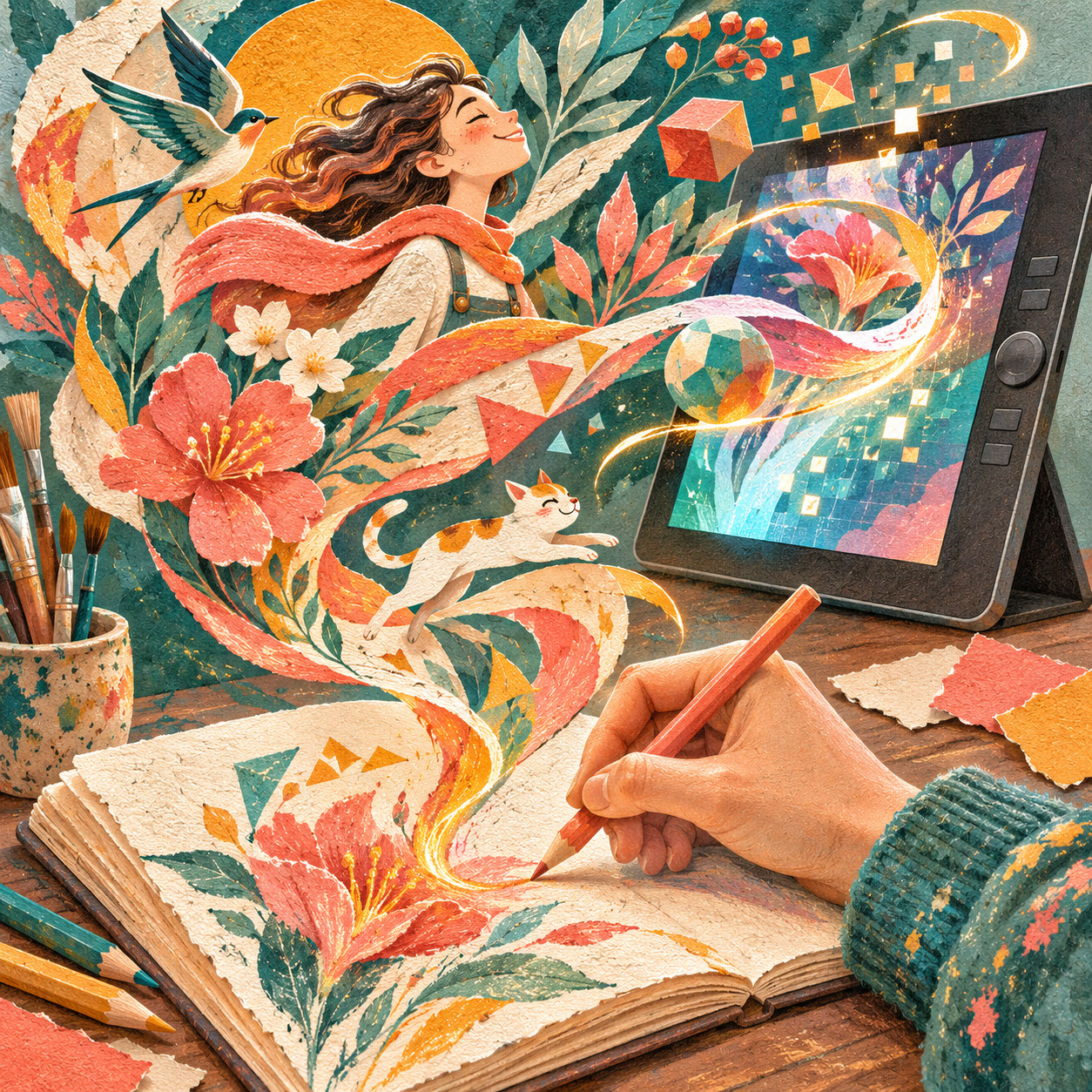
Square hero cover for Episode 1 ('Illustration Trends 2027: 7 Powerful Forces Reshaping Visual Creativity This Year'): an illustrator's hand draws a continuous ribbon of tactile gouache botanicals, a playful character, and geometric shapes rising from a paper sketchbook into an upright digital drawing tablet.
There's something wonderfully paradoxical happening in the creative world right now. As AI-generated imagery becomes increasingly sophisticated and widespread, the demand for distinctively human illustration is intensifying rather than diminishing. It's a fascinating moment to be working in visual creativity, and honestly, it's one of the most exciting periods for illustration that we've seen in decades.
Welcome to the opening episode of our eight-part exploration of illustration trends for 2027. Whether you're a working illustrator looking to refresh your creative practice, a designer seeking inspiration, or a brand wanting to understand where visual communication is heading, this series has been crafted specifically with you in mind. Today, we're setting the scene by examining the broader cultural, technological, and commercial forces that are reshaping illustration this year.
By the end of this post, you'll understand the key forces driving change in the illustration landscape, get a preview of seven emerging directions shaping visual creativity in 2027, discover why authenticity has become commercially valuable, and gain a framework for understanding illustration's expanded role across industries. So grab a cuppa, settle in, and let's explore what's happening in the world of visual creativity together.
 🔍 PLATE 01 — CLICK TO EXPAND
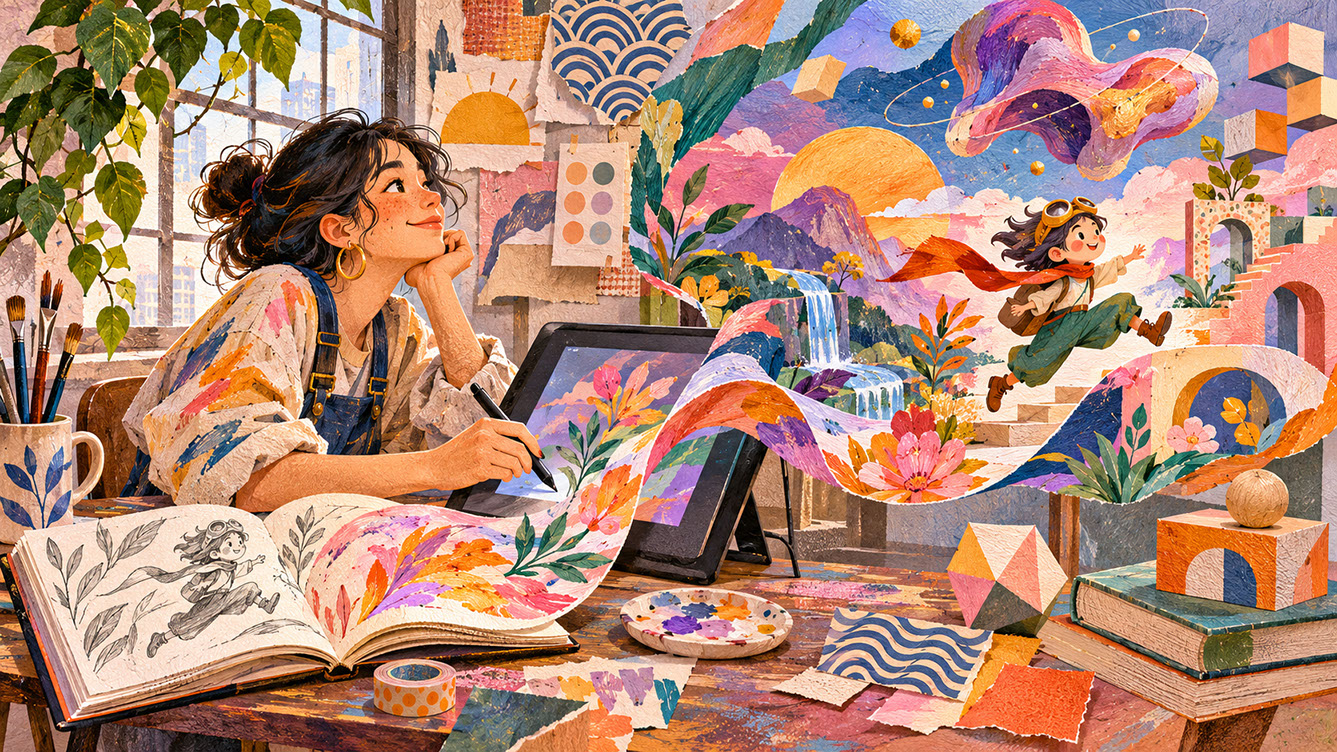
7 Powerful Forces Reshaping Visual Creativity This Year — Lead narrative plate for Episode 1: an unfolding ribbon of handmade artwork travels from an open sketchbook across a digital drawing tablet into a dimensional landscape uniting tactile brushwork, expressive colour, a playful character, collage layers, surreal forms, and modular geometry. Colour Palette: Deep Teal (#134E4A), Warm Coral (#F26A4B), Golden Ochre (#D99B26), Soft Studio Cream (#F6EFE2)
Why Human Touch Is Becoming Illustration's Greatest Asset
Let's address the elephant in the room straight away: AI image generation tools are now firmly part of the creative landscape. But here's the thing – rather than viewing this as a simple threat-versus-opportunity scenario, it's far more useful to see it as a shift that actually clarifies illustration's distinctive value.
The proliferation of synthetic imagery has made audiences remarkably more sensitive to authentic human expression. When perfect, polished digital images are available at the click of a button, the recognisably human marks – those variations, personality quirks, and creative decisions that could only come from a specific individual – carry greater emotional weight than ever before.
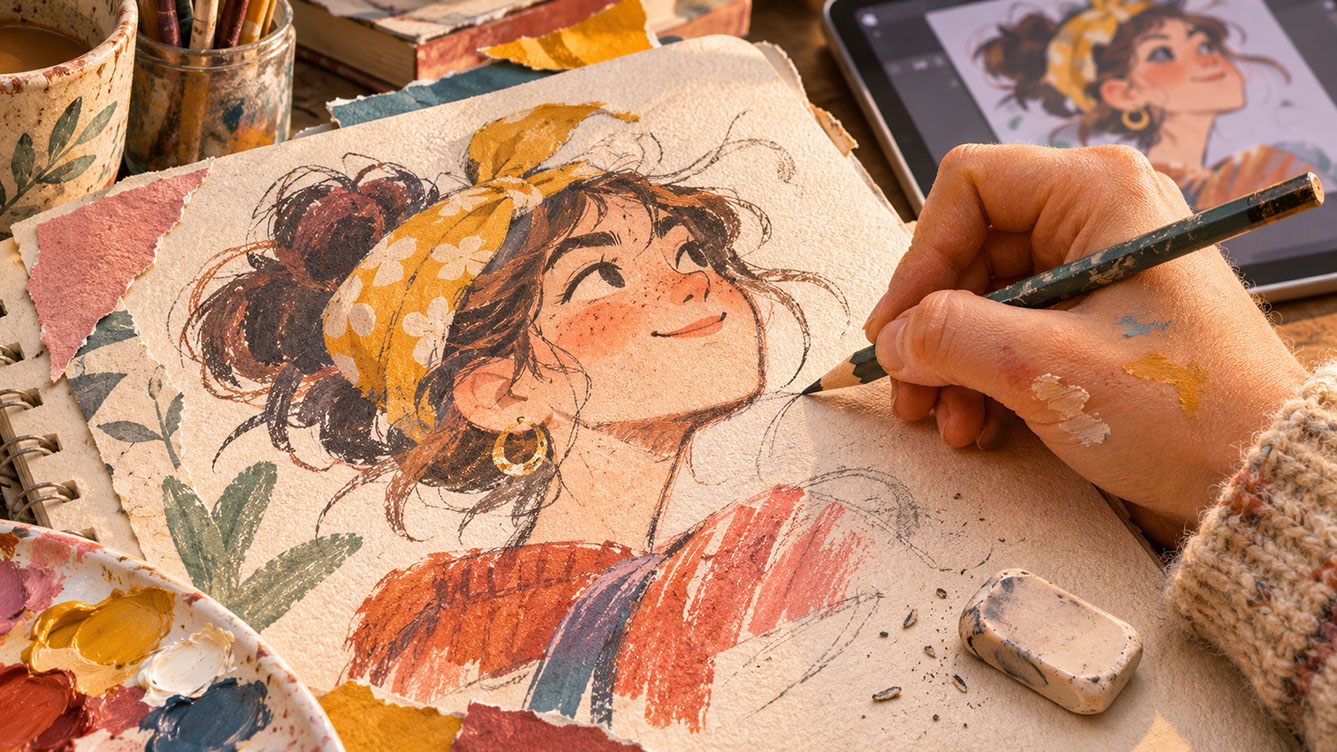
Think about it this way: imperfection has become a signal of authenticity. Those slight variations in a hand-drawn line, the personality in a brushstroke, the creative choices that reflect a unique perspective – these are qualities that audiences increasingly seek and value. Brands and publishers are actively looking for work that could only have come from a specific human creative mind.
Now, this doesn't mean AI tools are the enemy. Some illustrators are incorporating them thoughtfully into their workflow, using them for reference, experimentation, or specific production tasks whilst maintaining creative direction. The key distinction is that human creative vision remains the differentiating factor. What we're seeing is an authenticity premium emerging in the market – individuality and genuine creative voice have become commercially valuable qualities in ways they perhaps weren't a decade ago.
 🔍 PLATE 02 — CLICK TO EXPAND
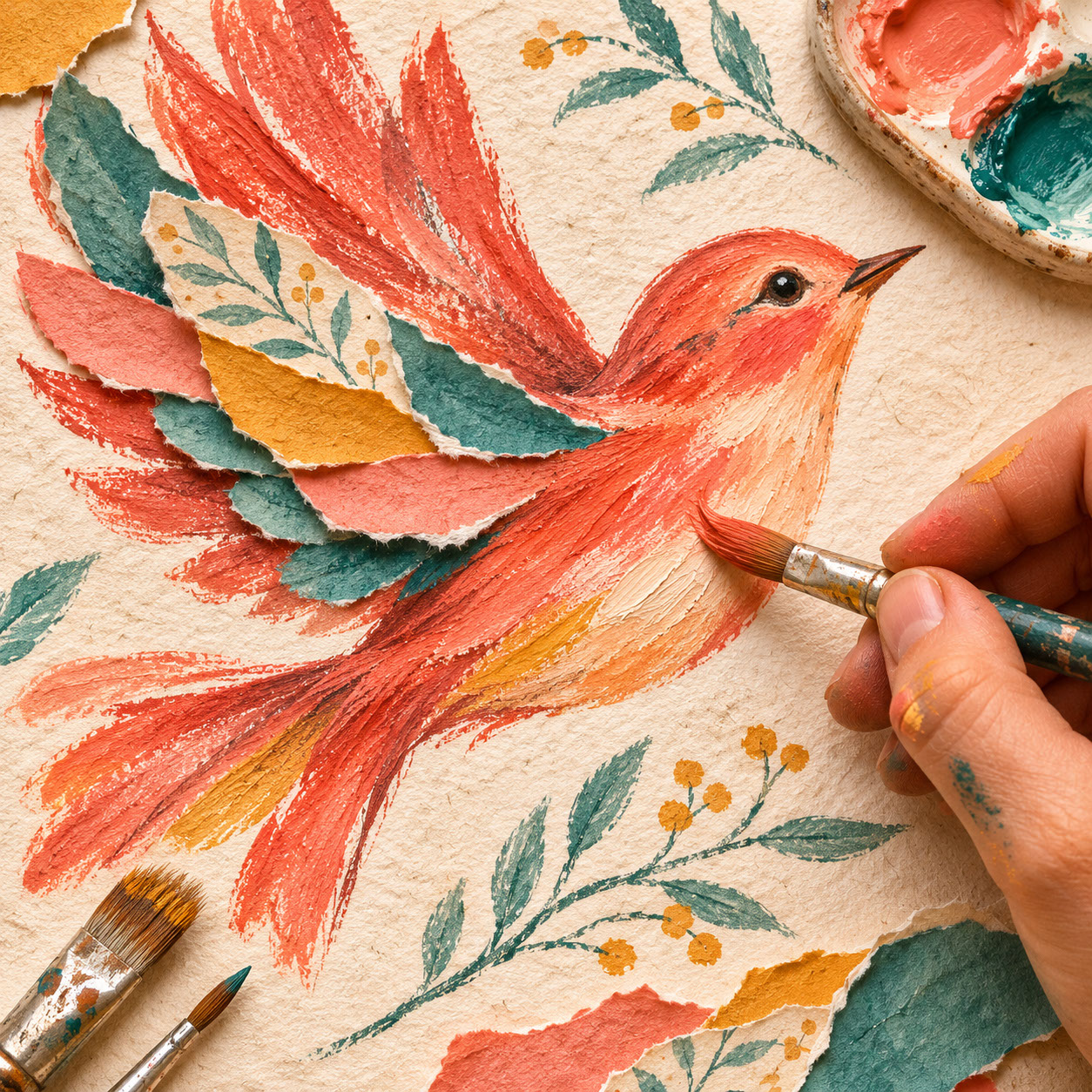
Why Human Touch Is Becoming Illustration's Greatest Asset — Authentic Hand-Drawn Marks — Visual study for 'Why Human Touch Is Becoming Illustration's Greatest Asset': a close-up of an illustrator's hand drawing a distinctive character on toothy paper with visible pencil lines, paint daubs, and eraser traces that communicate unmistakable human individuality. Colour Palette: Deep Teal (#134E4A), Warm Coral (#F26A4B), Golden Ochre (#D99B26), Soft Studio Cream (#F6EFE2)
From Greetings Cards to Digital Media: Where Illustration Is Flourishing
One of the most exciting developments in 2027 is how illustration is expanding its presence across an increasingly diverse range of industries. The opportunities for visual creativity have never been broader.
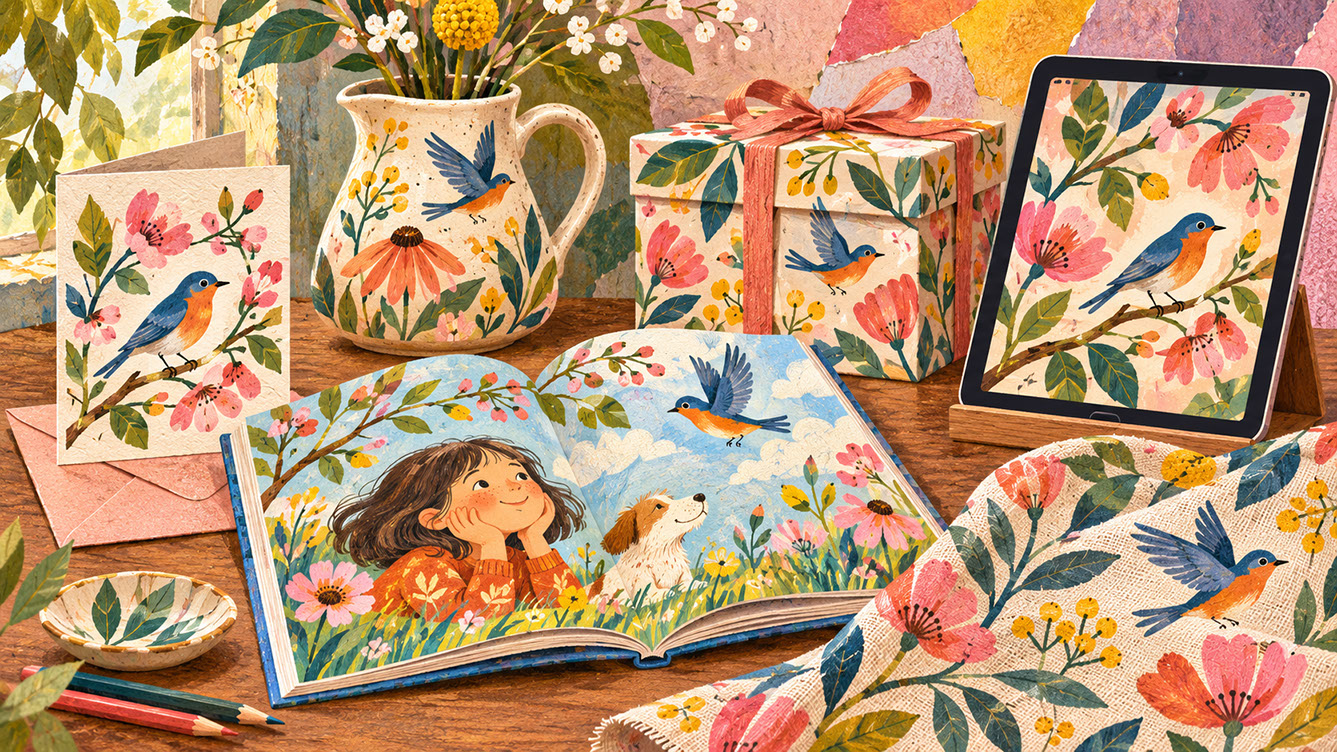
In traditional strongholds like greetings cards and stationery, there's continuing demand for distinctive visual voices – but the aesthetic preferences are evolving. Publishing remains robust, with children's books, editorial illustration, and book covers all seeking fresh perspectives. These established markets aren't static; they're actively seeking new directions and approaches.
But the real growth is happening in expanding territories. Textiles and surface pattern design are offering exciting opportunities in both fashion and interiors. Homeware and lifestyle products increasingly use illustration as a key differentiator in competitive markets. Packaging design is particularly interesting – brands are actively seeking distinctive visual identities that stand apart from photography-led approaches.
The digital expansion is equally significant. Social media content creation means brands need consistent visual systems that work across multiple platforms. Digital publishing and editorial offer opportunities for animated and interactive illustration. Even app interfaces and digital products are embracing illustration to create personality and warmth in user experiences.
What this means for illustrators is that versatility is valuable, but so is maintaining a distinctive voice. The most successful creative professionals are those who can work across multiple sectors whilst retaining a recognisable visual signature.
 🔍 PLATE 03 — CLICK TO EXPAND
Where Illustration Is Flourishing Across Industries — Cross-industry application showcase for 'From Greetings Cards to Digital Media: Where Illustration Is Flourishing': a unified botanical-and-bird visual language applied across a greeting card, picture book, textile swatch, ceramic vessel, packaging carton, and digital tablet. Colour Palette: Deep Teal (#134E4A), Warm Coral (#F26A4B), Golden Ochre (#D99B26), Soft Studio Cream (#F6EFE2)
The Fundamental Shift in How We Understand Illustration's Purpose
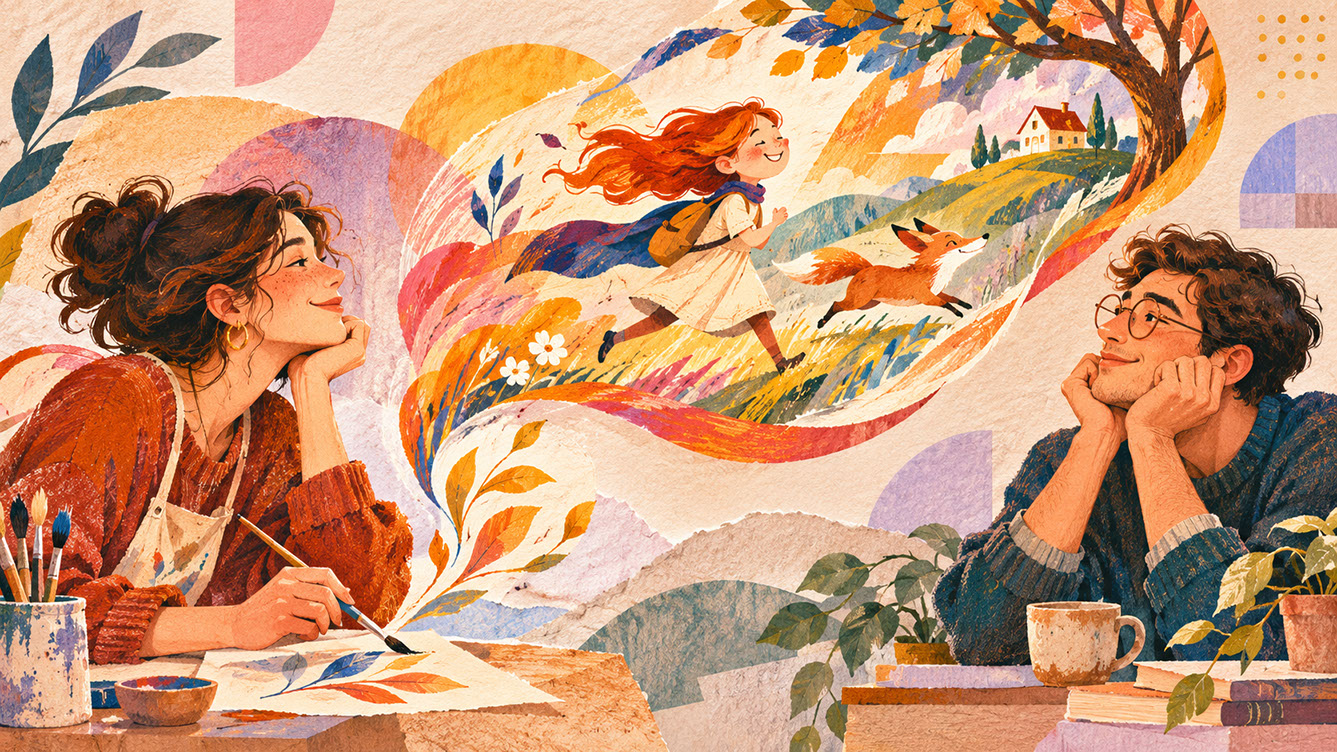
Perhaps the most significant change we're witnessing in 2027 is a fundamental shift in how illustration is understood and used. We're moving decisively from decoration to communication and connection.
For too long, illustration was often treated as mere embellishment – something nice to have, but not strategically essential. That's changing dramatically. Contemporary illustration carries real emotional and narrative weight. It's not just about making things look attractive; it's about communicating meaning, building relationships, and creating genuine connections with audiences.
Illustration now serves as an emotional bridge between brands and their audiences. Character-led and narrative approaches foster relationships that photography or generic stock imagery simply cannot achieve. There's a trust and warmth that comes from illustrated imagery that feels personal and considered.
This shift means illustration now serves genuinely strategic purposes: brand differentiation, audience engagement, and message clarity. Thoughtful choices about colour, composition, and character communicate specific values and emotions. A whimsical, hand-drawn style says something very different about a brand than a bold, geometric approach.
Alongside this is a broader craftsmanship revival. Traditional techniques and visible process add layers of meaning to contemporary illustration. What's particularly exciting is how digital tools and traditional craftsmanship are combining to create new hybrid possibilities – the best of both worlds, if you like.
 🔍 PLATE 04 — CLICK TO EXPAND
The Fundamental Shift in Illustration's Purpose — From Decoration to Emotional Communication — Conceptual editorial metaphor for 'The Fundamental Shift in How We Understand Illustration's Purpose': two people connect across an airy room through a sweeping hand-painted ribbon of expressive colour and character storytelling, illustrating the shift from surface decoration to emotional communication. Colour Palette: Deep Teal (#134E4A), Warm Coral (#F26A4B), Golden Ochre (#D99B26), Soft Studio Cream (#F6EFE2)
Your Preview of the Creative Landscape: 7 Directions Defining 2027
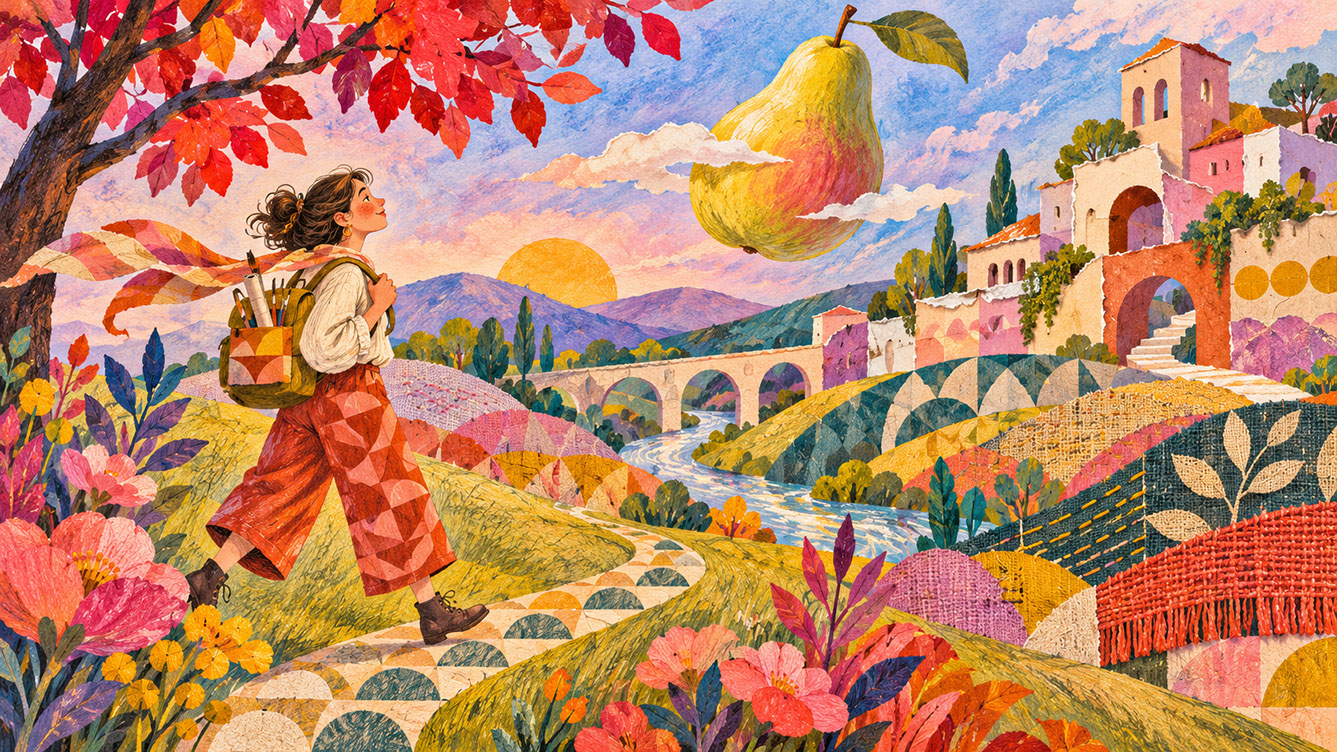
Now, let's give you a taste of what's to come in this series. Throughout the remaining seven episodes, we'll be exploring these emerging directions in depth, but here's your preview of the creative landscape for 2027.
Tactile Illustration represents the return of visible handmade qualities – pencil marks, paper texture, brushstrokes that you can almost feel. In an age of digital polish, imperfection signals authenticity in the most compelling way.
Expressive Colour is all about bold contrasts, emotional palettes, and unexpected colour combinations. We're moving beyond safe neutrals toward vivid, intentional colour choices that create genuine impact.
Playful Characters are everywhere – expressive figures with distinctive personalities and emotional specificity. Characters are becoming powerful vehicles for storytelling and audience connection.
Collage and Layering involves combining disparate visual elements into richly textured compositions. It's visual maximalism, but balanced with clear communication.
Contemporary Surrealism brings dreamlike imagery, altered scale, and imaginative worlds into commercial contexts. It's about making the strange familiar and the familiar wonderfully strange.
Cultural Authenticity draws on regional craft, lived experience, and meaningful cultural references. We're moving beyond generic imagery toward culturally grounded visual language that resonates deeply.
Adaptable Illustration Systems reflect the need to design for multiple formats – animation, interaction, modular flexibility. Illustration as system rather than single image is becoming increasingly important.
Each of these directions will be explored thoroughly in subsequent episodes, with practical guidance and inspiration you can apply to your own work.
 🔍 PLATE 05 — CLICK TO EXPAND
7 Directions Defining Illustration in 2027 — Panoramic synthesis for 'Your Preview of the Creative Landscape: 7 Directions Defining 2027': one cohesive world integrating tactile pencil-and-gouache hills, bold colour foliage, a playful walking character, layered torn-paper architecture, a surreal floating pear, hand-crafted surface patterns, and modular geometric motifs. Colour Palette: Deep Teal (#134E4A), Warm Coral (#F26A4B), Golden Ochre (#D99B26), Soft Studio Cream (#F6EFE2)
Essential Questions About Illustration in 2027
Before we wrap up this opening episode, let's address some of the questions you might be asking yourself right now.
You might be wondering whether you need to follow all these trends to stay relevant. The honest answer is no. These directions represent possibilities rather than requirements. The most successful illustrators interpret trends through their unique perspective rather than chasing every emerging style. Choose directions that genuinely resonate with your creative voice.
Regarding AI's impact on working illustrators, the tools are certainly changing aspects of the creative landscape. However, they're also clarifying what makes human illustration valuable. Your creativity, emotional intelligence, and authentic personal expression remain qualities that AI simply cannot replicate.
As for which industries offer the strongest opportunities, the good news is that opportunities exist across sectors. From traditional publishing and greetings cards to packaging, textiles, and digital media – the key is developing versatile skills whilst maintaining that distinctive visual voice we keep mentioning.
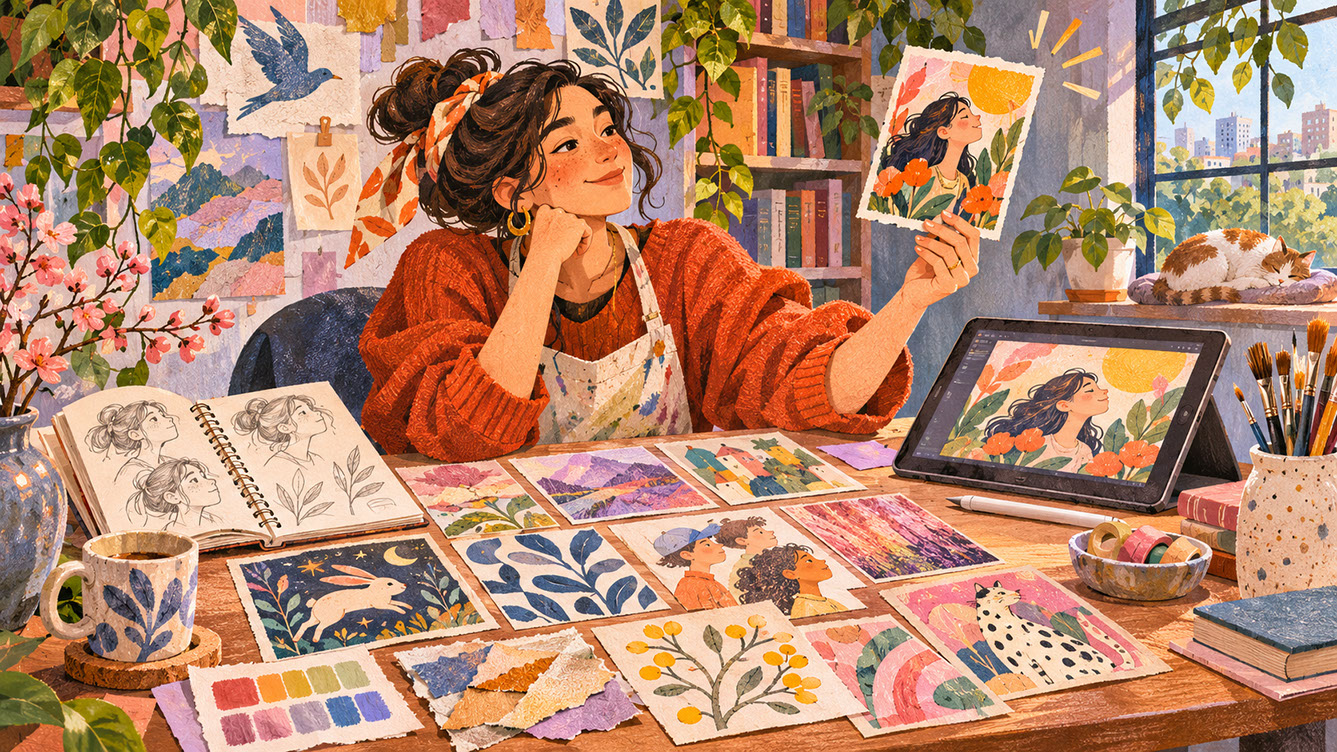
If you're wondering how to apply these trends to your existing practice, start by identifying which directions align with your natural creative inclinations. Then experiment with incorporating elements into your work. The upcoming posts in this series will provide specific, practical guidance for each direction.
 🔍 PLATE 06 — CLICK TO EXPAND
Essential Questions About Illustration in 2027 — Deliberate Creative Direction & Voice — Studio practice plate for 'Essential Questions About Illustration in 2027': an illustrator at a sunlit worktable compares small experiments in colour, texture, character, and pattern—confidently selecting the direction that aligns with their personal creative voice. Colour Palette: Deep Teal (#134E4A), Warm Coral (#F26A4B), Golden Ochre (#D99B26), Soft Studio Cream (#F6EFE2)
Embracing the Evolution
So there you have it – the landscape of illustration in 2027 is one of genuine opportunity and creative possibility. We're at a significant moment where technology, culture, and commerce are reshaping illustration in fascinating ways. The value of authenticity and human creativity has never been clearer, and illustration's role across industries continues to expand.
What excites me most about this moment is the productive tension between innovation and craftsmanship, between digital capabilities and human touch. It's creating space for work that's both contemporary and deeply personal.
In our next episode, we'll dive deep into Tactile Illustration: The Return of the Human Hand. We'll explore why rough pencil marks, uneven outlines, paper grain, and visible brushstrokes are communicating authenticity in ways that polished digital imagery simply cannot match. You'll gain practical techniques for combining traditional media with digital colouring and production, including guidance on scanning real textures. It's going to be wonderfully hands-on.
I hope you'll follow along with this series as we explore each direction in depth. Consider which trends resonate with your own creative practice, and get ready to experiment. The future of visual creativity is genuinely exciting, and we're just getting started.
 🔍 PLATE 07 — CLICK TO EXPAND
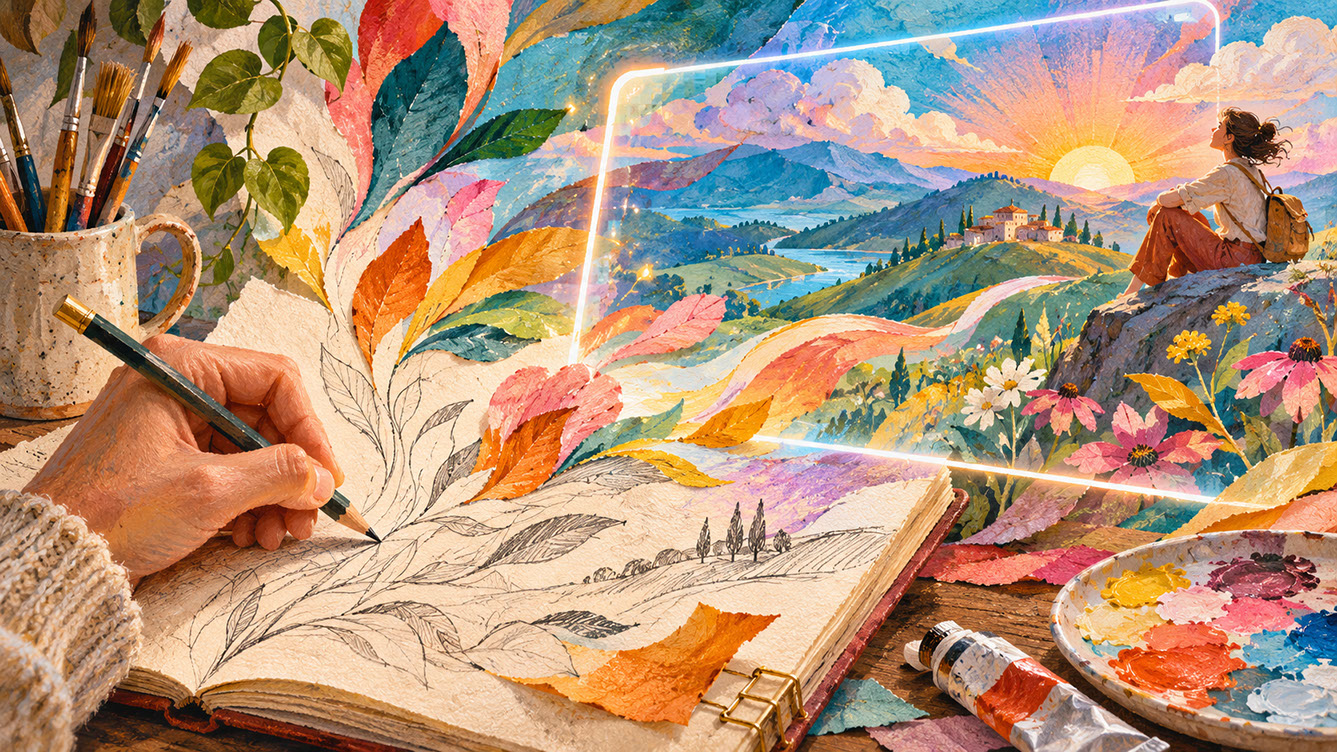
Embracing the Evolution — Uniting Timeless Human Craftsmanship with New Digital Possibilities — Closing visual synthesis for 'Embracing the Evolution': rough pencil lines from an open sketchbook anchored by an artist's hand transform into richly painted leaves and expressive colours passing through a luminous digital frame into an expansive creative horizon. Colour Palette: Deep Teal (#134E4A), Warm Coral (#F26A4B), Golden Ochre (#D99B26), Soft Studio Cream (#F6EFE2)
⚡ 5 Strategies to Consider
STUDIO PLAYBOOK // 5 DIRECTIVES❓ Frequently Asked Questions — 5 Q&As (5 Q&As)
SCHEMA.ORG/FAQPAGE // 5 Q&As (5 Q&As)Q1. What are the main forces reshaping illustration in 2027?
The main forces include the growing relationship between human creativity and AI technology, the expanding role of illustration across diverse industries, a fundamental shift from decoration to meaningful communication, and the increasing commercial value placed on authenticity and distinctive visual voices.
Q2. Why is human touch becoming more valuable in illustration as AI advances?
As AI-generated imagery becomes more widespread, audiences have become more sensitive to authentic human expression. The recognisably human marks, variations, and creative decisions that could only come from a specific individual now carry greater emotional weight and signal genuine authenticity.
Q3. Which industries are offering growing opportunities for illustrators in 2027?
Beyond traditional strongholds like greetings cards and publishing, growing opportunities exist in textiles and surface pattern design, homeware and lifestyle products, packaging design, social media content creation, digital publishing, app interfaces, and interactive digital experiences.
Q4. What is meant by illustration shifting from decoration to communication?
This shift means illustration is no longer treated as mere embellishment but as meaningful visual communication that carries emotional and narrative weight. Illustration now serves strategic purposes including brand differentiation, audience engagement, building trust, and creating genuine connections.
Q5. What are the seven emerging illustration directions for 2027?
The seven directions are Tactile Illustration (handmade qualities), Expressive Colour (bold palettes), Playful Characters (distinctive personalities), Collage and Layering (textured compositions), Contemporary Surrealism (dreamlike imagery), Cultural Authenticity (meaningful cultural references), and Adaptable Illustration Systems (multi-format design).