Illustration Trends 2027–2028: 10 Bold Styles & Your Complete 8-Part Guide to the Future of Visual Creativity
Explore 10 bold illustration trends for 2027–2028: tactile handmade textures, expressive colour, playful characters, collage, surrealism & modular design.
 🔍 COVER PLATE — CLICK TO EXPAND
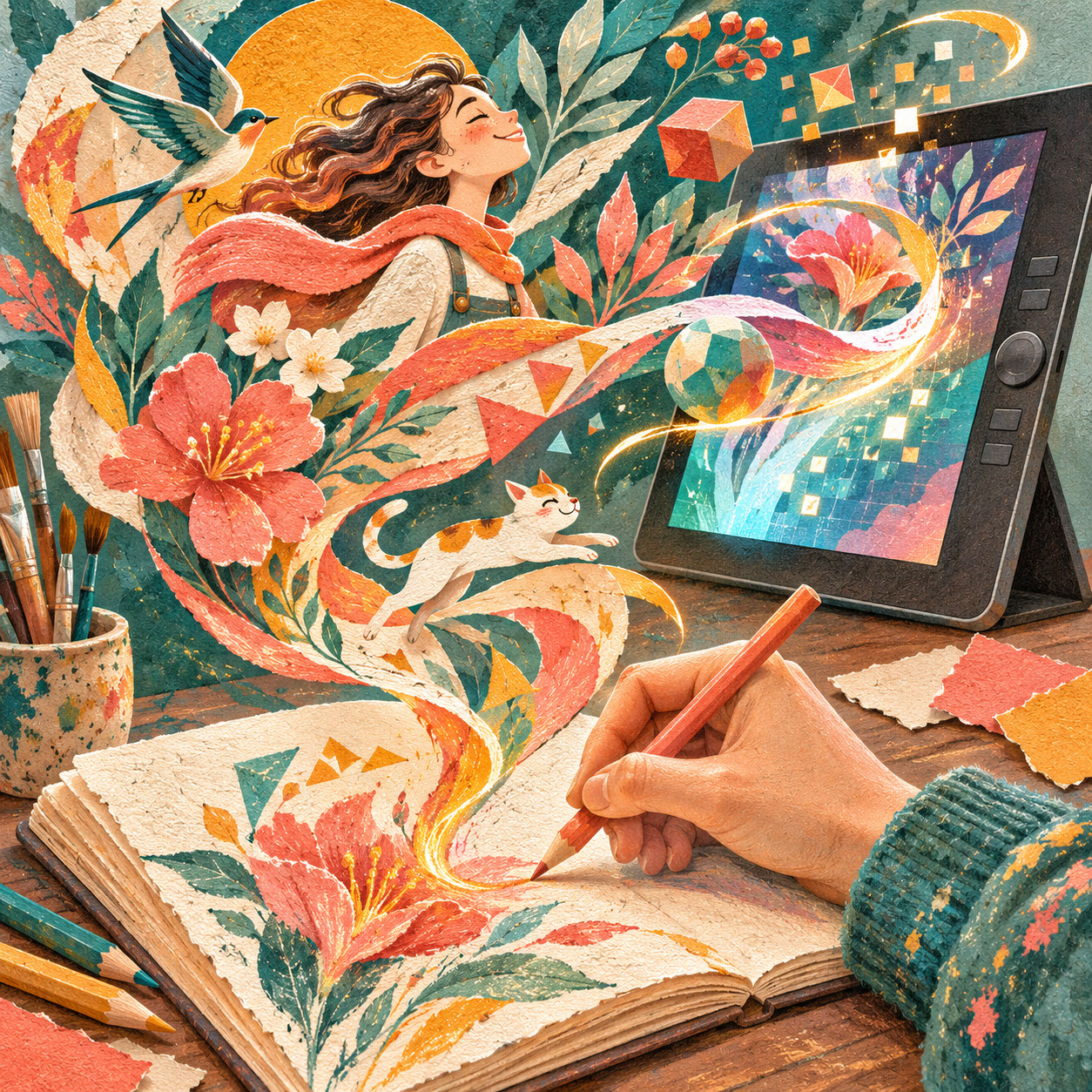
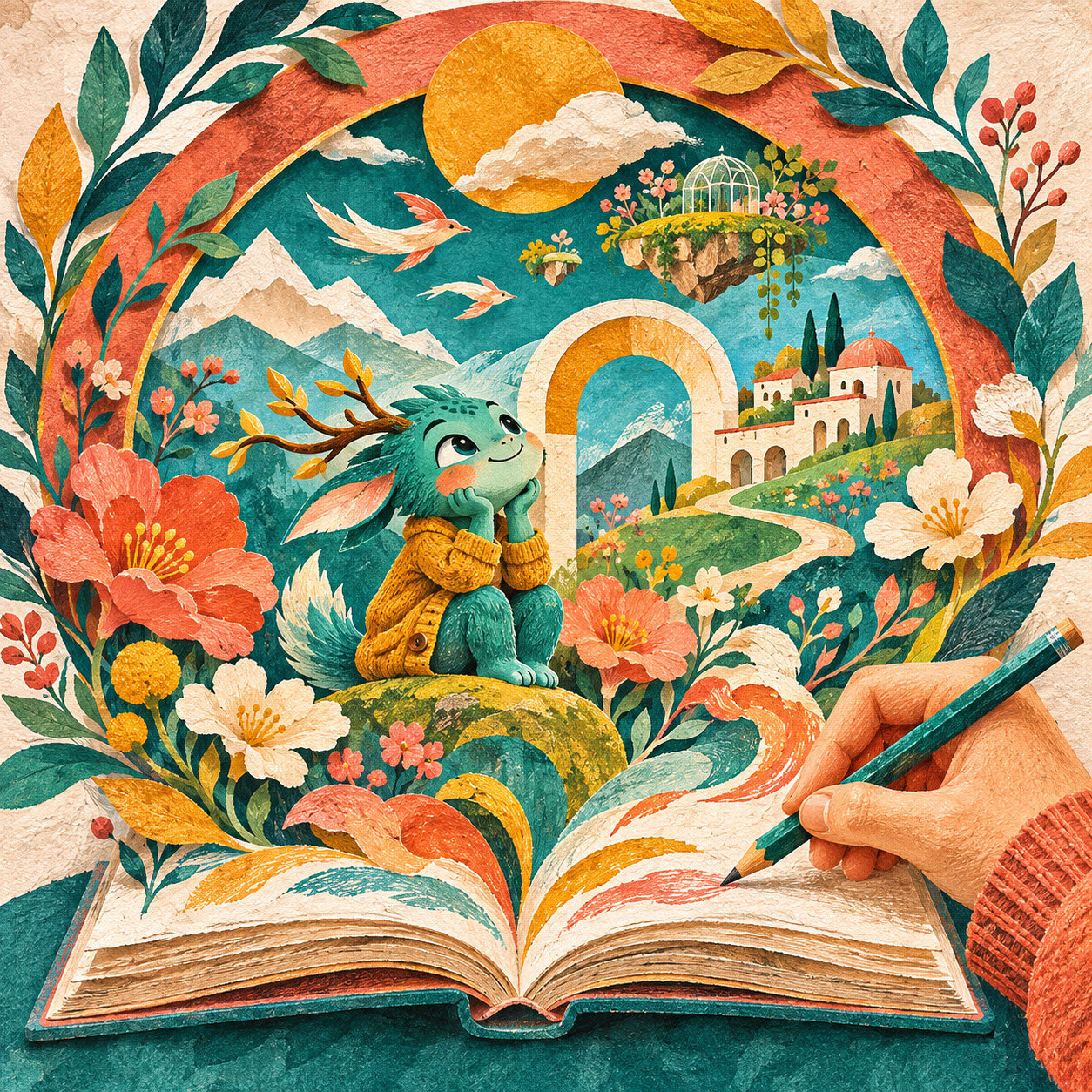
Square editorial hero cover for 'Illustration Trends 2027–2028: Your Complete 8-Part Guide to the Future of Visual Creativity': an illustrator's open sketchbook held by a human hand with a pencil blossoms into a circular mixed-media world of layered cut-paper hills, tactile gouache botanicals, a whimsical teal creature in a mustard cardigan, a terracotta geometric arch, and a floating miniature garden.
What will illustration look like in 2027? From tactile handmade textures and expressive character design to experimental collage, surreal compositions and AI-influenced creativity, the future of illustration is full of contrast.
As digital tools become more advanced, illustrators are finding new ways to make their work feel personal, emotional and unmistakably human. Traditional techniques are returning with fresh energy, while animation, interactive design and artificial intelligence are expanding what illustration can become.
Whether you work in surface pattern design, editorial illustration, packaging, publishing or digital media, these illustration trends for 2027 offer plenty of inspiration. Here are the key styles, influences and creative opportunities to watch.
 🔍 PLATE 01 — CLICK TO EXPAND
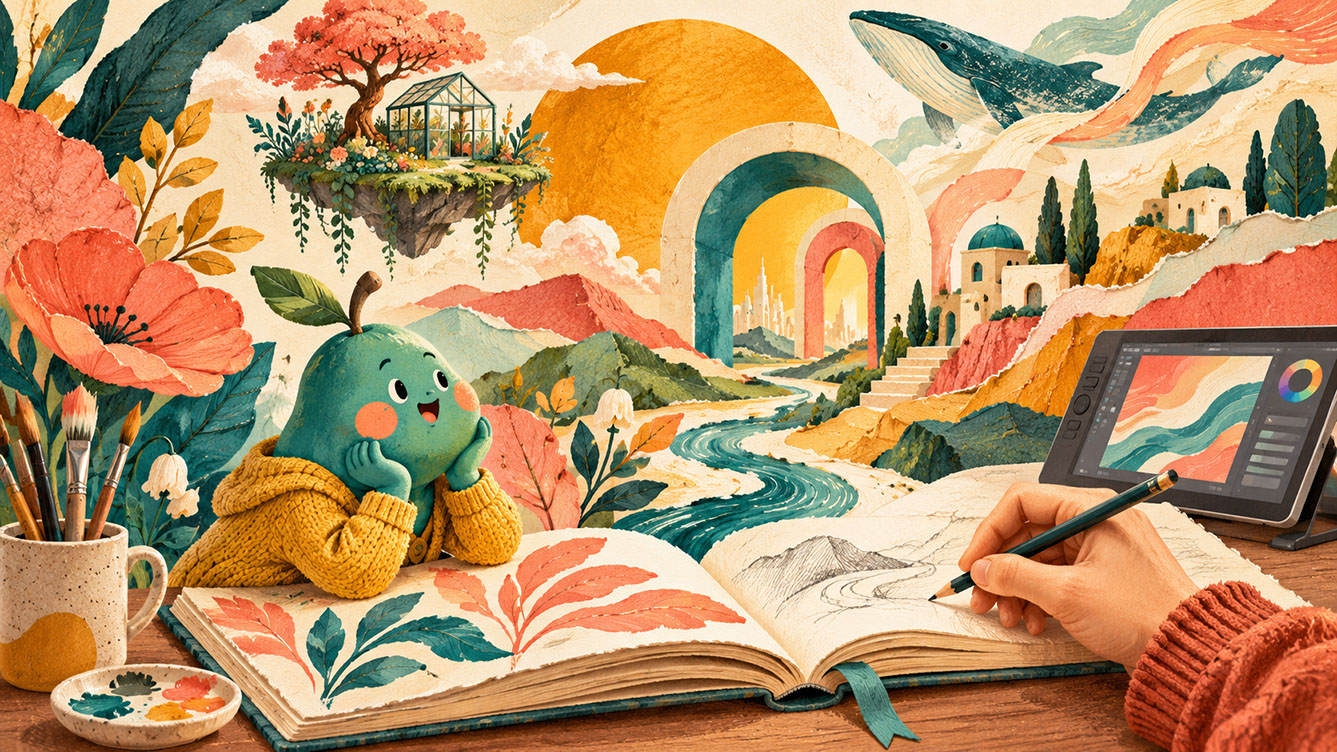
Illustration Trends 2027–2028 Overview — 10 Bold Styles Shaping the Future of Visual Creativity — Lead editorial overview plate for 'Illustration Trends 2027: 10 Bold Styles Shaping the Future of Visual Creativity': an open sketchbook anchored by a human hand and pencil unfolds into a sweeping landscape uniting tactile gouache botanicals, our playful teal character in a mustard cardigan, torn-paper hills, floating garden islands, geometric arches, and a digital drawing tablet. Colour Palette: Deep Teal (#134E4A), Warm Coral (#F26A4B), Golden Ochre (#D99B26), Soft Studio Cream (#F6EFE2)
1. Human Imperfection Takes Centre Stage
In a world filled with polished digital imagery and AI-generated artwork, imperfection is becoming a powerful creative advantage.
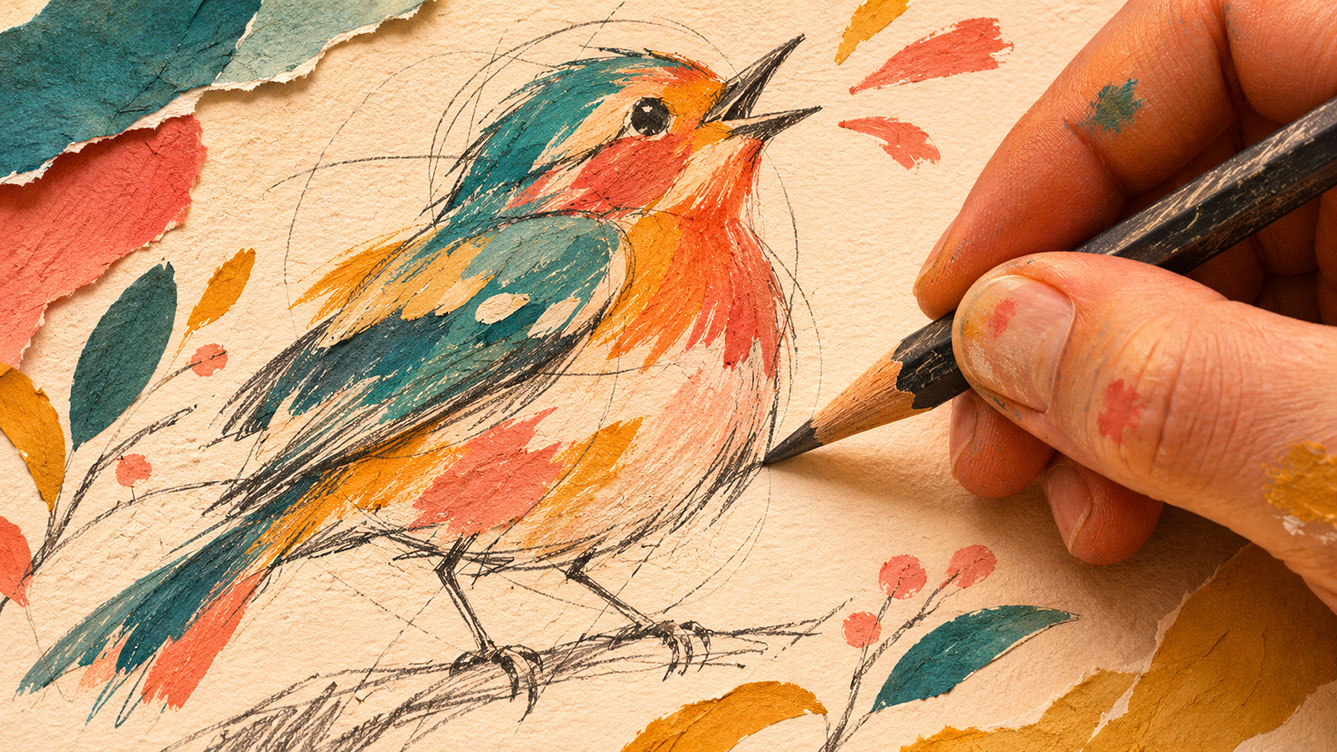
Hand-drawn lines, uneven shapes, visible brush marks and unexpected colour combinations can make an illustration feel more authentic. Rather than hiding flaws, artists are using them to communicate personality and process.
This trend includes:
- Loose linework
- Rough pencil textures
- Hand-painted details
- Uneven lettering
- Visible construction marks
- Slightly irregular compositions
These qualities help an image feel made rather than manufactured. They also create a stronger emotional connection with audiences who are increasingly drawn to individuality and authenticity.
How to use it: Add hand-drawn elements to digital compositions, scan traditional artwork or use textured brushes to create a more natural finish.
 🔍 PLATE 02 — CLICK TO EXPAND
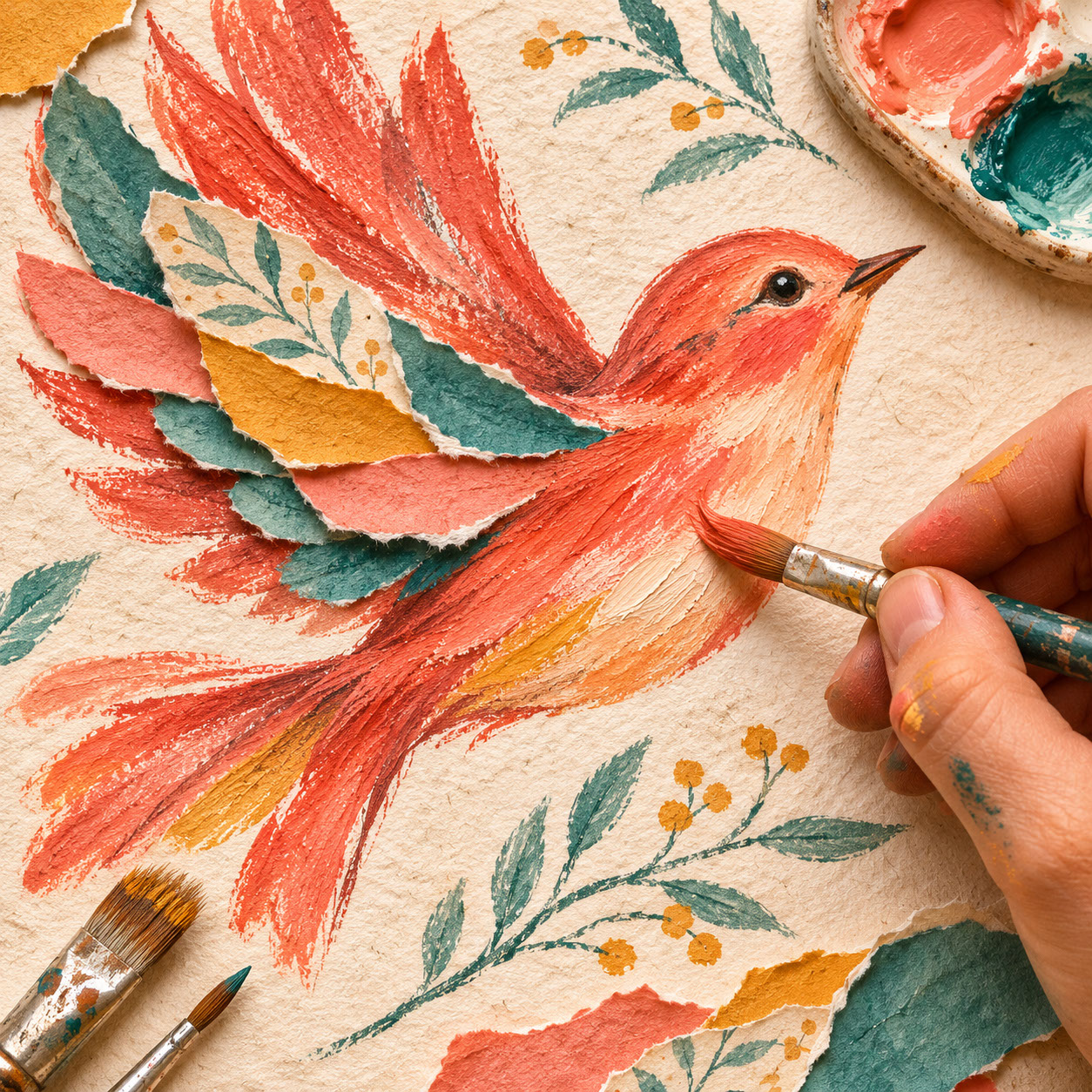
1. Human Imperfection Takes Centre Stage — Loose Linework, Visible Brush Marks & Construction Lines — Editorial study for '1. Human Imperfection Takes Centre Stage': an intimate macro view of an artist's hand drawing an expressive bird on coarse toothy paper with uneven pencil contours, visible construction lines, dry-brush gouache strokes, and charming irregular shapes that celebrate human authorship. Colour Palette: Warm Ochre (#D99B26), Coral Bird (#F26A4B), Graphite Pencil (#2E343B), Coarse Cream Paper (#F5EFE2)
2. Expressive Colour and Unexpected Palettes
Colour will remain one of the most effective ways to make illustration memorable in 2027. However, the focus is moving beyond simple bright colours. Instead, artists are combining unexpected tones to create distinctive visual identities.
Look out for combinations such as:
- Soft pastels with deep charcoal
- Acid green with warm terracotta
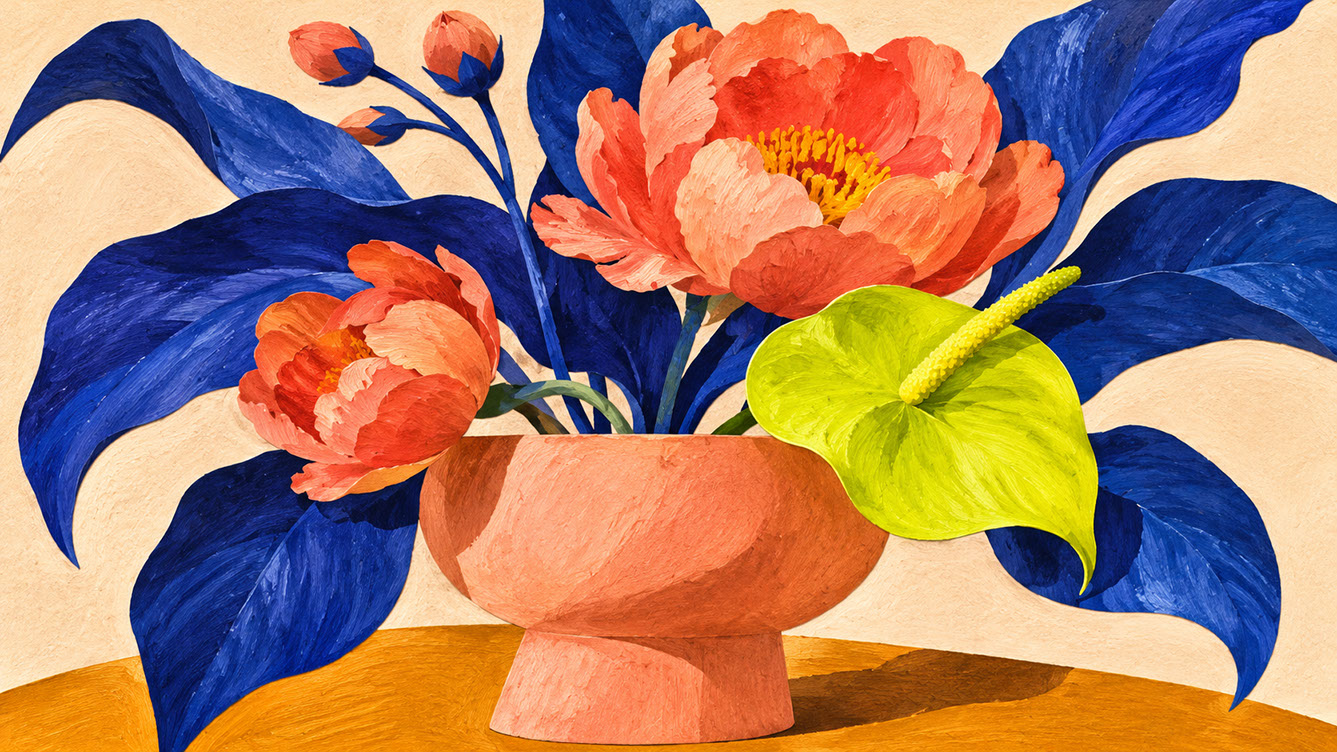
- Cobalt blue with muted peach
- Rich burgundy with pale yellow
- Earthy neutrals with sharp digital accents
These colour contrasts can create energy without making a design feel chaotic. They also help illustrations stand out across packaging, greetings cards, stationery, textiles and social media.
Practical tip: Choose one dominant colour, one supporting shade and one unexpected accent. This creates a confident palette while leaving room for visual surprise.
 🔍 PLATE 03 — CLICK TO EXPAND
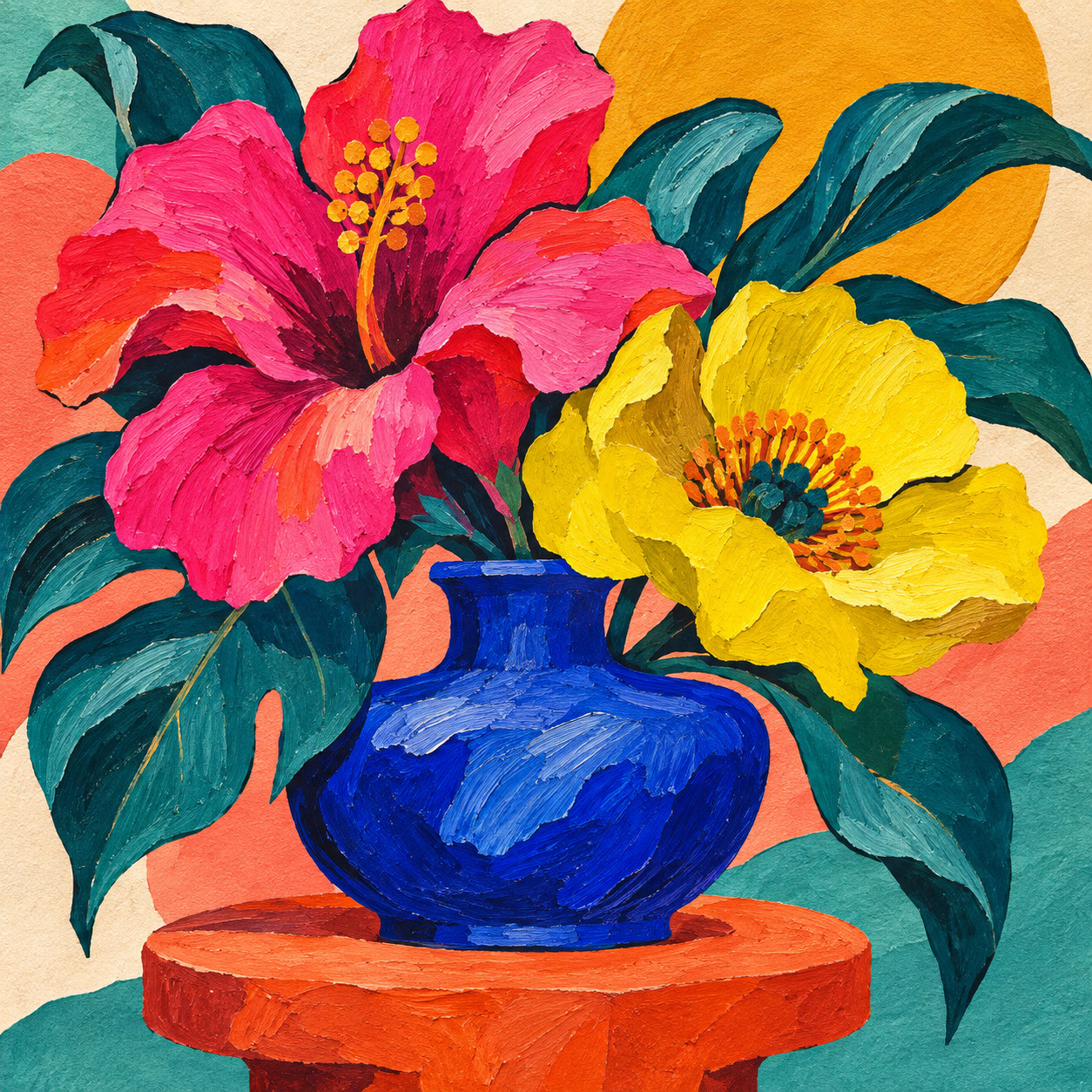
2. Expressive Colour and Unexpected Palettes — Cobalt Botanicals, Muted Peach & Acid-Green Accents — Colour contrast study for '2. Expressive Colour and Unexpected Palettes': a bold sculptural botanical still-life pairing deep cobalt-blue leaves and a muted-peach vessel with a single electric acid-green accent and rich gouache grain to demonstrate emotional colour tension. Colour Palette: Cobalt Blue (#1D4ED8), Muted Peach (#F4A28C), Acid Green (#B8F500), Warm Cream (#F6EFE2)
3. Playful Character Design
Character illustration is becoming more expressive, humorous and emotionally engaging. In 2027, characters will not need to look perfect or realistic to make an impact.
Designers are exploring exaggerated proportions, unusual facial expressions, simplified bodies and distinctive gestures. A character’s personality often matters more than technical detail.
This makes playful character design particularly useful for:
- Children’s publishing
- Brand mascots
- Greetings cards
- Social media campaigns
- Packaging
- Educational content
The most successful characters usually have a clear visual point of view. They might be awkward, curious, mischievous or optimistic. That recognisable personality helps audiences remember them.
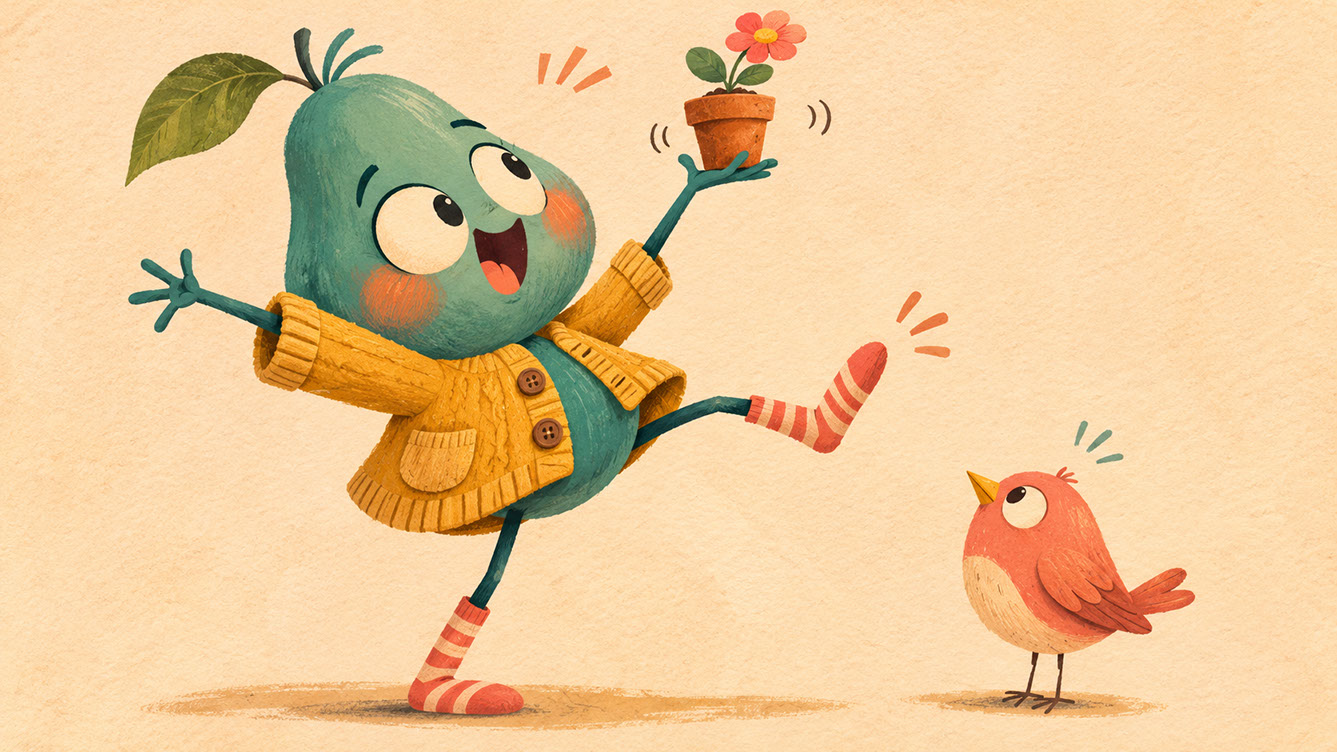 🔍 PLATE 04 — CLICK TO EXPAND
3. Playful Character Design — Quirky Proportions, Exaggerated Gestures & Memorable Personality — Character storytelling plate for '3. Playful Character Design': an original pear-shaped teal creature with an oversized head, bent antenna, mustard cardigan, and coral striped socks enthusiastically balances a tiny flowerpot while a curious coral bird looks on. Colour Palette: Character Teal (#1A6B64), Mustard Cardigan (#E0A12E), Coral Socks (#F06449), Studio Cream (#F7F1E5)
4. Tactile Textures and Handmade Surfaces
Texture is becoming increasingly important as illustrators look for ways to add warmth and depth to digital artwork. Flat graphics can be transformed through paper grain, fabric effects, ink marks, painted surfaces and printmaking details.
Popular techniques include:
- Risograph-inspired layering
- Screen-print textures
- Watercolour washes
- Collage scraps
- Crayon and pastel marks
- Cut-paper edges
- Recycled-paper effects
Tactile illustration works particularly well in homeware, wallpaper, wrapping paper and textile design because it suggests physical materials and craftsmanship.
It can also help digital artwork feel more approachable. Even when an illustration is created entirely on screen, a handmade surface can give it a more memorable and human quality.
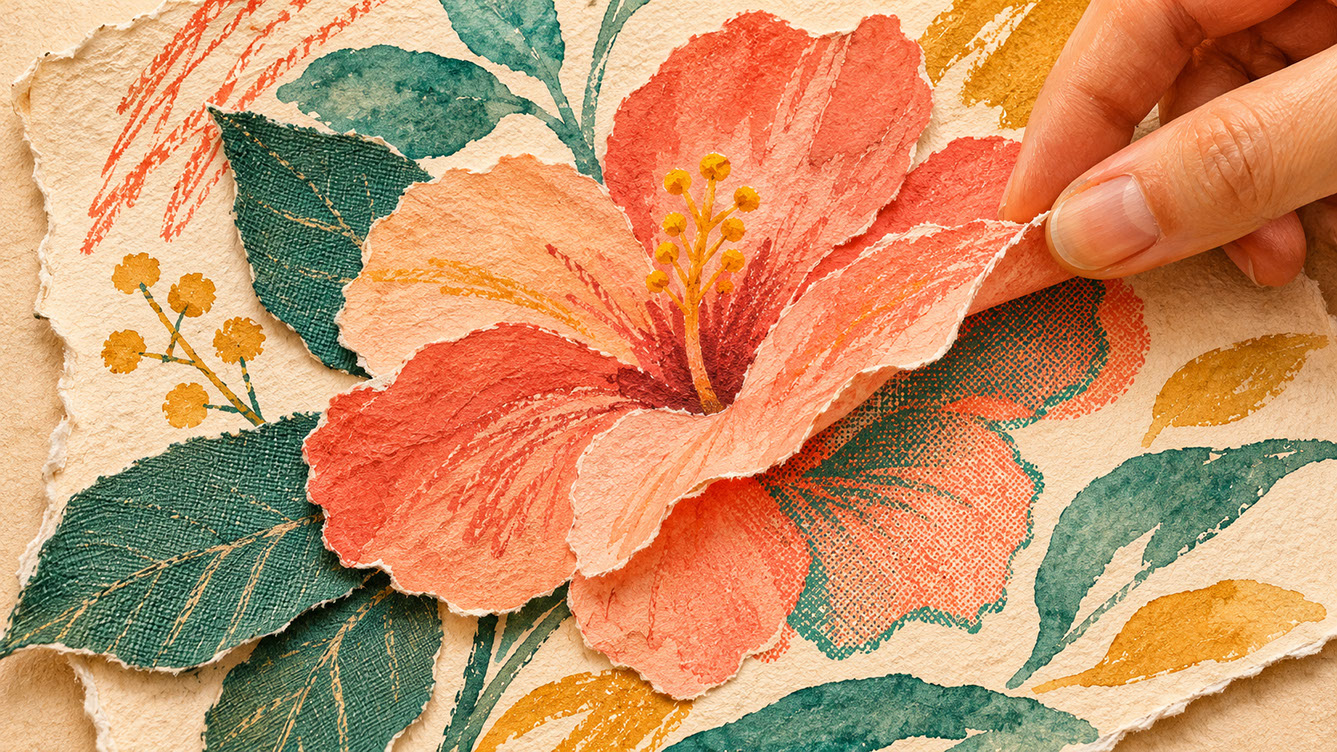 🔍 PLATE 05 — CLICK TO EXPAND
4. Tactile Textures and Handmade Surfaces — Cut Paper, Crayon Grain, Watercolour & Screenprint Layers — Surface craft study for '4. Tactile Textures and Handmade Surfaces': an overhead view of a single botanical composition constructed from rough handmade paper, crayon grain, watercolour washes, cut-paper petals, and slightly misregistered screenprint layers gently lifted by the artist's fingertips. Colour Palette: Screenprint Teal (#155E59), Cut-Paper Coral (#E85D44), Crayon Ochre (#D69628), Fibrous Cream (#F3ECE0)
5. Experimental Collage and Layered Composition
Collage is evolving beyond the traditional arrangement of photographs and paper cuttings. In 2027, illustrators are combining drawings, typography, scanned textures, digital shapes, archival references and found imagery.
The result is often layered, surprising and slightly unpredictable.
Experimental collage allows artists to bring together different eras and visual languages. A vintage botanical drawing might sit alongside a geometric shape, while handwritten text and bold colour blocks create a contemporary finish.
Why it matters: Collage reflects the way modern audiences experience visual culture—through overlapping images, screens, references and ideas. It also offers a practical way to reuse existing materials and develop a distinctive style.
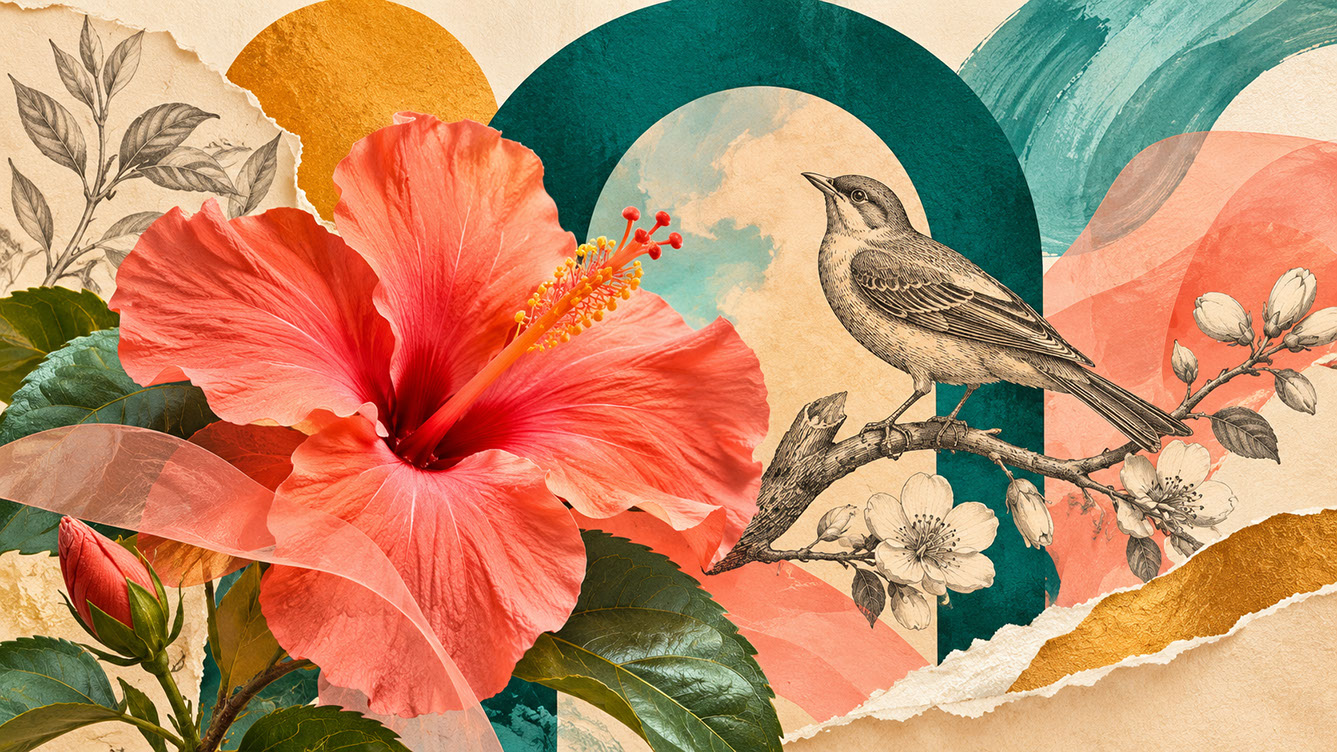 🔍 PLATE 06 — CLICK TO EXPAND
5. Experimental Collage and Layered Composition — Photographic Petals, Vintage Engraving & Cut-Paper Arches — Mixed-media composition for '5. Experimental Collage and Layered Composition': combining a photographic coral flower cutout, an archival-style bird engraving, a bold teal geometric arch, torn cream paper edges, and translucent gouache shapes with generous visual breathing space. Colour Palette: Photographic Coral (#F05E46), Archival Ink (#262A30), Geometric Teal (#14534F), Torn Paper Cream (#F4EDE1)
6. Contemporary Surrealism
Surrealism continues to influence illustration, but its modern form is often more playful and accessible than traditional dream imagery. Artists are creating impossible scenes, unusual object combinations and visual metaphors that encourage viewers to pause and interpret.
Examples might include:
- Oversized everyday objects
- Floating landscapes
- Plants growing from unexpected places
- Animals in human situations
- Hybrid figures and imaginative creatures
- Ordinary scenes with one impossible detail
Contemporary surrealism is valuable because it creates curiosity. It gives an audience something to discover, making an illustration more engaging and shareable.
For commercial work, surreal ideas can also help brands communicate abstract qualities such as imagination, transformation, freedom or innovation.
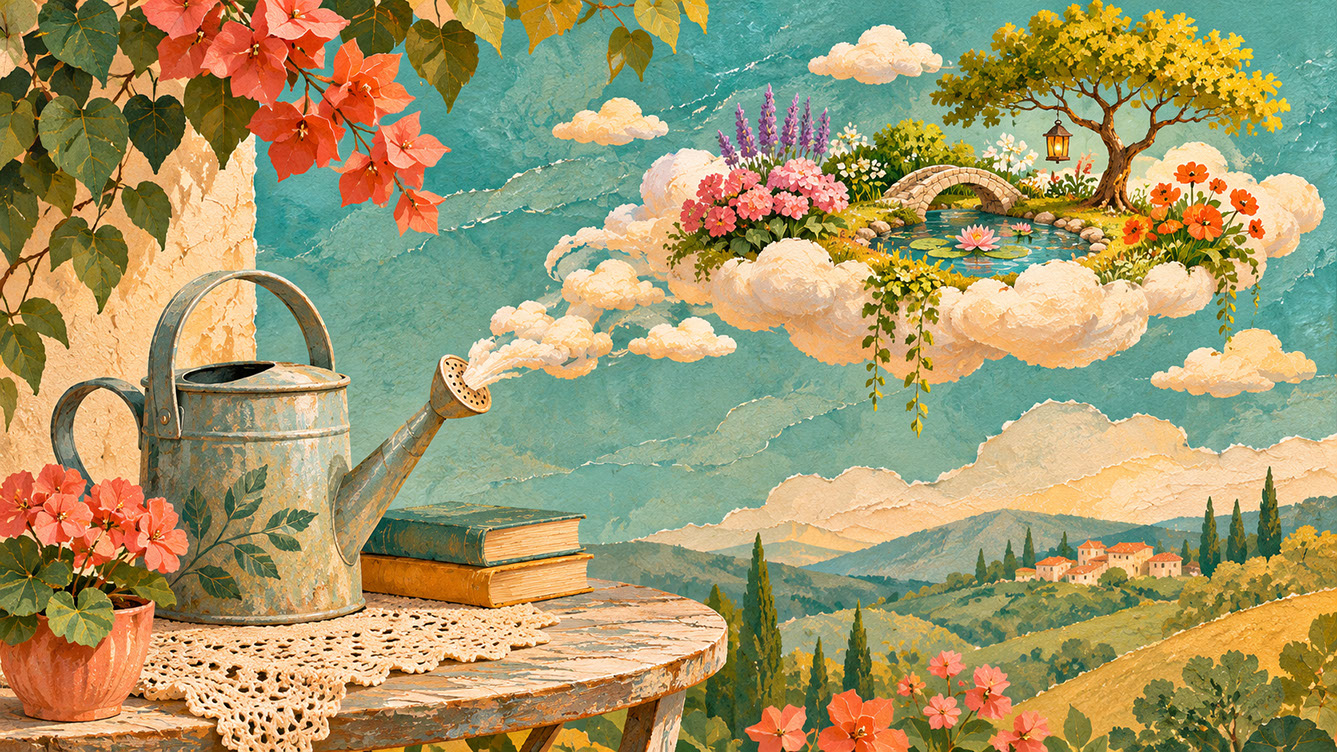 🔍 PLATE 07 — CLICK TO EXPAND
6. Contemporary Surrealism — Everyday Objects Transformed into Dreamlike Floating Gardens — Dreamlike conceptual plate for '6. Contemporary Surrealism': a familiar garden watering can rests on a wooden table while its spout releases a gentle stream of miniature clouds that transform into a floating botanical island. Colour Palette: Garden Teal (#175B55), Cloud Cream (#F7F2E8), Terracotta Pot (#D96B4B), Sunlit Ochre (#E2A634)
7. Organic Forms Meet Geometric Structure
One of the most interesting illustration trends for 2027 is the combination of natural and structured forms.
Curved leaves, flowers, clouds and fluid shapes are being placed alongside grids, circles, stripes and architectural forms. This contrast creates balance between softness and order.
Organic-geometric illustration can suit a wide range of applications, including:
- Wellness branding
- Interior products
- Packaging
- Editorial design
- Fashion graphics
- Contemporary stationery
The style feels modern while remaining approachable. It can also be adapted easily into repeat patterns, icons, decorative borders and larger compositions.
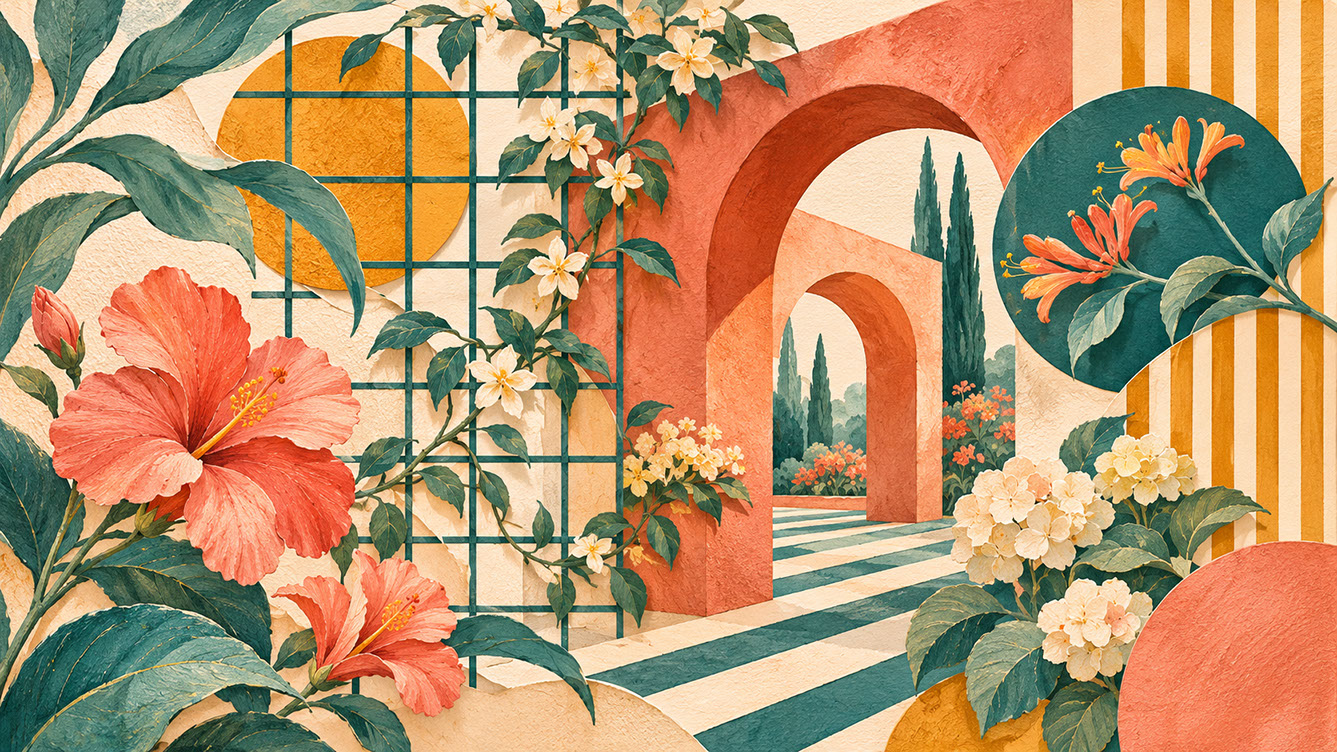 🔍 PLATE 08 — CLICK TO EXPAND
7. Organic Forms Meet Geometric Structure — Fluid Botanical Leaves Weaving Through Architectural Grids — Structural harmony plate for '7. Organic Forms Meet Geometric Structure': an imaginative garden where fluid hand-painted leaves and coral blooms weave through crisp geometric circles, a structured grid trellis, striped planes, and warm terracotta arches. Colour Palette: Terracotta Arch (#D96548), Trellis Teal (#14524E), Golden Circle (#DFA332), Alabaster Cream (#F5EFE2)
8. Nostalgia Reimagined for a New Audience
Retro illustration is not disappearing, but it is being updated. Instead of copying the past, designers are selecting familiar influences and giving them a contemporary interpretation.
You may see references to:
- Mid-century print design
- 1970s colour palettes
- Early computer graphics
- Vintage children’s books
- Classic travel posters
- Traditional sign painting
The key is reinterpretation. Modern layouts, unusual colour choices and digital techniques can prevent nostalgic work from feeling predictable.
Nostalgia works because it creates an immediate emotional response. However, the strongest results combine a familiar reference with something unexpected, helping the final design feel both comforting and fresh.
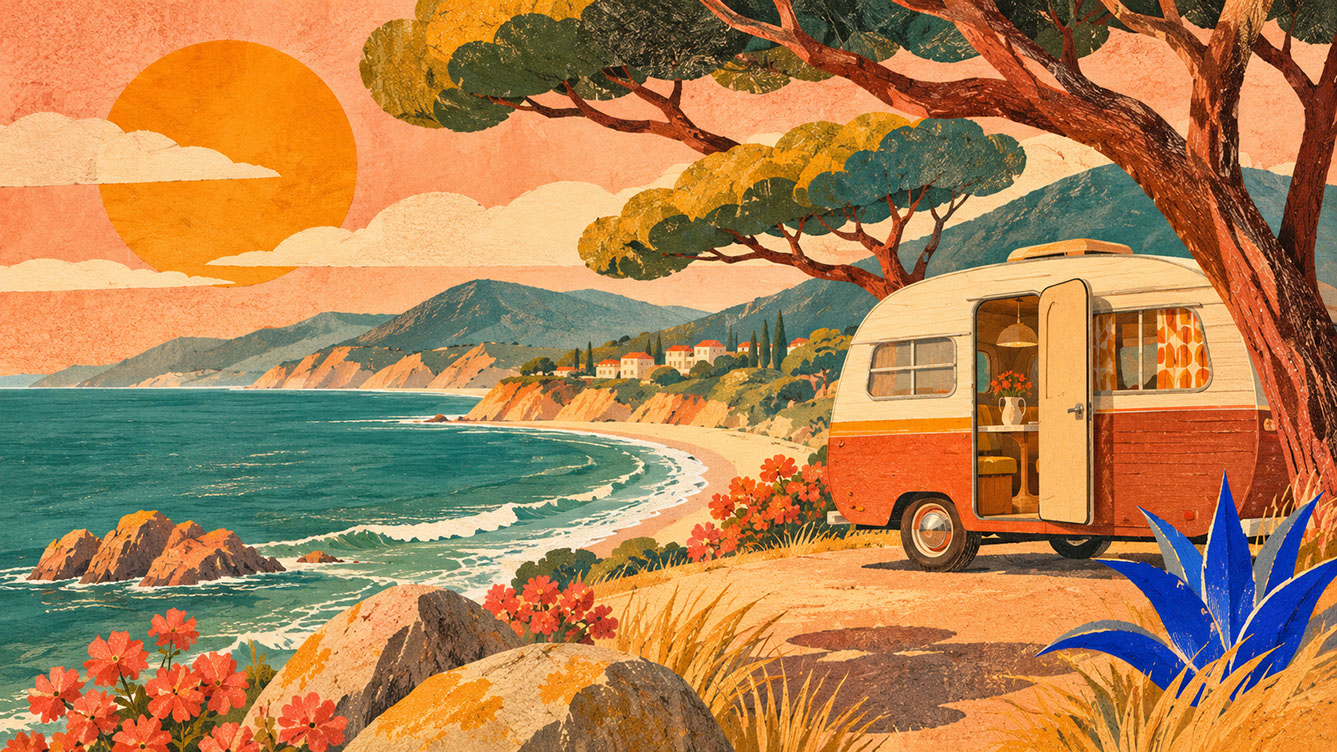 🔍 PLATE 09 — CLICK TO EXPAND
8. Nostalgia Reimagined for a New Audience — Mid-Century Print Grain & 1970s Ochre with Cobalt Accents — Retro-future editorial plate for '8. Nostalgia Reimagined for a New Audience': a coastal travel-poster-inspired landscape with simplified mid-century forms, warm 1970s ochre and rust tones, grainy print texture, a vintage camper, and a contemporary asymmetric cobalt-blue accent. Colour Palette: 1970s Ochre (#D89228), Rust Terracotta (#C85538), Modern Cobalt (#1E40AF), Coastal Teal (#185B57)
9. Illustration Becomes More Animated and Interactive
Illustration is increasingly moving beyond the static page. Short animations, looping graphics, interactive websites and responsive visual systems are creating new opportunities for illustrators.
A single illustration might now exist as:
- A printed poster
- An animated social media asset
- An interactive website element
- A digital sticker
- A moving packaging graphic
- Part of a visual identity system
This means illustrators need to consider movement, adaptability and multiple formats. Even a simple shift, such as blinking eyes, moving text or changing colours, can add life to a static image.
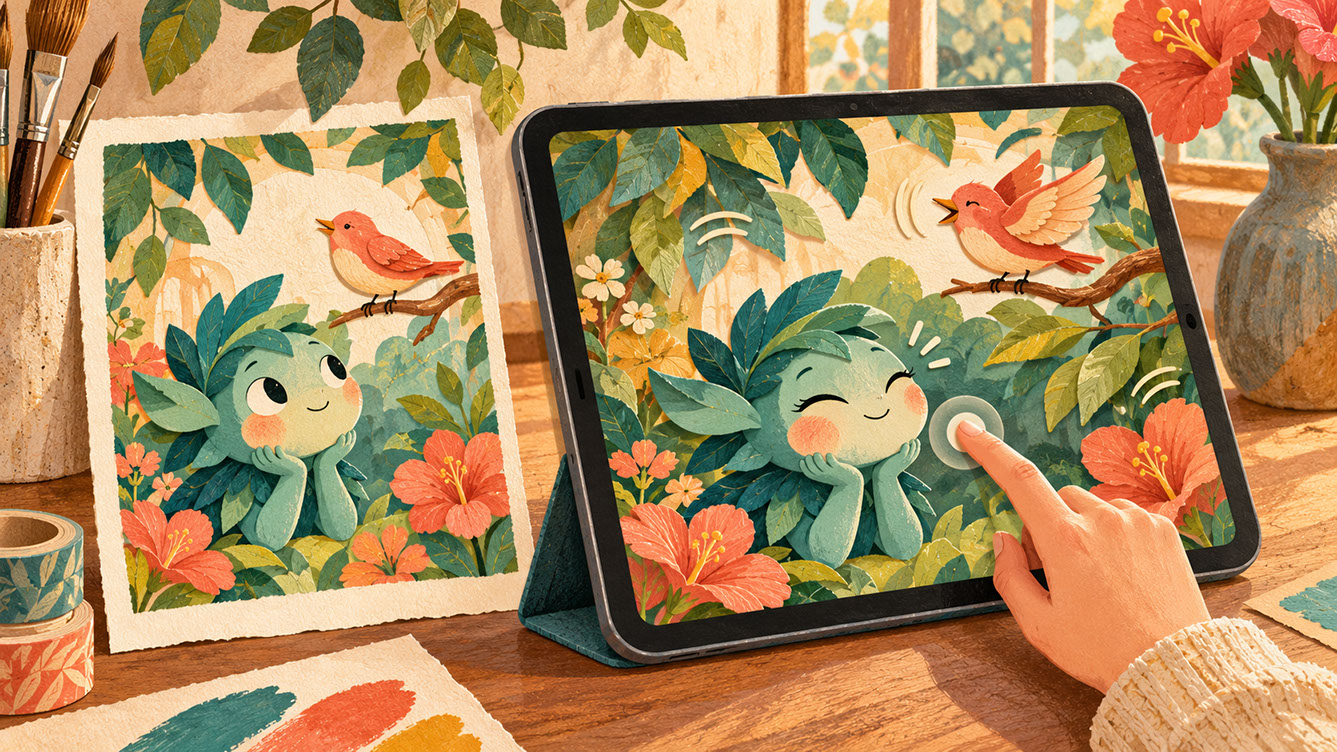 🔍 PLATE 10 — CLICK TO EXPAND
9. Illustration Becomes More Animated and Interactive — Subtle Motion Cues Across Screen and Print — Motion-ready studio plate for '9. Illustration Becomes More Animated and Interactive': a hand taps a tablet displaying our recurring teal character and coral bird with subtle curved motion cues suggesting blinking and swaying leaves, paired beside a matching physical print. Colour Palette: Deep Teal (#134E4A), Warm Coral (#F26A4B), Golden Ochre (#D99B26), Soft Studio Cream (#F6EFE2)
10. Human Creativity and AI Work Together
Artificial intelligence will remain an important influence on illustration in 2027. However, the most valuable creative work is unlikely to come from technology alone.
AI can help generate ideas, explore compositions, develop references or speed up repetitive tasks. Yet human judgement remains essential for storytelling, editing, cultural awareness, emotional depth and originality.
As AI-generated imagery becomes more common, a recognisable artistic voice may become even more important. Personal marks, unusual decisions and genuine creative intention can distinguish an illustrator’s work from generic visual output.
The best approach is to treat emerging technology as a creative assistant—not a replacement for imagination.
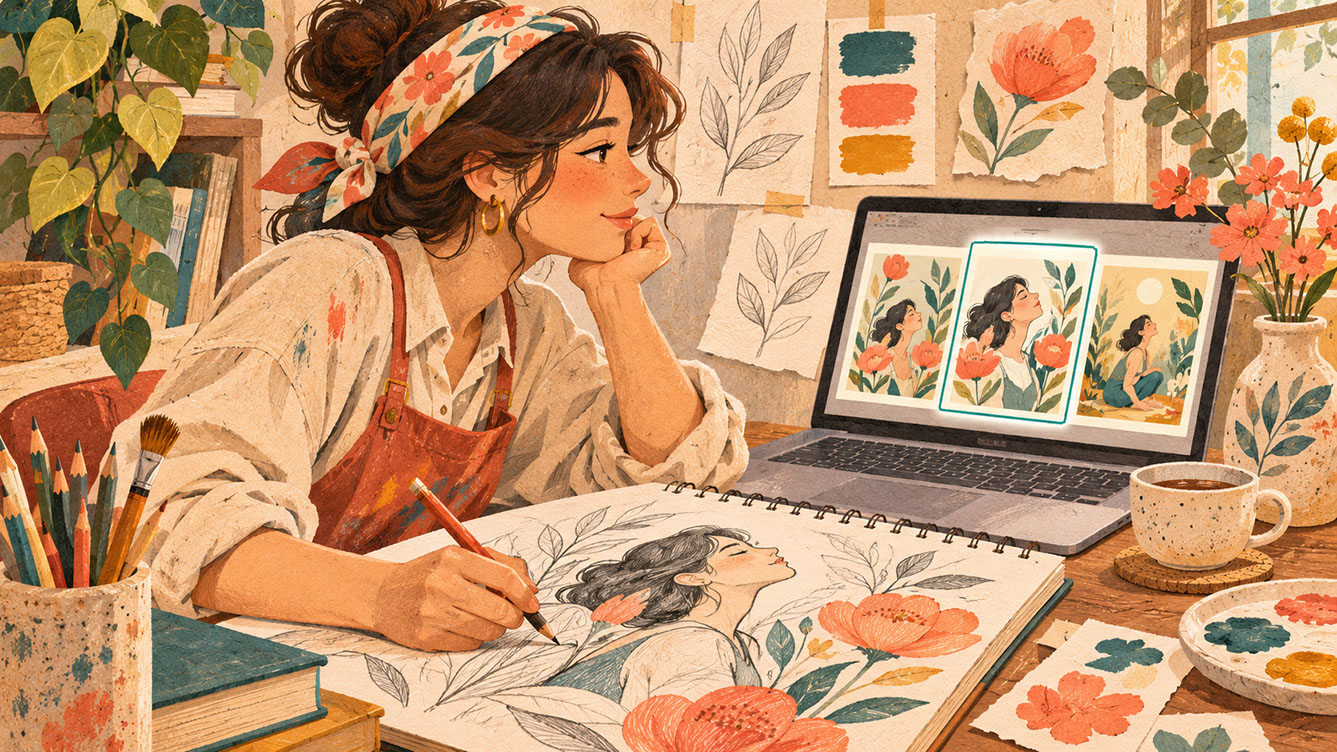 🔍 PLATE 11 — CLICK TO EXPAND
10. Human Creativity and AI Work Together — Artist-Led Ideation & Hand-Crafted Final Execution — Collaborative workflow plate for '10. Human Creativity and AI Work Together': a thoughtful illustrator reviews early composition thumbnails on a laptop while actively redrawing and refining the final botanical-and-character artwork by hand in a physical sketchbook. Colour Palette: Deep Teal (#134E4A), Warm Coral (#F26A4B), Golden Ochre (#D99B26), Soft Studio Cream (#F6EFE2)
Frequently Asked Questions About Illustration Trends 2027
What is the biggest illustration trend for 2027?
The growing demand for authentic, human-looking artwork is likely to be one of the most important trends. Handmade textures, expressive marks and distinctive artistic voices offer a meaningful contrast to polished digital imagery.
Will AI replace illustrators?
AI may change how illustrators work, but it is unlikely to replace the need for creative direction, storytelling and personal interpretation. Illustrators who combine technical awareness with a strong visual identity will remain valuable.
How can I apply these trends to commercial illustration?
Start with the needs of the project. Choose one or two relevant trends—such as tactile texture or expressive colour—and adapt them to the audience, product and format. Avoid adding trends simply for decoration.
Which illustration trends work best for surface pattern design?
Organic forms, playful characters, experimental collage, expressive colour palettes and tactile textures all translate effectively into repeat patterns for wallpaper, textiles, stationery and homeware.
 🔍 PLATE 12 — CLICK TO EXPAND
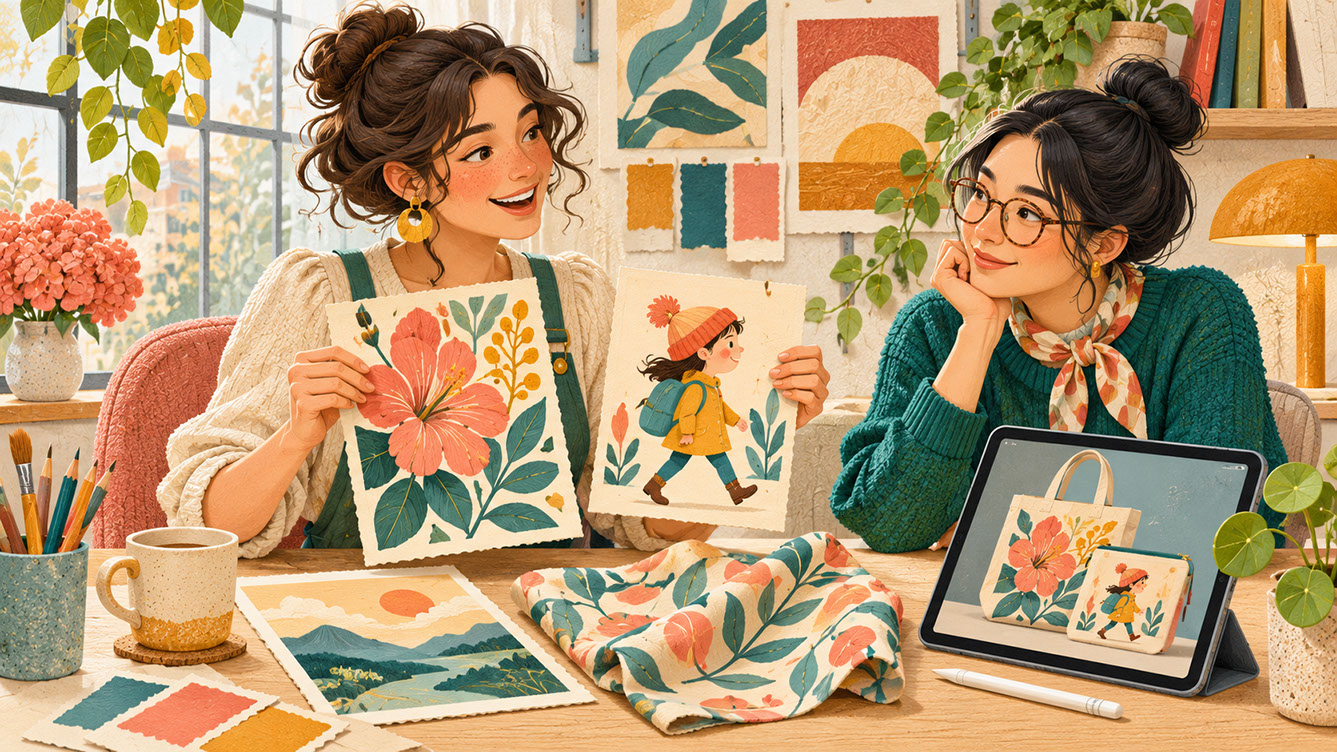
Frequently Asked Questions About Illustration Trends 2027–2028 — Practical Studio Selection — Editorial consultation plate for 'Frequently Asked Questions About Illustration Trends 2027': two designers at a sunlit table select complementary botanical prints, character cards, repeat-pattern fabric swatches, and digital layouts for a live commercial project. Colour Palette: Deep Teal (#134E4A), Warm Coral (#F26A4B), Golden Ochre (#D99B26), Soft Studio Cream (#F6EFE2)
Conclusion: Make Illustration Personal in 2027
The most exciting illustration trends for 2027 are not about following strict rules. They are about combining influences in fresh, meaningful ways.
From imperfect handmade marks and playful characters to surreal compositions, nostalgic references and interactive artwork, the future belongs to illustrators who experiment confidently. Technology will continue to expand creative possibilities, but personality, emotion and originality will remain at the heart of memorable visual communication.
So, as you plan your next collection or creative project, look beyond what is simply fashionable. Find the colours, textures, stories and techniques that feel genuinely yours. In 2027, the strongest illustration will be expressive, adaptable and unmistakably human.
 🔍 PLATE 13 — CLICK TO EXPAND
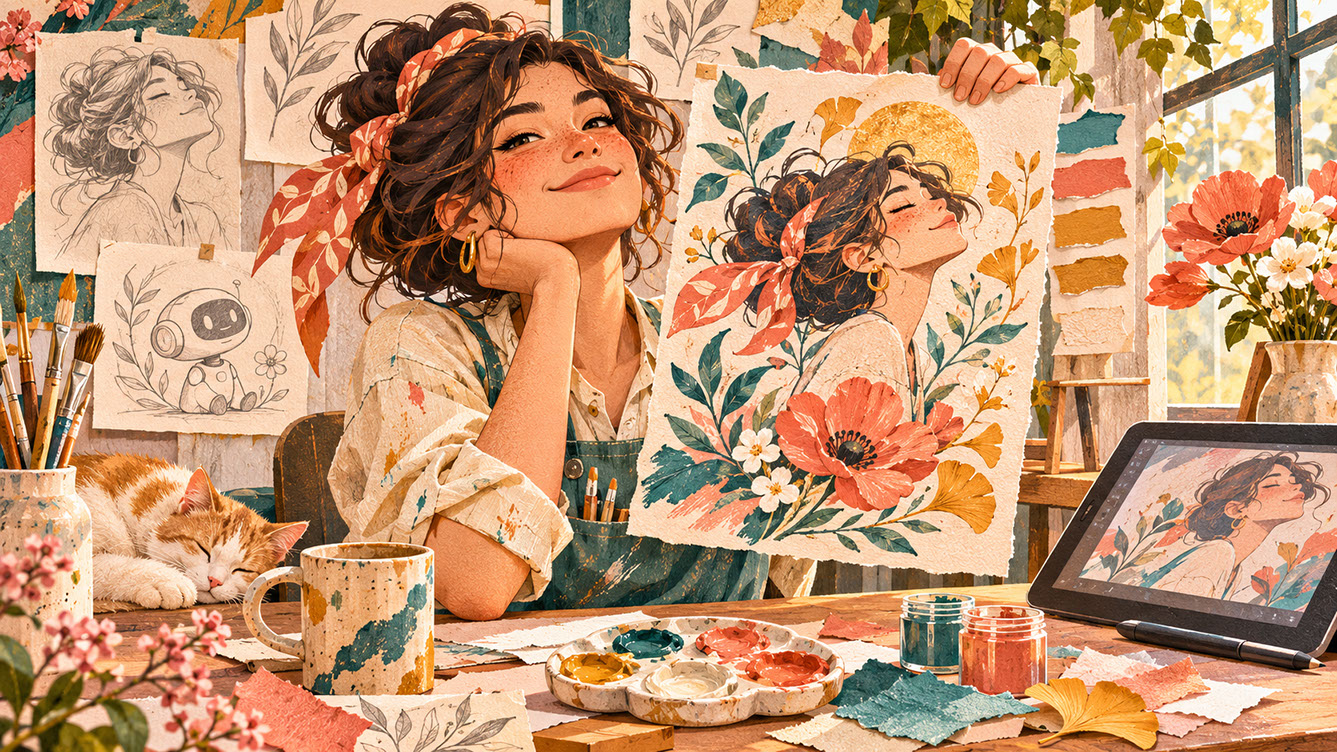
Make Illustration Personal in 2027–2028 — Celebrating Originality & Human Authorship — Closing synthesis plate for 'Conclusion: Make Illustration Personal in 2027': an illustrator at a sunlit studio table holds up a finished character-and-botanical illustration surrounded by pencil studies, chosen gouache pigments, cut-paper scraps, and a digital tablet. Colour Palette: Deep Teal (#134E4A), Warm Coral (#F26A4B), Golden Ochre (#D99B26), Soft Studio Cream (#F6EFE2)
Explore All 8 Deep-Dive Episodes in the Illustration Trends 2027–2028 Series
Welcome to our comprehensive 8-part exploration of the illustration landscape in 2027–2028. Each episode builds upon this overview to give illustrators, surface pattern designers, art directors, and creative brands actionable craft techniques, commercial strategies, and visual inspiration:
EPISODE 01 OF 08EPISODE 1-Illustration Trends 2027: 7 Powerful Forces Reshaping Visual Creativity This Year
Explores the macro cultural, technological, and commercial forces reshaping illustration in 2027–2028—why human touch is becoming illustration's greatest asset alongside AI, and previewing the 7 creative directions ahead.
Read Episode 1 →EPISODE 02 OF 08Deep-dives into tactile illustration and handmade aesthetics—visible brushstrokes, rough pencil contours, scanning real paper/fabric/wood textures, and risograph-inspired limited palettes.
Read Episode 2 →EPISODE 03 OF 08Unpacks expressive colour and emotional contrast—moving beyond safe beige neutrals by pairing grounded ecological tones (moss, deep teal, clay) with synthetic digital brights (electric pink, acid yellow).
Read Episode 3 →EPISODE 04 OF 08Examines playful character design and expressive storytelling—quirky proportions, exaggerated gestures, miniature single-frame narratives, and flexible character systems for brands and surface patterns.
Read Episode 4 →EPISODE 05 OF 08Covers experimental collage, layering, and visual maximalism—combining photographic cutouts, archival engravings, torn paper, and gouache while preserving clear focal hierarchy and strategic breathing space.
Read Episode 5 →EPISODE 06 OF 08Explores contemporary surrealism and dreamlike commercial creativity—transforming familiar objects through altered scale, floating gardens, and conceptual anchors that connect emotionally with audiences.
Read Episode 6 →EPISODE 07 OF 08Addresses cultural authenticity and regional craft—moving beyond surface motif borrowing toward lived experience, local materials, primary-source research, and respectful collaboration with community makers.
Read Episode 7 →EPISODE 08 OF 08EPISODE 8-Beyond Static Images: How Modular Illustration Systems Are Reshaping Visual Design in 2027
Concludes with modular illustration systems and subtle motion—transitioning from single static images to reusable component libraries, multi-aspect ratio planning, and gentle parallax/micro-animation.
Read Episode 8 →⚡ 5 Strategies to Consider
STUDIO PLAYBOOK // 5 DIRECTIVES❓ Frequently Asked Questions — 5 Q&As (5 Q&As)
SCHEMA.ORG/FAQPAGE // 5 Q&As (5 Q&As)Q1. What are the main forces reshaping illustration in 2027?
The main forces include the growing relationship between human creativity and AI technology, the expanding role of illustration across diverse industries, a fundamental shift from decoration to meaningful communication, and the increasing commercial value placed on authenticity and distinctive visual voices.
Q2. Why is human touch becoming more valuable in illustration as AI advances?
As AI-generated imagery becomes more widespread, audiences have become more sensitive to authentic human expression. The recognisably human marks, variations, and creative decisions that could only come from a specific individual now carry greater emotional weight and signal genuine authenticity.
Q3. Which industries are offering growing opportunities for illustrators in 2027?
Beyond traditional strongholds like greetings cards and publishing, growing opportunities exist in textiles and surface pattern design, homeware and lifestyle products, packaging design, social media content creation, digital publishing, app interfaces, and interactive digital experiences.
Q4. What is meant by illustration shifting from decoration to communication?
This shift means illustration is no longer treated as mere embellishment but as meaningful visual communication that carries emotional and narrative weight. Illustration now serves strategic purposes including brand differentiation, audience engagement, building trust, and creating genuine connections.
Q5. What are the seven emerging illustration directions for 2027?
The seven directions are Tactile Illustration (handmade qualities), Expressive Colour (bold palettes), Playful Characters (distinctive personalities), Collage and Layering (textured compositions), Contemporary Surrealism (dreamlike imagery), Cultural Authenticity (meaningful cultural references), and Adaptable Illustration Systems (multi-format design).