
Tech-Light Living: 7 Ways Interior Design Is Creating Sanctuaries From Digital Overwhelm in 2026
Discover 7 ways 2026 interior design counters digital overwhelm using concealed screens, lime plaster, acoustic wool, tactile oak, and warm grazing light.
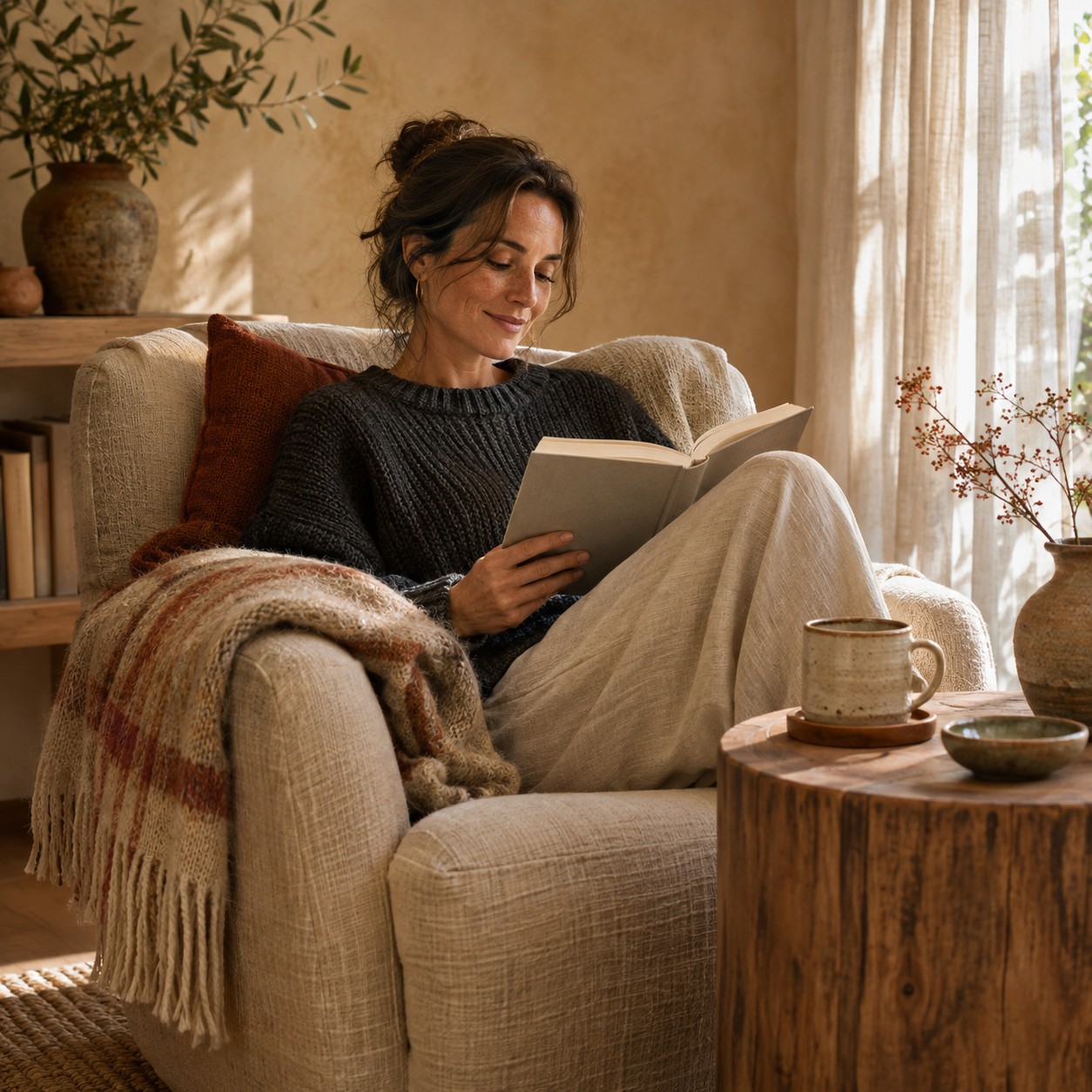 🔍 COVER PLATE — CLICK TO EXPAND
Imagine stepping through your front door after a day saturated with notifications, video calls, and the relentless glow of screens. Your feet meet warm timber floorboards. The walls, finished in soft lime plaster, seem to absorb the day's noise. There are no visible screens demanding your attention, no blinking lights signalling yet another message. Instead, layered textures of linen, wool, and unglazed ceramics invite you to exhale. This is the tech-light sanctuary, and it represents the authenticity movement's most tangible expression yet.
Throughout this series, we have explored how brands and creators are pivoting toward genuine human craft in response to synthetic perfection. We have examined analogue textures in graphic design, the tactile revolution in materials, documentary-style photography, and the post-luxury movement's quiet confidence. Now, these principles extend into three-dimensional lived experience. Our homes and the commercial spaces we frequent have become the latest battleground between digital convenience and human wellbeing. After years of open-plan designs optimised for connectivity, consumers are actively seeking environments designed as refuges from notification fatigue and digital overstimulation.
This post explores how interior designers, architects, and hospitality professionals are responding with intentional material choices, technology concealment strategies, acoustic considerations, and lighting design that prioritises warmth over clinical brightness. Let us discover how to create spaces that ground us firmly in physical reality.
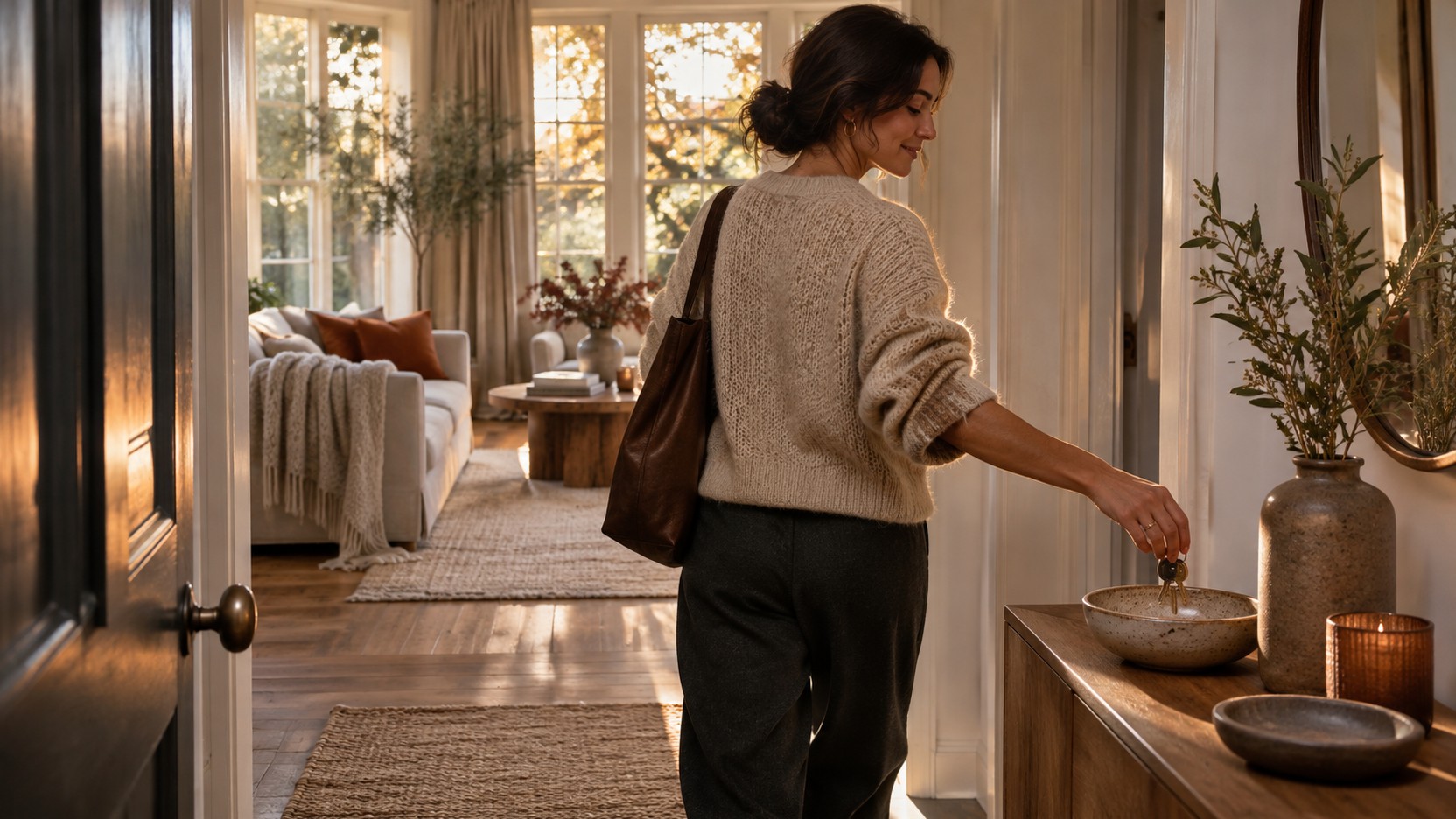 🔍 PLATE 01 — CLICK TO EXPAND
Plate 01 — Resident Setting Keys in Stoneware Bowl at Entryway of Quiet Timber and Linen Living Room: Plate 01 (Introduction): A deliberate threshold ritual leaves digital demands at the door, opening into a calm interior of raw timber, wool, and late-afternoon daylight.
Understanding the Shift: The Home as Refuge
The psychological need for sanctuary has never been more acute. Our homes are increasingly expected to provide genuine relief from constant connectivity. Notification fatigue is not merely a mental state; it manifests physically in our nervous systems through elevated cortisol levels, disrupted sleep patterns, and a persistent sense of being permanently on call.
The pandemic years accelerated an uncomfortable blurring of boundaries. Bedrooms became offices, kitchens transformed into video call backdrops, and the concept of leaving work simply evaporated for millions. This intensified the need for designated tech-light zones—spaces where the digital world cannot intrude uninvited.
Consumer behavioural shifts reflect this longing. There is growing interest in spaces offering sensory contrast to screen-dominated workdays. People are rejecting homes designed primarily as backdrops for video calls, seeking instead rooms that feel distinctly unlike extensions of digital interfaces.
The design industry has responded accordingly. Interior designers report substantially increased client requests for what they describe as grounding spaces. Hospitality venues are positioning themselves as digital detox destinations. Tech-light has emerged as a deliberate design philosophy—not anti-technology sentiment, but rather intentional integration that serves human needs rather than dominating human experience.
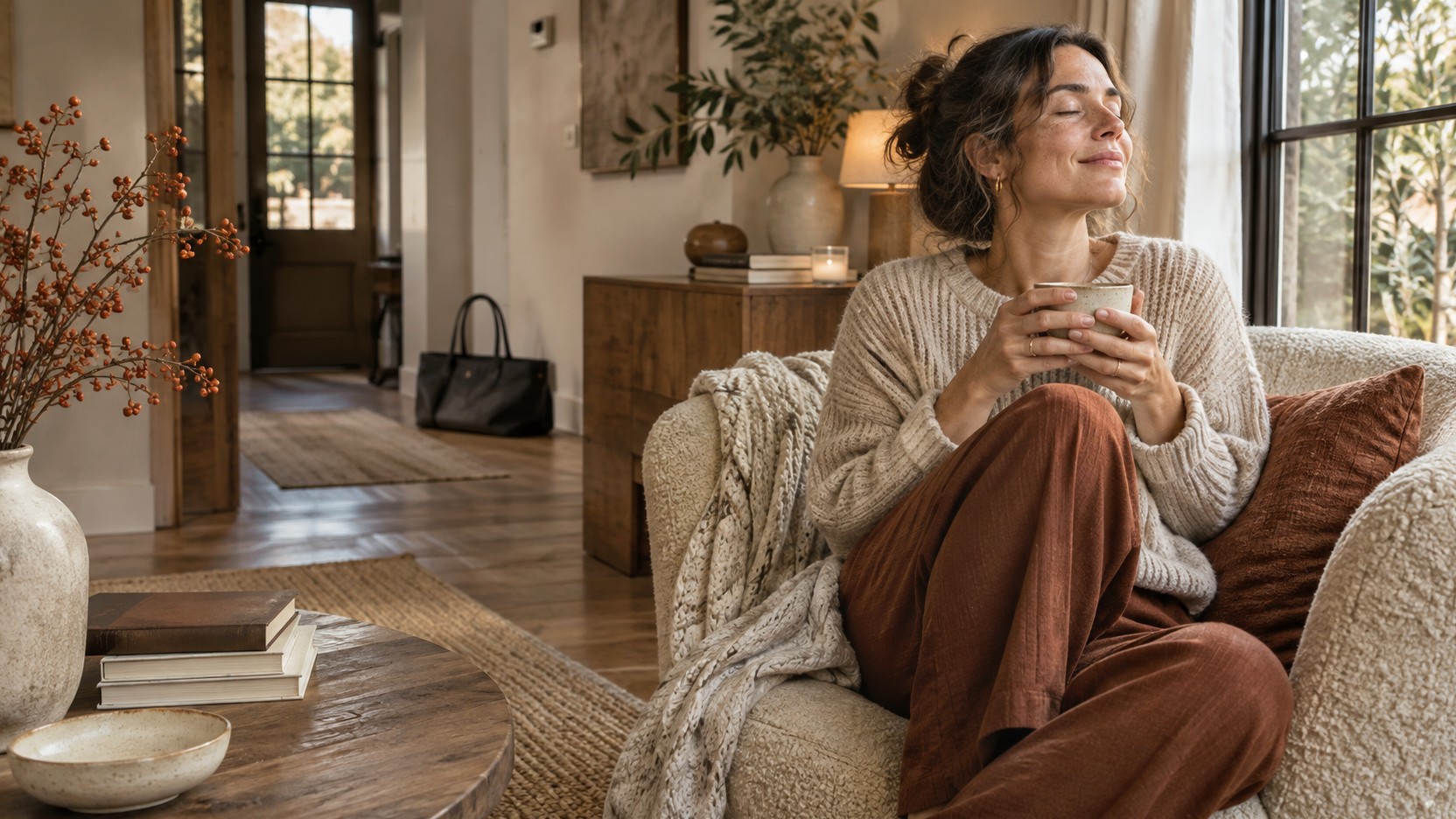 🔍 PLATE 02 — CLICK TO EXPAND
Plate 02 — Adult Seated by Sunlit Window With Ceramic Tea Cup in Softly Textured Plaster Living Room: Plate 02 (The Home as Refuge): Designing domestic spaces around nervous-system restoration and unhurried physical presence rather than constant connectivity.
Material Choices Creating Warmth and Sensory Richness
The materials we surround ourselves with fundamentally shape our sensory experience. Natural wood grain provides visual complexity that screens simply cannot replicate. The psychological warmth associated with exposed timber—whether oak, ash, or reclaimed pine—creates an immediate sense of comfort that synthetic alternatives struggle to match.
Crucially, the imperfections in natural timber matter enormously. Knots, grain variation, and subtle colour shifts create what we explored in earlier episodes as proof of presence. These irregularities signal authenticity in ways that perfectly uniform laminate surfaces cannot. When selecting timber, the question of sustainable sourcing becomes paramount, and authentic wood finishes consistently outperform faux alternatives in creating genuine sanctuary atmospheres.
Linen, wool, and natural textiles offer a tactile invitation that synthetic alternatives simply lack. The way natural fibres feel beneath your fingertips—slightly irregular, breathable, alive—creates immediate sensory grounding. Textile choices affect both touch and visual warmth; layering different natural fabrics creates depth and variety that keeps spaces feeling genuinely lived-in rather than showroom-perfect.
Unglazed ceramics and textured surfaces contribute significantly to sanctuary atmospheres. The appeal of wobbly ceramics and hand-finished pottery lies in their visible evidence of the maker's hand. Matte, unglazed surfaces feel inherently more grounding than high-gloss alternatives, which can sometimes feel cold or clinical despite their visual appeal.
Stone and plaster finishes complete the material palette. Lime plaster, Venetian plaster, and traditional tadelakt offer visual and tactile qualities that synthetic alternatives struggle to match. Natural stone's inherent variation becomes a design feature rather than a flaw. Perhaps most importantly, these materials age gracefully, developing patina rather than simply degrading—a quality that digital surfaces can never possess.
Technology Concealment Strategies
Creating a tech-light sanctuary does not require rejecting modern technology entirely. Instead, it demands intentional visibility—devices available when wanted, invisible when rest is needed.
Hidden screens represent the most visible application of this philosophy. Design solutions for concealing televisions have become increasingly sophisticated: artwork panels that slide to reveal screens, motorised covers that descend from ceilings, and integrated cabinetry that transforms entertainment centres into elegant storage. Some households designate entire rooms as screen-free sanctuaries, whilst others create zones within open-plan spaces where technology simply does not intrude.
Analogue controls and interfaces are experiencing a renaissance. There is growing preference for physical switches and dials over app-controlled everything. The satisfying tactility of a well-designed dimmer switch or a beautifully weighted door handle provides sensory feedback that touchscreens cannot replicate. This creates a balance: smart home convenience remains available, but the sensory experience of interacting with your space feels genuinely human.
Infrastructure considerations extend to the practical details. Designing charging stations that do not dominate living spaces, placing routers and devices where they do not intrude on sanctuary zones, and addressing the aesthetic implications of visible cables all contribute to the overall sense of refuge.
The paradox of concealment is worth acknowledging: hiding technology is not rejecting it. Rather, it is about creating spaces where technology serves rather than dominates, allowing devices when wanted whilst ensuring rest when needed.
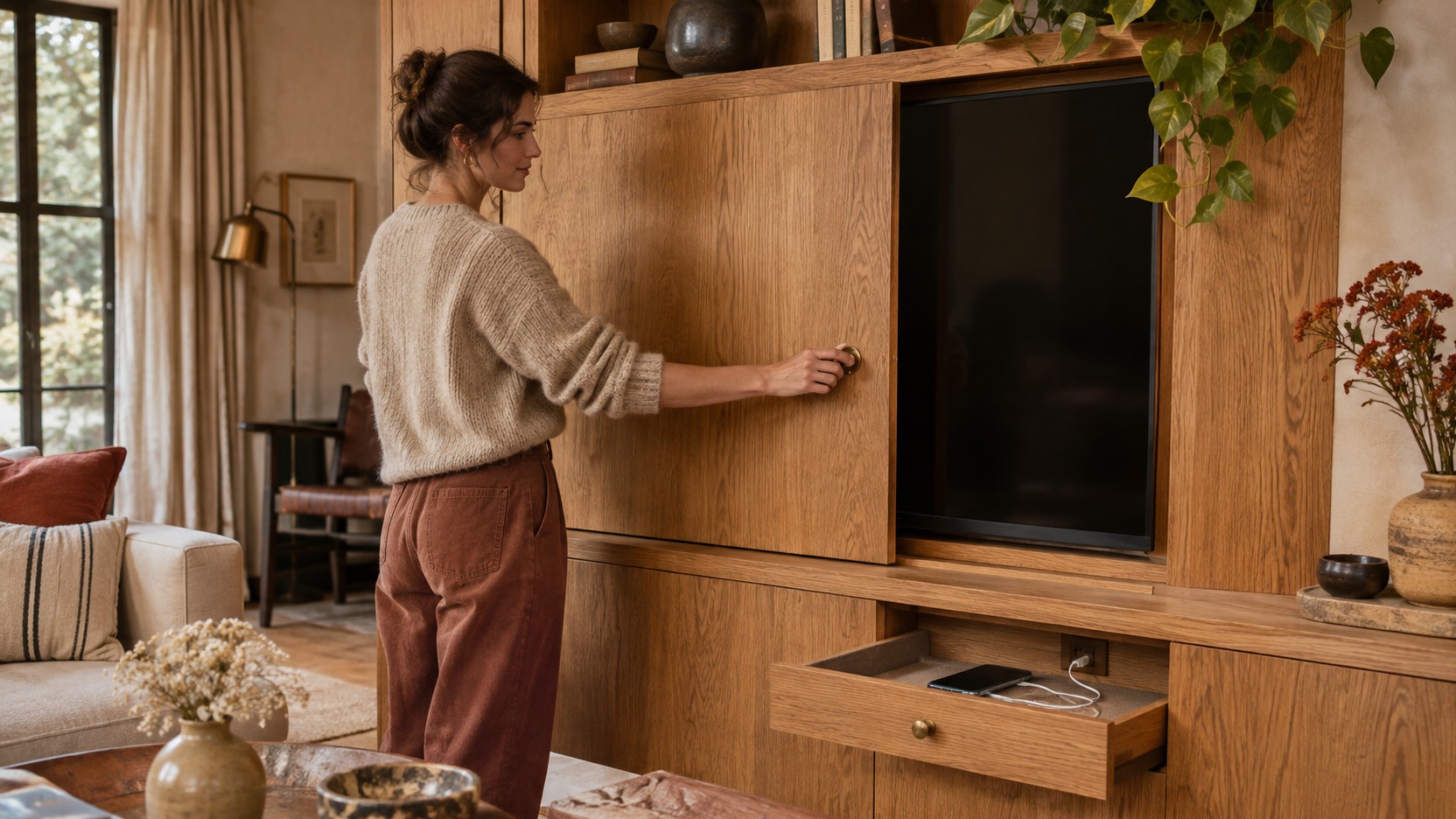 🔍 PLATE 03 — CLICK TO EXPAND
Plate 03 — Resident Sliding Fluted Oak Cabinet Panel Across Recessed Television and Charging Drawer: Plate 03 (Technology Concealment Strategies): Architectural oak joinery and dedicated charging drawers keep screens invisible when not in active use.
Acoustic Considerations for Warm Sound Environments
Acoustics remain one of the most overlooked aspects of sanctuary design, yet they profoundly affect our sense of comfort and rest.
Modern architecture often creates acoustic problems. Hard, reflective surfaces—expansive glass, polished concrete floors, minimal furnishings—produce echoey, harsh environments. The psychological stress of poor acoustics operates even when we are not consciously aware of it. Open-plan designs frequently feel energising but rarely restful, partly because sound bounces unpredictably rather than being absorbed.
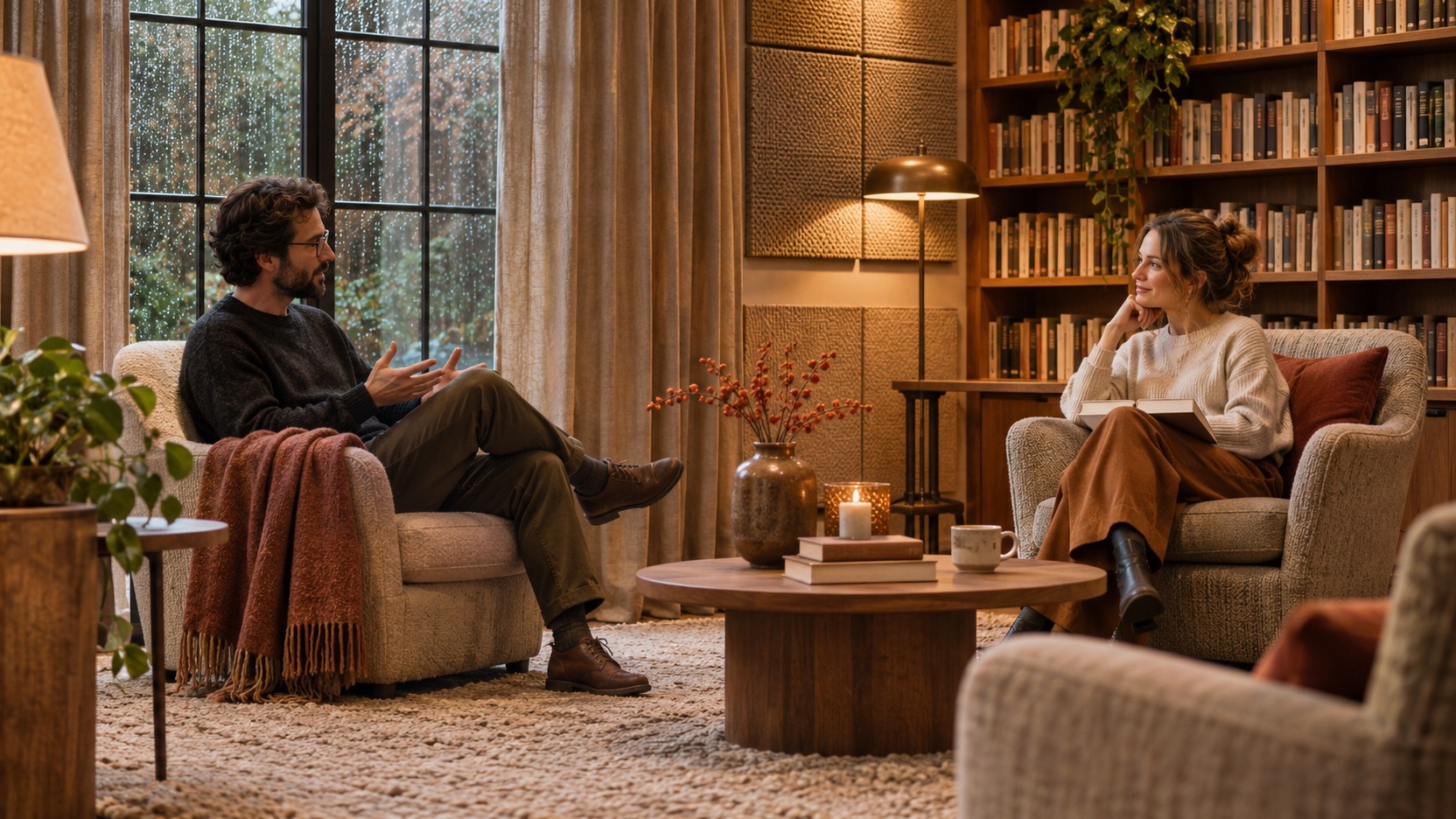
Creating warm sound environments requires thoughtful intervention. Soft furnishings serve as acoustic treatment: upholstered furniture, heavy curtains, and generous rugs all absorb and soften sound. Textured wall treatments break up reflections, whilst bookshelves and varied surfaces prevent the flat, reverberant quality of minimalist spaces.
Beyond absorption, consider the sounds you want to hear. Sanctuary design accommodates positive acoustic experiences: rain on windows, a fire crackling, conversation at comfortable levels without competing with echo. Natural materials often provide superior acoustic properties compared to synthetic alternatives, adding another dimension to their appeal.
 🔍 PLATE 04 — CLICK TO EXPAND
Plate 04 — Acoustically Softened Reading Room With Thick Wool Rug, Heavy Linen Drapes, and Bookshelves: Plate 04 (Acoustic Considerations): Layered wool rugs, full bookshelves, heavy linen drapery, and textured plaster absorb harsh echoes to create an intimate soundscape.
Surfaces That Invite Touch and Lighting Design
Certain surfaces invite touch whilst others subtly repel it. Understanding this distinction allows designers to create spaces that encourage physical engagement with our environments.
Varied textures within a single space create opportunities for tactile discovery. Handrails, door handles, and furniture edges all present opportunities for sensory engagement. A smooth brass handle, a rough linen cushion, a cool stone countertop—these variations keep our senses active and grounded in physical reality.
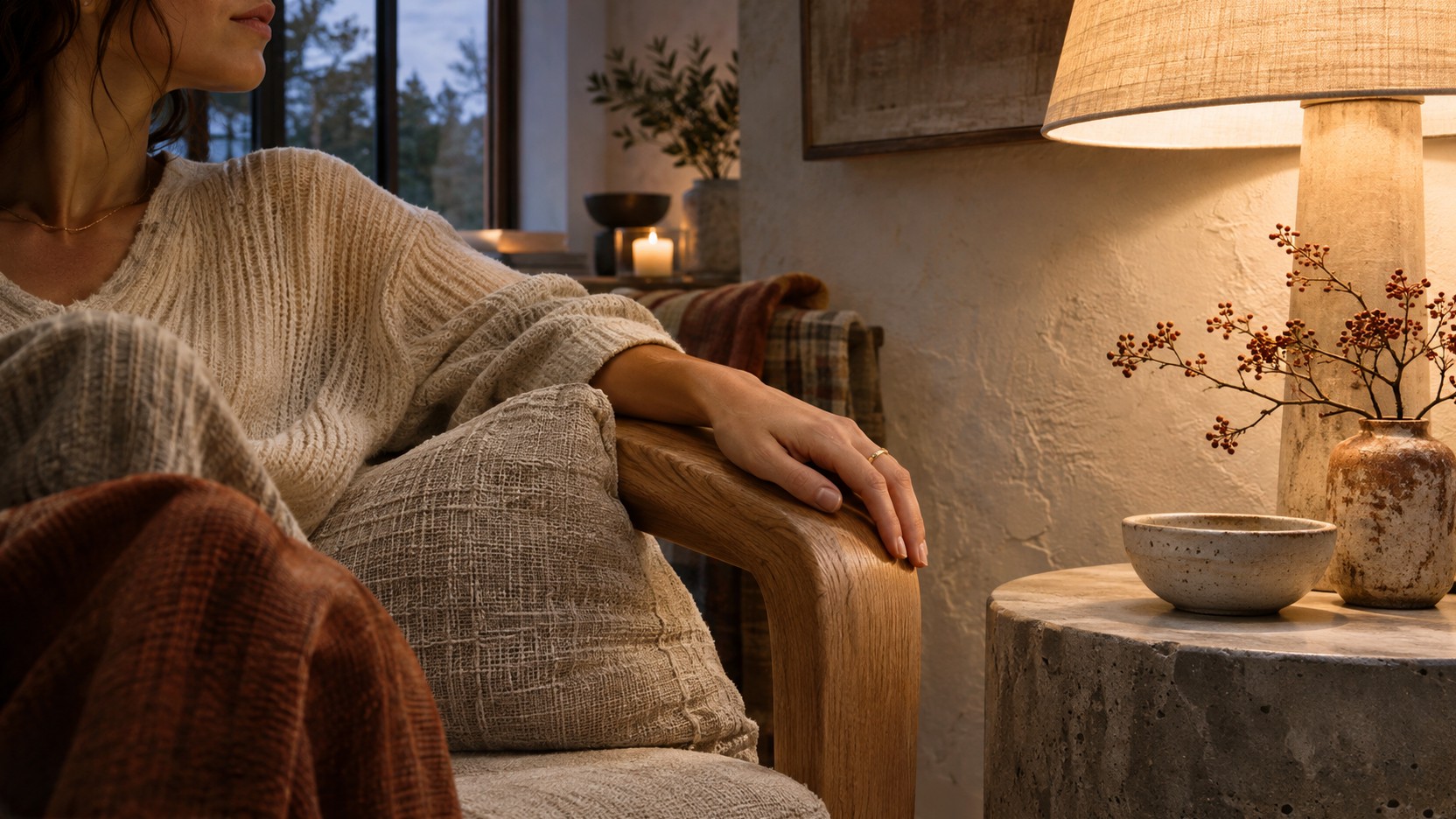
Lighting design proves equally critical. Clinical brightness makes spaces feel institutional rather than welcoming. Evenly-lit rooms, whilst practical, lack the warmth and intimacy that sanctuary requires. Instead, layered lighting—ambient, task, and accent working together—creates depth and flexibility.
Warm colour temperatures trump cool white for sanctuary spaces. The variation of natural light throughout the day should be embraced rather than overridden by artificial alternatives. And non-electric light sources—candles, fires, and oil lamps—provide grounding elements that connect us to centuries of human experience.
The interplay between touch and light deserves attention. Lighting affects our perception of texture profoundly. Strategic illumination reveals material qualities—grain, weave, surface variation—whilst thoughtful shadow creates visual warmth alongside brightness.
 🔍 PLATE 05 — CLICK TO EXPAND
Plate 05 — Evening Interior Detail of Hand on Smooth Oak Armrest Under Grazing Shaded Lamp Light: Plate 05 (Surfaces & Lighting Design): Low-level shaded lamps cast grazing illumination across lime plaster, raw oak, and slubbed linen as evening falls.
Hospitality and Commercial Spaces Responding
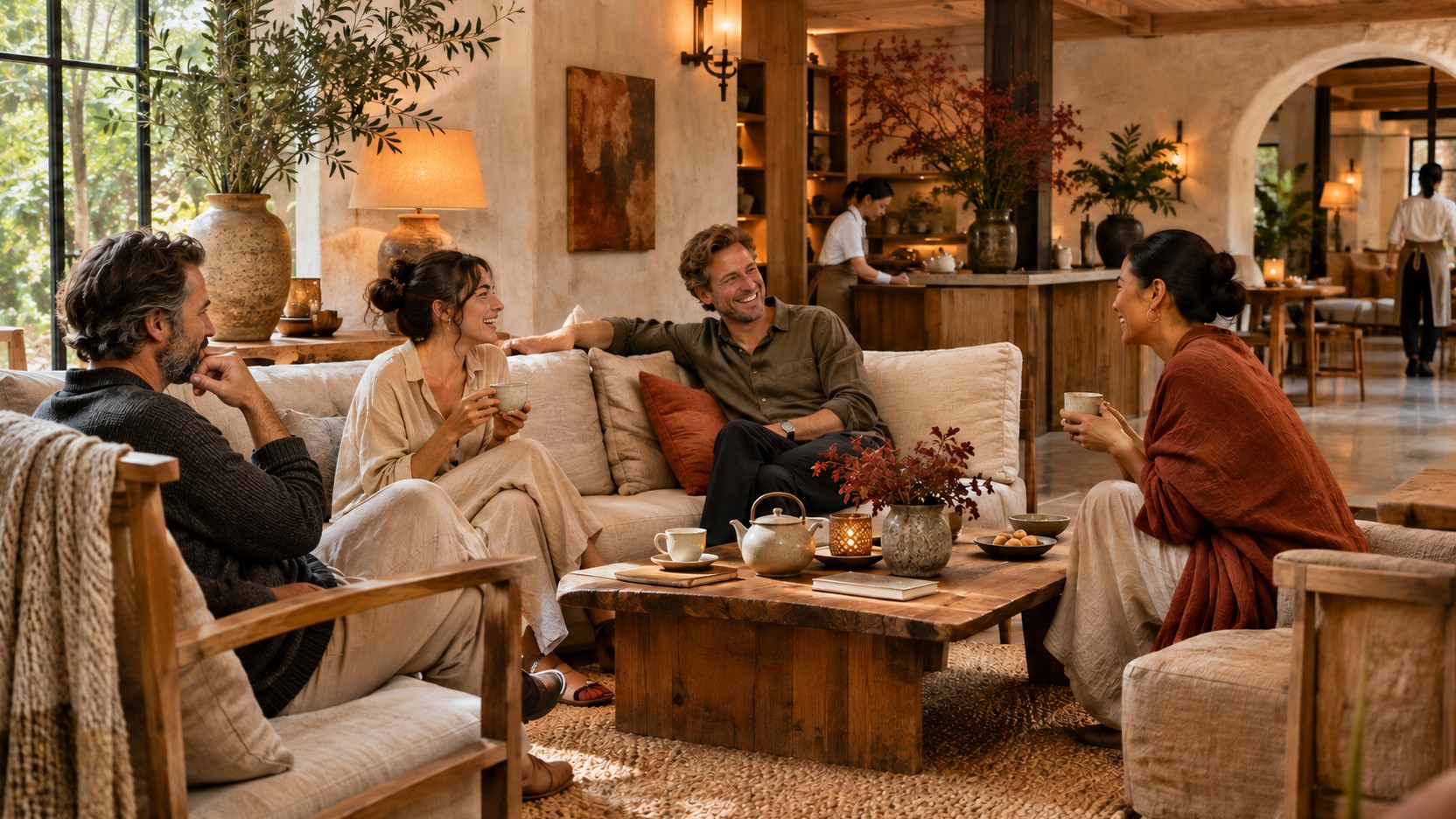
The sanctuary imperative extends well beyond residential design. Hotels and restaurants are positioning themselves as escapes from hyperconnectivity. Material choices in high-end hospitality now prioritise sensory experience over mere visual impact. Restaurant design increasingly encourages presence and genuine conversation rather than documenting meals for social media.
Retail environments are adapting similarly. Shops designed to slow customers down, rather than process them quickly, offer competitive advantage. Physical retail can provide sensory experiences unavailable online—the weight of quality fabric, the scent of natural materials, the warmth of considered lighting.
Workplace evolution follows the same trajectory. Office spaces incorporating sanctuary zones acknowledge that productivity requires rest. The business case for sensory-rich working environments becomes clearer as organisations recognise that burnt-out employees rarely produce their best work.
 🔍 PLATE 06 — CLICK TO EXPAND
Plate 06 — Guests Enjoying Unhurried Tea Conversation in Boutique Hotel Lounge With Timber and Plaster: Plate 06 (Hospitality & Commercial Spaces): Boutique hotels and workspaces replacing lobby TVs with tactile material warmth that encourages human presence.
Conclusion: Creating Your Own Sanctuary
The tech-light sanctuary represents more than a design trend—it embodies the authenticity movement's three-dimensional manifestation. The same desire for human evidence and sensory richness we explored in visual design, photography, and luxury positioning now shapes our physical environments.
Material choices, technology concealment, acoustic design, tactile surfaces, and warm lighting combine to create spaces offering genuine refuge from digital overstimulation. Whether you are designing a new home, refreshing an existing space, or simply seeking small improvements, the principles remain consistent: prioritise natural materials, conceal technology thoughtfully, consider acoustics carefully, and design lighting for warmth rather than brightness.
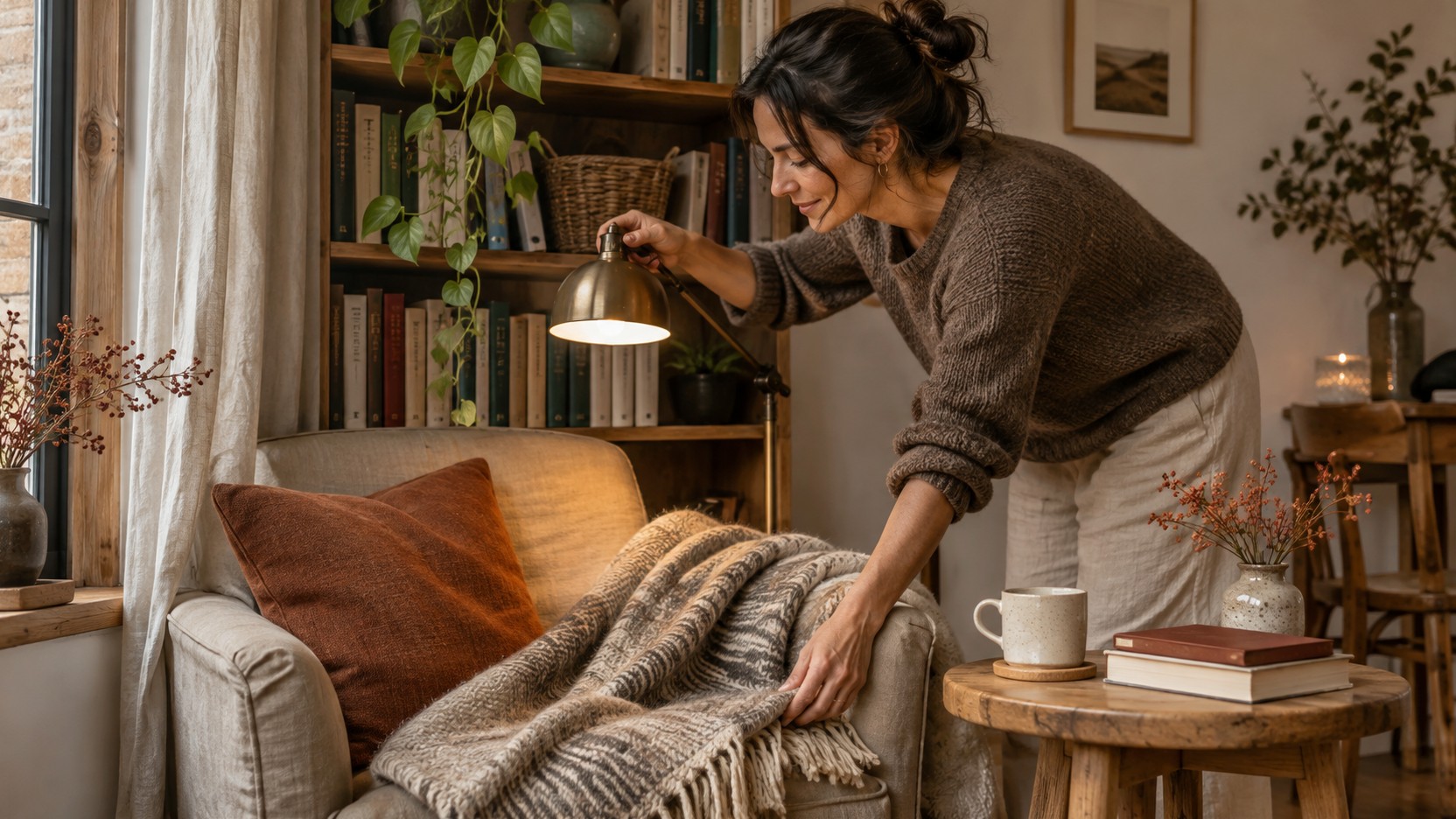
Consider your own living spaces: what currently signals sanctuary? Where might small changes—a textured throw, warmer bulbs, a charging station relocated out of sight—create significant sensory relief? The tech-light home is not about perfection; it is about intention. And in 2026, that intention has never been more valuable.
 🔍 PLATE 07 — CLICK TO EXPAND
Plate 07 — Resident Draping Textured Wool Throw Over Linen Armchair Beside Warm Reading Lamp: Plate 07 (Conclusion — Creating Your Own Sanctuary): Attainable, human-scale material choices transform an everyday room into a restorative refuge from digital fatigue.
⚡ 5 Strategies to Consider
STUDIO PLAYBOOK // 5 DIRECTIVES❓ Frequently Asked Questions — 5 Q&As (5 Q&As)
SCHEMA.ORG/FAQPAGE // 5 Q&As (5 Q&As)Q1. Does tech-light design mean rejecting modern technology entirely?
Not at all. Tech-light design is about intentional technology use rather than rejection. The goal is creating spaces where devices are available when wanted but invisible when rest is needed. It is about control and choice—ensuring technology serves human needs rather than dominating the environment. Smart home features can coexist beautifully with sanctuary design when thoughtfully concealed.
Q2. How can I create a tech-light sanctuary in a small flat or limited space?
Creating sanctuary in small spaces requires zone thinking rather than dedicated rooms. Use textile and lighting changes to signal different modes—a textured throw and warmer bulbs can transform a corner into a rest zone. Portable solutions work well: charging stations in closed drawers, screens that fold away, and layered textiles that create visual separation. Even relocating your router out of sight makes a difference.
Q3. Are natural materials like timber and stone affordable for average homeowners?
Natural materials can be incorporated at various price points. Consider textured paint finishes that mimic plaster, second-hand furniture with genuine timber, and textile layering with affordable natural fabrics. Strategic use of natural materials in high-impact areas—a timber dining table, a stone bathroom countertop—creates significant effect without comprehensive renovation. Prioritise touch points you interact with daily.
Q4. How do these tech-light principles apply to rented accommodation?
Renters can create sanctuary through non-permanent changes. Focus on removable textile solutions such as rugs, curtains, and cushion covers in natural fabrics. Adjust lighting by replacing bulbs with warmer temperatures and adding lamps at varied heights. Create sanctuary through furnishings and accessories rather than structural changes—handmade ceramics, natural fibre baskets, and textile wall hangings all contribute without affecting walls.
Q5. Why do natural materials feel more restful than synthetic alternatives?
Natural materials engage our senses in ways synthetics cannot replicate. Timber grain provides visual complexity, natural fibres offer varied tactile feedback, and materials like stone and plaster carry subtle temperature variations. Our nervous systems respond to these sensory inputs as signals of safety and grounding. Additionally, natural materials often age gracefully, developing patina rather than simply degrading.
EXPLORE RELATED STUDIO TAGS (10):
Glad this piece sparked something — want the matching 4096×4096px .ZIP pack?
Enter your email below for an instant direct download of Studio Seamless Pattern Pack — Drop 01 (WPAY_DROP01.zip) plus new Studio Journal essays & free drops.