
Why Brands Are Ditching Perfect Photography: The Raw, Real Revolution Transforming Commercial Imagery in 2026
Why commercial brands are replacing airbrushed studio shoots with candid documentary photography, direct flash, real skin textures, and lived-in spaces.
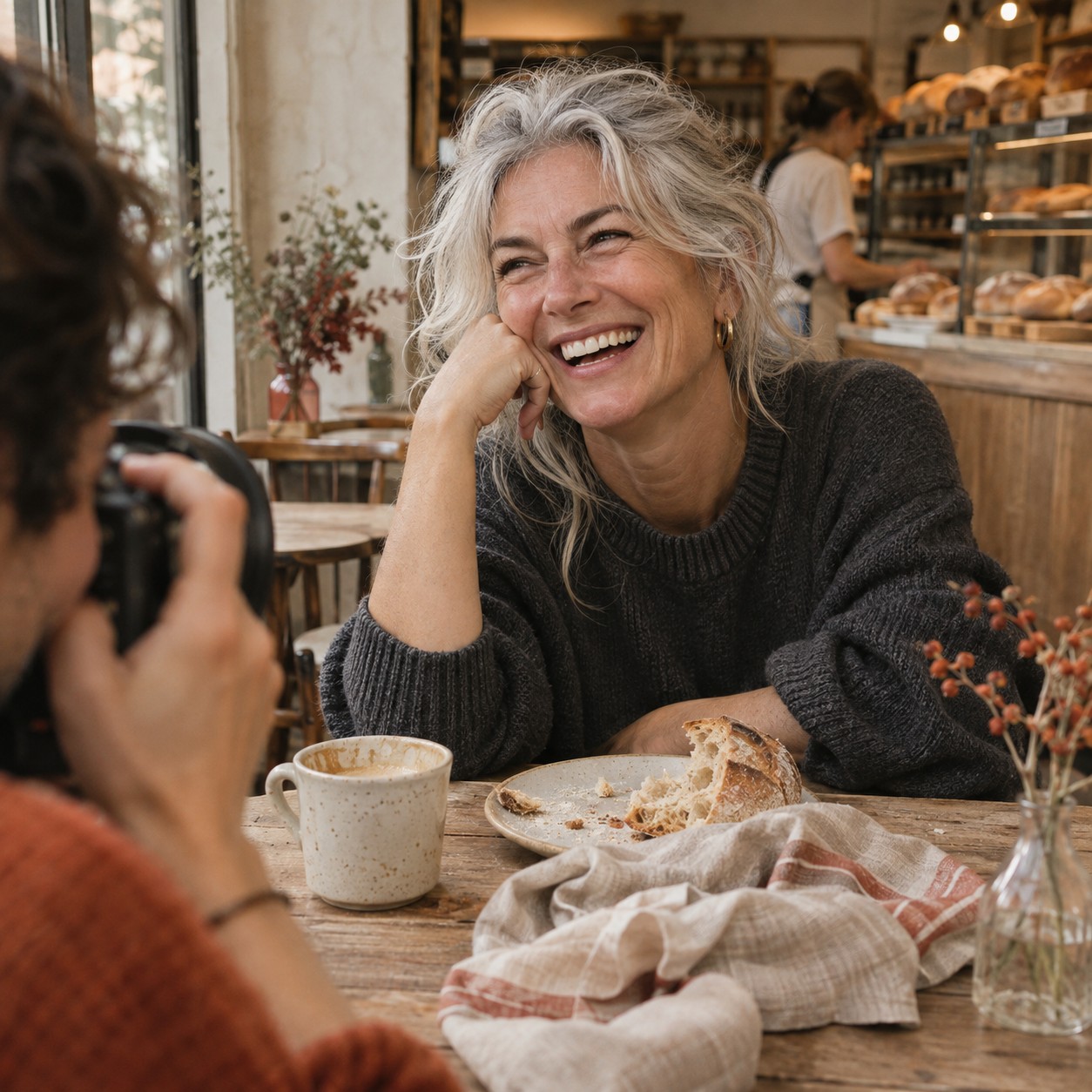 🔍 COVER PLATE — CLICK TO EXPAND
Introduction
Picture a commercial photoshoot from five years ago: a pristine studio bathed in carefully controlled lighting, a model holding an unnatural pose for the fifteenth time, and a retoucher standing by to smooth every pore, whiten every eye, and manufacture an impossible perfection. Now contrast that with today's approach—a documentary crew following real people through genuine moments, minimal post-production, visible skin texture, and the deliberate embrace of hard flash that would have horrified creative directors just a decade ago.
This transformation represents far more than a stylistic shift. It signals a fundamental crisis in how consumers relate to polished commercial imagery. After years of scrolling past technically flawless but emotionally hollow content, audiences have developed sophisticated detection instincts for overly produced photography. They can spot synthetic perfection instantly—and they scroll past it without a second thought.
Throughout this series, we have explored the trust crisis driving brands toward authenticity (Episode 1), examined how analogue textures serve as proof of human presence (Episode 2), and investigated how tactile materials address our sensory exhaustion from flat screens (Episode 3). Each of these principles now converges in a specific creative discipline: commercial photography.
Authentic commercial photography is not the absence of creative direction—it represents a fundamentally different kind of intentionality that allows reality to remain visible whilst serving strategic brand objectives. In this episode, you will gain practical understanding of documentary photography techniques, discover why specific aesthetic choices now signal energy and presence, and learn how to balance authenticity with creative purpose.
 🔍 PLATE 01 — CLICK TO EXPAND
Plate 01 — Documentary Photographer Quietly Observing Two Adults Cooking in a Sunlit Lived-In Kitchen: Plate 01 (Introduction): Observational brand photography in a real kitchen—no softboxes, no forced smiles, and no sanitised props.
When Perfect Became Invisible: Why Traditional Commercial Photography Lost Its Power
Traditional commercial photography built its entire practice around control. Studio lighting eliminated unwanted shadows. Posed models created idealised compositions. Extensive retouching removed every blemish, smoothed every line, and colour-corrected skin into impossible uniformity. This approach emerged from print advertising's technical limitations and aspirational marketing theory—the belief that consumers would purchase products associated with unattainable perfection.
But something profound has shifted. Generative AI can now produce technically flawless commercial imagery instantaneously. When anyone with a laptop can generate pixel-perfect product shots in seconds, perfection stops signalling quality, investment, or craftsmanship. It simply becomes noise.
The psychological shift is equally significant. Consumers no longer ask 'does this look professional?' Instead, they ask 'does this feel real?' Images that are too perfect trigger a kind of uncanny valley response—a subconscious distrust that something is fundamentally wrong, even if viewers cannot articulate why.
Social media has accelerated this transformation dramatically. Years of exposure to authentic moments—captured on phones, shared spontaneously, imperfect but genuine—have trained eyes to distinguish real moments from staged performance. The polished commercial shot that once commanded attention now reads as suspicious.
This credibility vacuum has created space for a radically different photographic approach—one that prioritises presence over perfection.
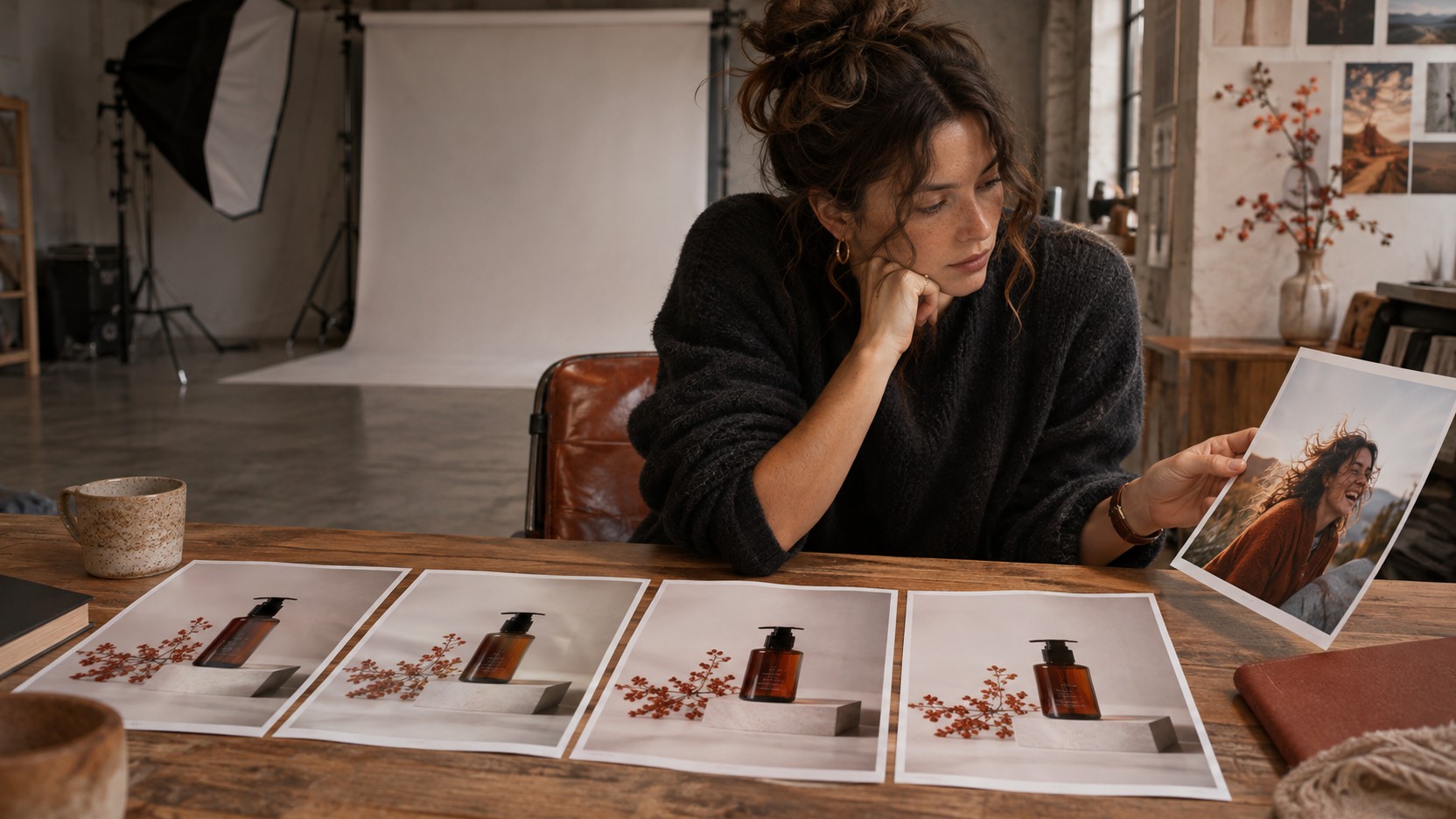 🔍 PLATE 02 — CLICK TO EXPAND
Plate 02 — Creative Editor Turning Away From Glossy Studio Prints Toward Candid Documentary Photograph: Plate 02 (When Perfect Became Invisible): Sterile seamless backdrops and repetitive glossy product shots lose viewer attention to emotionally resonant documentary frames.
Candid, Unscripted, Alive: The New Visual Language of Brand Photography
Documentary-style brand photography represents a fundamental departure from controlled studio practice. Rather than manufacturing specific outcomes, photographers create conditions where authentic moments can emerge. The approach moves away from constructed sets toward real environments, replaces choreographed poses with unscripted interaction, and captures genuine moments rather than fabricating them.
Several core characteristics define this documentary approach:
Candid Moments: Real reactions captured mid-gesture, imperfect timing that reveals genuine emotion, the split-second expressions that staged photography cannot replicate.
Unscripted Interaction: Genuine conversation between subjects, natural movement patterns, authentic engagement that carries the energy of real human connection.
Real Skin Texture: Visible pores, natural lines, freckles, and skin conditions remain present—evidence of real human bodies rather than airbrushed mannequins.
Motion and Energy: Intentional blur suggesting movement, frames capturing transitional moments, the dynamism of life in progress rather than frozen perfection.
Environmental Context: Real locations with their inherent messiness, the lived-in quality of spaces where actual people exist, details that suggest ongoing life beyond the frame.
Why does this approach resonate so powerfully? Documentary imagery triggers different neural responses—recognition rather than aspiration. Consumers see themselves reflected rather than excluded. The approach suggests brands have nothing to hide, whilst real moments carry emotional weight that posed perfection simply cannot replicate.
Fashion, beauty, and lifestyle brands across all market segments are adopting documentary approaches, moving from aspirational distance to relatable intimacy. The shift reflects a broader cultural recognition that authenticity builds connection in ways that perfection never could.
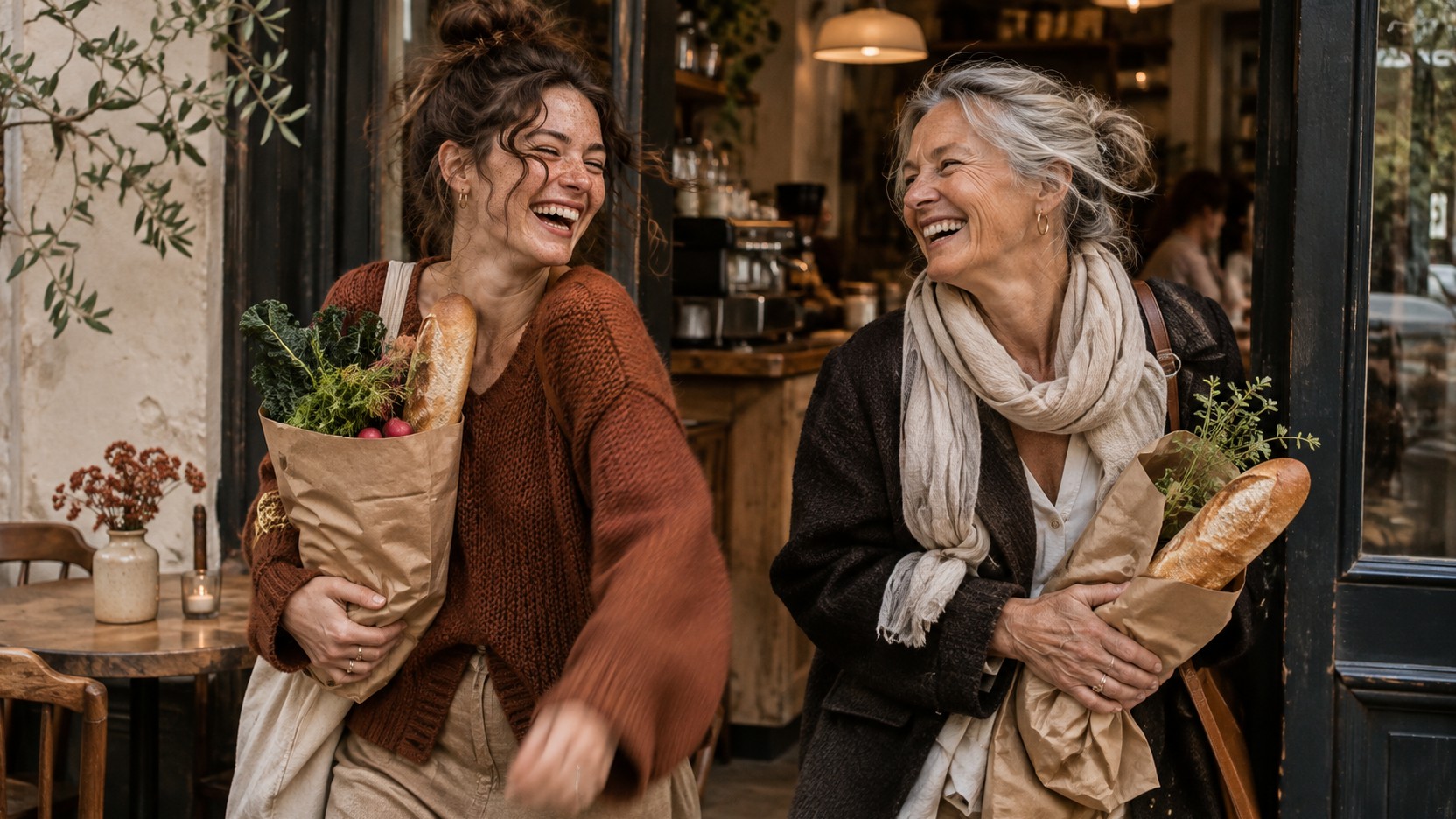 🔍 PLATE 03 — CLICK TO EXPAND
Plate 03 — Two Friends Sharing an Unscripted Laugh Mid-Stride Through a Neighbourhood Café Doorway: Plate 03 (Candid, Unscripted, Alive): Slight motion blur, asymmetric doorway framing, and spontaneous laughter create immediate emotional believability.
Why Hard Light, Deep Shadows, and Overexposure Now Signal Energy and Presence
One of the most distinctive visual signatures of this movement is the revival of direct flash photography—an aesthetic once dismissed as amateur error. The 'ugly flash' aesthetic embraces direct, on-camera flash creating harsh, flat lighting. Red-eye, stark shadows, and washed-out highlights become features rather than flaws. The 'snapshot' quality associated with disposable cameras and party photography now carries cultural cachet.
The psychology behind hard light reveals why this works. Hard light creates drama, urgency, and immediacy. Deep shadows suggest dimension and reality—the opposite of flat, airbrushed perfection. Overexposure carries energy and spontaneity, suggesting the photographer captured a moment too vital to miss. These 'mistakes' signal authenticity precisely because they could not be easily manufactured or replicated by AI systems trained on conventional beauty standards.
Technical characteristics creating this effect include direct flash without diffusion, high contrast between highlight and shadow, intentional overexposure in key areas, and colour casts with temperature variations that would traditionally be corrected.
Culturally, this aesthetic connects to film photography, disposable cameras, and pre-digital snapshot culture. It carries nostalgia whilst simultaneously feeling contemporary, referencing documentary journalism and paparazzi photography. The aesthetic says 'this moment was worth capturing regardless of technical perfection'—and that urgency resonates with audiences exhausted by calculated polish.
 🔍 PLATE 04 — CLICK TO EXPAND
Plate 04 — Direct On-Camera Flash Snapshot of Friends Laughing at an Evening Kitchen Gathering: Plate 04 (Hard Light and Deep Shadows): Unapologetic direct flash and high-contrast shadows signal real-time immediacy rather than controlled studio artifice.
Intentional Imperfection: How Authentic Photography Still Requires Strategic Thinking
Here is the crucial distinction that separates authentic photography from simple incompetence: authentic photography is not the absence of direction but a different kind of intentionality. The goal involves allowing reality to remain visible whilst serving brand objectives. This requires creating conditions for authentic moments rather than manufacturing specific outcomes.
Creative direction remains essential in several areas:
Casting: Selecting subjects who embody brand values whilst representing genuine diversity. The casting choice itself communicates authenticity—or its absence.
Location Choice: Finding environments that feel lived-in but align with brand positioning. A location can feel authentic whilst still serving strategic communication goals.
Timing: Knowing when to capture and when to wait for genuine moments. Documentary photography requires patience that traditional controlled shoots often eliminate.
Framing: Compositional decisions that feel spontaneous but serve storytelling. Even candid moments benefit from thoughtful perspective.
Editorial Selection: Choosing which authentic moments best serve communication goals. Not every candid shot works—curation remains vital.
The art lies in structured spontaneity. This means setting up scenarios where authentic interaction can occur, giving subjects space and time to relax beyond performance, knowing when to direct and when to observe, and building trust that allows genuine moments to emerge. The photographer becomes a facilitator of authenticity rather than a constructor of artifice.
 🔍 PLATE 05 — CLICK TO EXPAND
Plate 05 — Documentary Photographer Kneeling Patiently to Frame Potters Working at a Studio Wheel: Plate 05 (Intentional Imperfection): Patient observation, deliberate lens choice, and light discipline allow unscripted craft activity to align with strategic brand goals.
Mature Faces, Diverse Bodies, Natural Expressions: The Building Blocks of Authentic Photography
Understanding documentary principles leads to specific visual elements that create believable, trustworthy imagery.
Mature Faces: Lines, wrinkles, and age markers serve as evidence of lived experience. Moving beyond youth-obsessed casting to reflect actual consumer demographics creates immediate recognition. Mature faces carry stories that smooth skin cannot tell.
Diverse Bodies: Body diversity functions as an authenticity marker because real people come in different shapes. Moving beyond single body type representation means showing bodies in use rather than on display.
Natural Expressions: The fixed commercial smile triggers distrust because no one actually smiles that way in real life. Authentic photography captures concentration, contemplation, genuine laughter, even neutral expressions. This emotional range reflects real human experience, with micro-expressions that staged photography cannot replicate.
Lived-In Environments: Real homes with visible life—books, plants, personal objects—communicate authenticity instantly. Workspaces showing actual use rather than styled perfection, environmental details suggesting ongoing life beyond the frame, and the deliberate rejection of sterile, styled interiors all contribute to believability.
Product Use Rather Than Product Display: Showing products in the context of actual use transforms commercial photography entirely. Worn items, partially consumed goods, products with visible wear—integration into real life rather than isolated presentation. The difference between 'look at this product' and 'see how this product lives' fundamentally changes audience response.
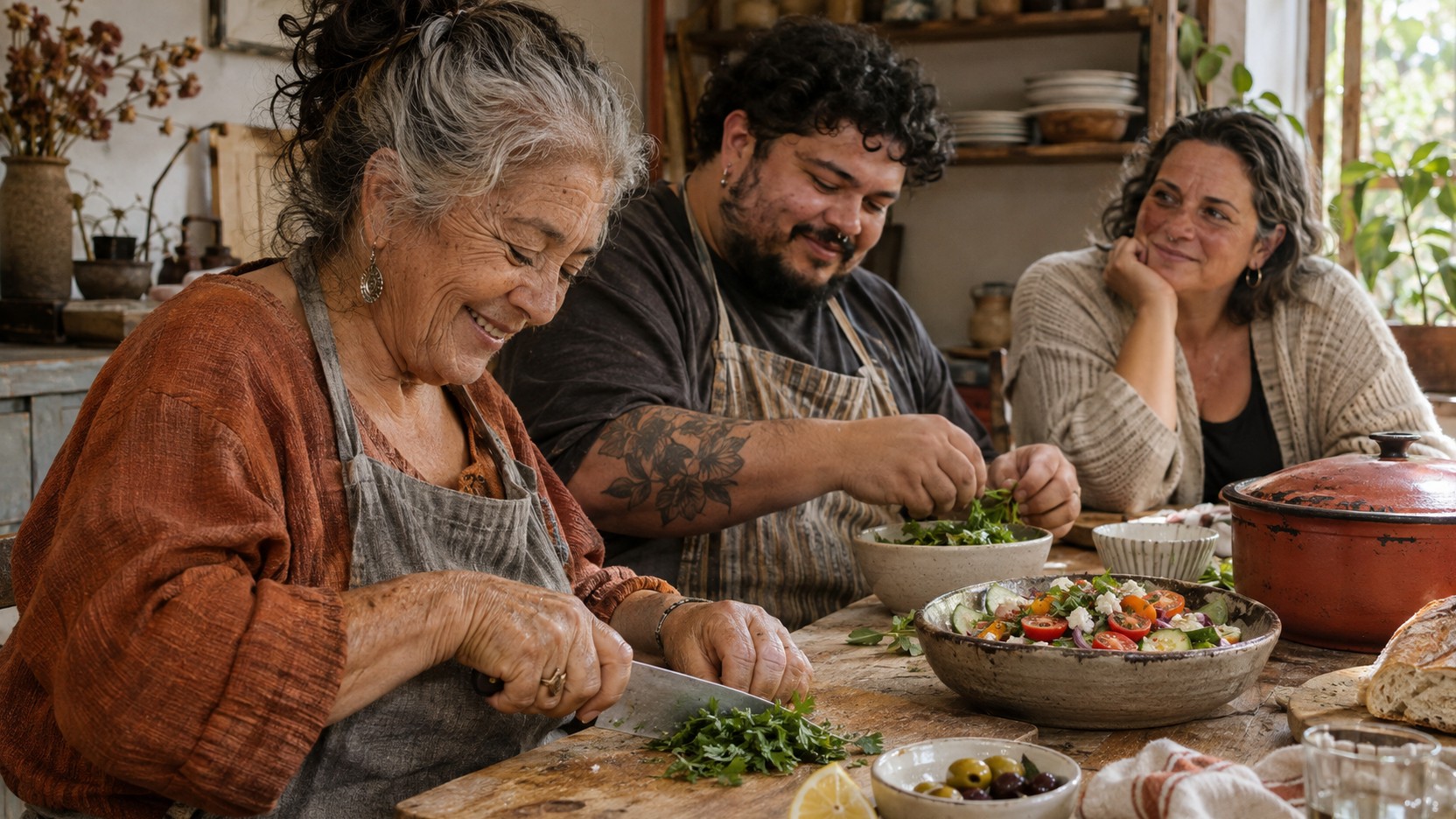 🔍 PLATE 06 — CLICK TO EXPAND
Plate 06 — Three Adults of Varied Ages and Body Types Preparing a Shared Lunch in a Sunlit Home Kitchen: Plate 06 (Mature Faces & Diverse Bodies): Unretouched skin texture, silver hair, varied body shapes, and absorbed concentration reflect real customers in real life.
Showing Reality Whilst Maintaining Creative Intent: A Framework for Authentic Photography
Implementing documentary photography principles requires strategic consideration. Start by identifying which brand touchpoints benefit most from documentary approach—often lifestyle content, social media, and brand storytelling. Understand where some control remains appropriate, such as product detail shots or technical specifications. Build photography briefs that allow for authentic outcomes rather than prescribing specific poses or expressions.
Practical guidance includes working with photographers experienced in documentary methods, allowing more shooting time for genuine moments to emerge, reducing reliance on post-production correction, and building internal approval processes that accept imperfection.
Certain elements should be maintained: clear brand positioning and values, strategic communication objectives, quality standards (authentic does not mean poor quality), and appropriate representation and sensitivity.
Other elements can be released: pixel-perfect expectations, extensive retouching requirements, controlled pose mandates, and sterile environment specifications.
This approach connects to the broader authenticity imperative explored throughout this series whilst preparing for practical implementation frameworks in Episode 7.
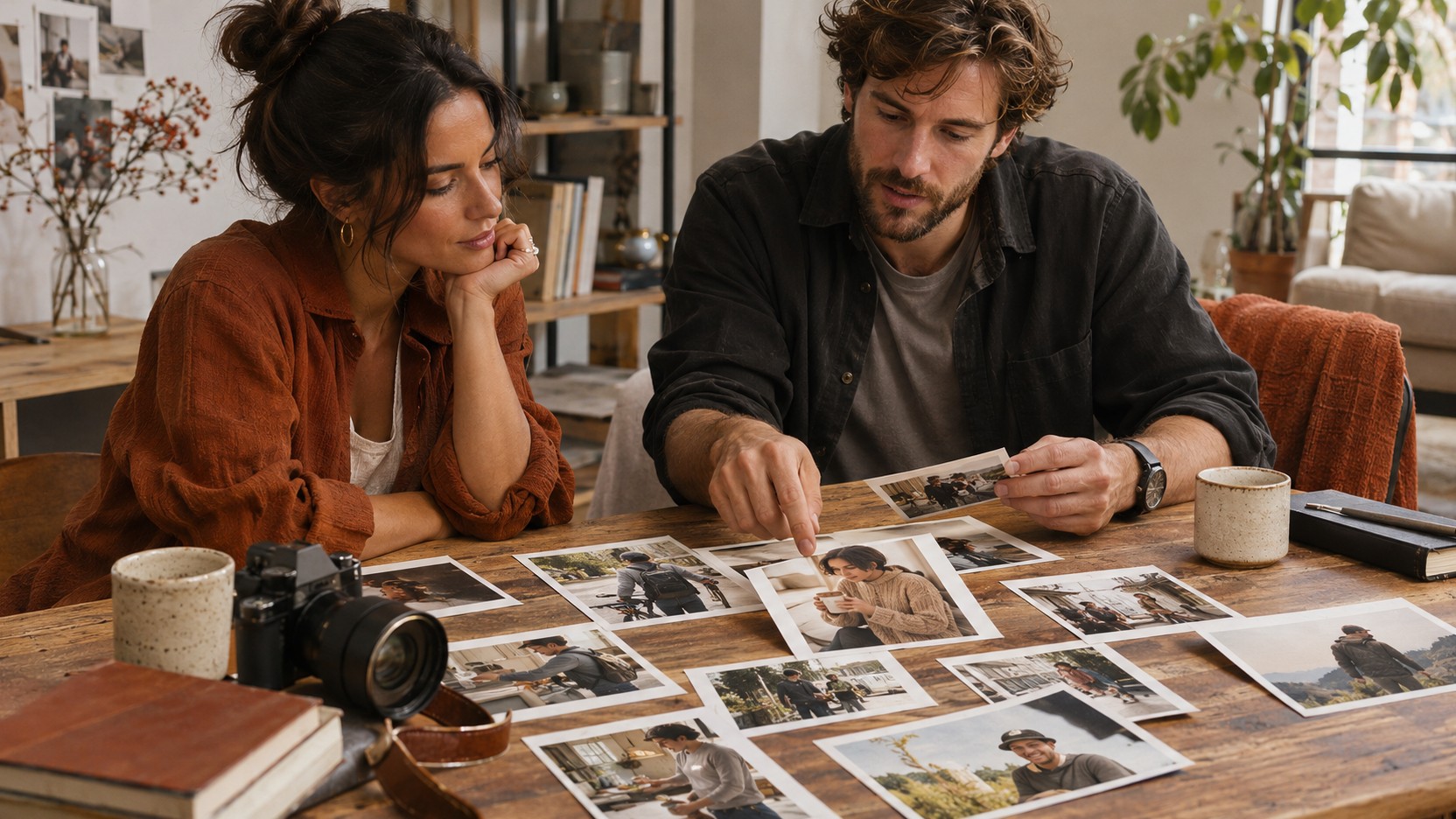 🔍 PLATE 07 — CLICK TO EXPAND
Plate 07 — Creative Director and Photographer Curating Physical Contact Prints Across an Oak Worktable: Plate 07 (Framework for Authentic Photography): Editing contact sheets for emotional resonance and brand coherence rather than technical flawlessness.
Your Questions About Documentary Brand Photography Answered
Does authentic photography mean no retouching at all?
Not necessarily. The goal involves reducing retouching that removes evidence of reality—skin texture, body diversity, environmental context. Colour correction, exposure adjustment, and technical fixes remain appropriate. The question is whether retouching obscures human presence.
Will documentary-style photography look unprofessional?
Authentic photography requires different skills, not lower standards. Poor composition, bad timing, and unclear communication remain problems regardless of aesthetic approach. The distinction is between intentional imperfection and simple incompetence.
How do we maintain brand consistency with documentary imagery?
Consistency comes through casting alignment, environmental choices, colour palettes, and editorial selection rather than rigid pose and lighting control. The visual system can remain coherent whilst allowing individual images to carry documentary qualities.
Is this approach suitable for all product categories?
Documentary approaches work particularly well for lifestyle, fashion, beauty, food, and experiential brands. Technical products, luxury goods, and certain professional services may require more controlled imagery, though even these categories are exploring authentic elements.
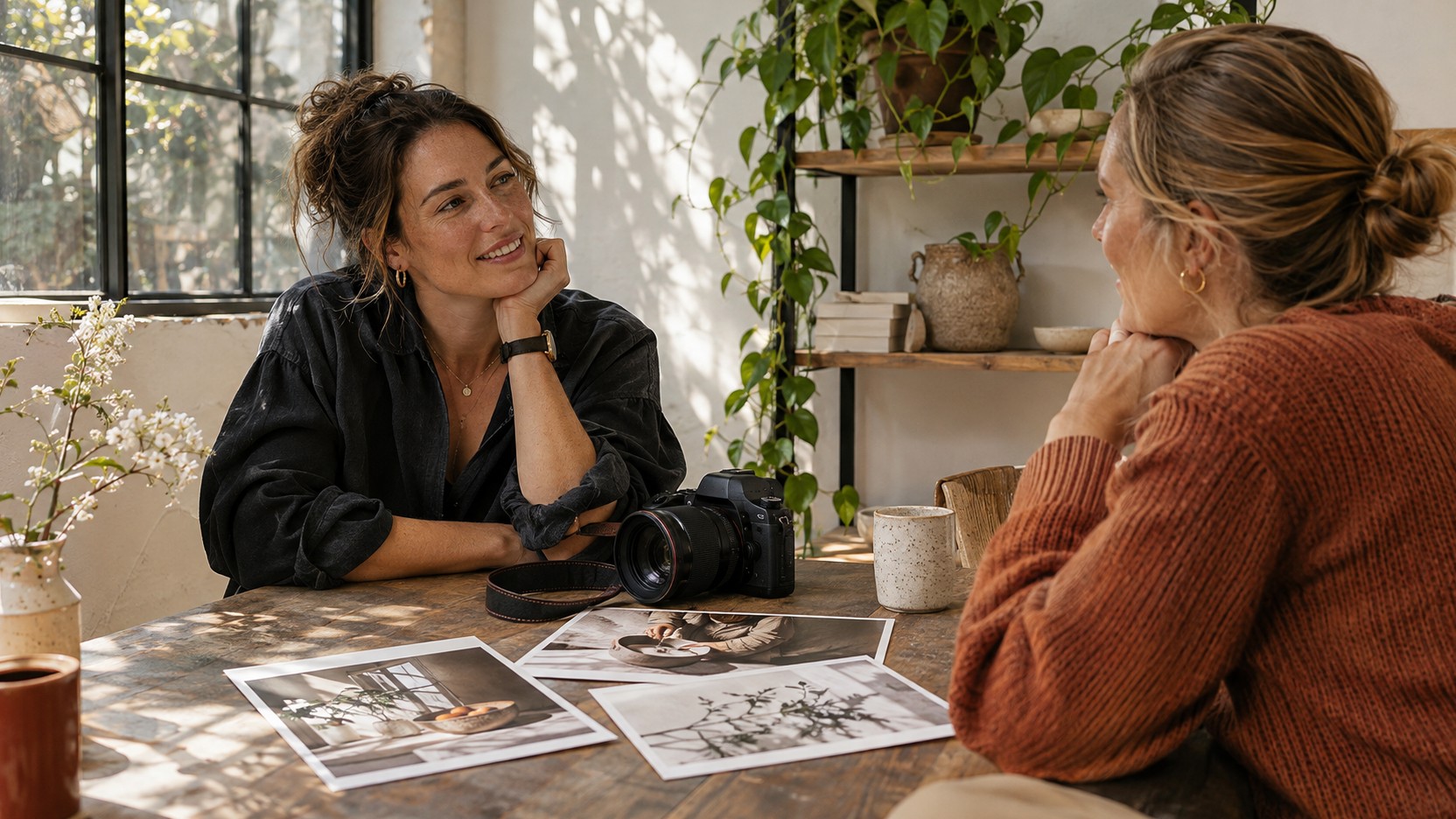 🔍 PLATE 08 — CLICK TO EXPAND
Plate 08 — Documentary Photographer Discussing Shoot Approach With Small Business Owner in Sunlit Studio: Plate 08 (Documentary Photography FAQ): Pre-shoot alignment between photographer and founder builds the trust required for unscripted on-location sessions.
Conclusion
The shift from controlled perfection to documentary presence represents one of the most significant transformations in commercial photography practice. Traditional approaches featuring controlled lighting, posed models, and extensive retouching are giving way to candid moments, unscripted interaction, real skin texture, and the ugly flash aesthetic. This is not regression—it is evolution toward what actually creates connection.
The most powerful commercial photography no longer asks 'how can we make this look perfect?' but 'how can we make this feel present?' That single question shifts everything.
Take a moment to audit your current brand photography. Does it invite trust or trigger suspicion? Does it show real people in real moments, or manufactured perfection? Identify one photography touchpoint where documentary approaches might strengthen connection—and begin there.
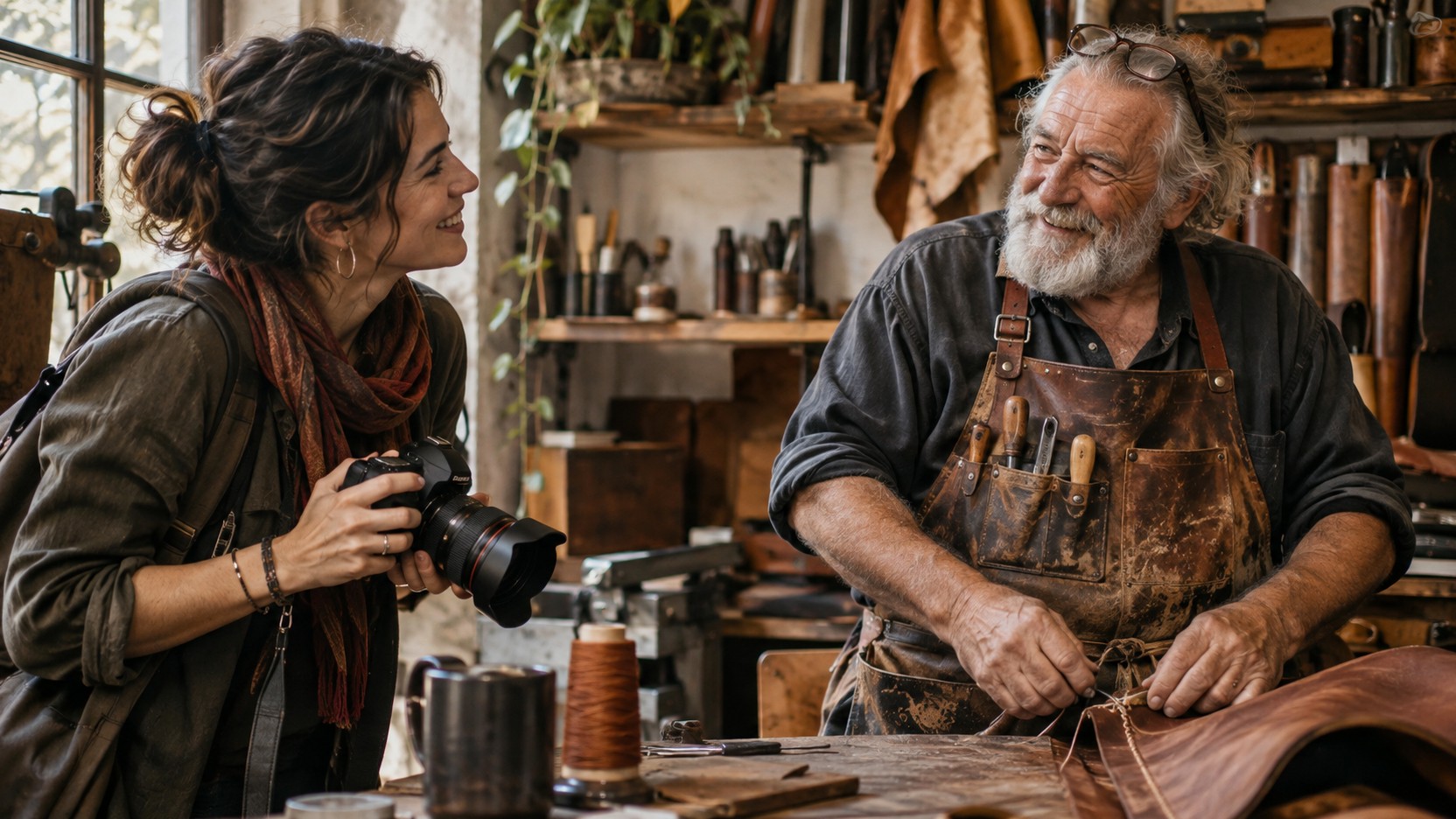 🔍 PLATE 09 — CLICK TO EXPAND
Plate 09 — Photographer Lowering Camera to Share a Warm Smile With an Older Leather Craftsperson: Plate 09 (Conclusion): Human rapport between photographer and subject produces commercial imagery that audiences immediately recognise as lived and trustworthy.
⚡ 5 Strategies to Consider
STUDIO PLAYBOOK // 5 DIRECTIVES❓ Frequently Asked Questions — 5 Q&As (5 Q&As)
SCHEMA.ORG/FAQPAGE // 5 Q&As (5 Q&As)Q1. What exactly is documentary-style brand photography and how does it differ from traditional commercial photography?
Documentary-style brand photography prioritises capturing genuine, unscripted moments in real environments rather than manufacturing specific outcomes through controlled lighting, posed models, and extensive retouching. The approach focuses on authenticity, allowing reality to remain visible whilst still serving strategic brand objectives through thoughtful casting, location selection, and editorial curation.
Q2. Why has the ugly flash aesthetic become popular in commercial photography?
The ugly flash aesthetic—characterised by direct on-camera flash, harsh shadows, and overexposure—signals authenticity precisely because these technical 'imperfections' cannot be easily manufactured by AI or replicated through conventional commercial processes. The aesthetic references snapshot culture and documentary journalism, carrying urgency and energy that resonates with audiences exhausted by calculated polish.
Q3. Does authentic photography mean brands should completely eliminate retouching?
Not entirely. Authentic photography aims to reduce retouching that removes evidence of reality—skin texture, body diversity, and environmental context. Technical adjustments like colour correction and exposure balancing remain appropriate. The key question is whether retouching obscures human presence or simply addresses technical considerations.
Q4. How can brands maintain visual consistency whilst using documentary photography approaches?
Brand consistency with documentary imagery comes through casting alignment with brand values, thoughtful environmental choices, cohesive colour palettes, and careful editorial selection of which authentic moments to use. Consistency shifts from rigid pose and lighting control to a coherent visual system that allows individual images to carry documentary qualities.
Q5. What visual elements make documentary brand photography feel believable and trustworthy?
Key elements include mature faces with visible lines and age markers, diverse body types shown in natural use, genuine expressions beyond fixed commercial smiles, lived-in environments with visible personal objects, and products shown in actual use rather than isolated display. These elements trigger recognition rather than aspiration in viewers.
EXPLORE RELATED STUDIO TAGS (10):
Glad this piece sparked something — want the matching 4096×4096px .ZIP pack?
Enter your email below for an instant direct download of Studio Seamless Pattern Pack — Drop 01 (WPAY_DROP01.zip) plus new Studio Journal essays & free drops.