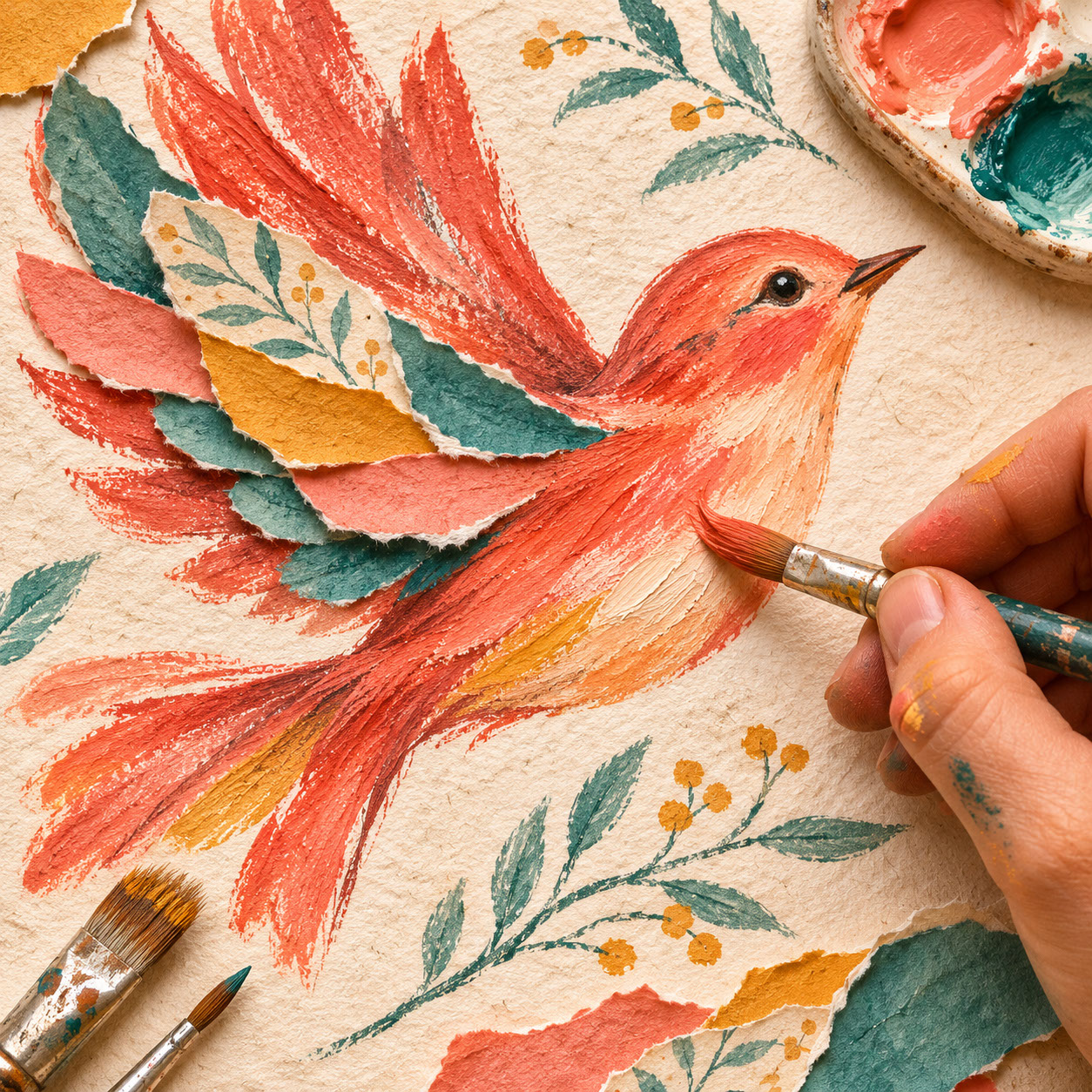
The Trust Crisis: Why Polished Perfection Is Losing Its Power in 2026
Discover why polished visual perfection triggers consumer scepticism in 2026, and how human authorship, visible process, and imperfection rebuild brand trust.
 🔍 COVER PLATE — CLICK TO EXPAND
Introduction: The Paradox of Perfect
Here is something rather counterintuitive to wrap your head around: the most technically flawless brand assets you have ever seen are increasingly the most ignored. That gorgeous, pixel-perfect hero image? Scroll. That immaculately composed product shot? Skip. That pristine layout without a single element out of place? Completely invisible.
Welcome to the trust crisis of 2026, where the tools designed to elevate brand presentation have instead created a credibility vacuum. When anyone with an internet connection can generate flawless imagery in seconds, perfection no longer signals investment, care, or quality. Instead, it whispers something far more damaging: potential fabrication.
This article explores why the authenticity movement sweeping through design, branding, and visual communication is not some nostalgic yearning for simpler times. It is a rational, measured consumer response to a fundamentally transformed media landscape. By the end, you will understand the psychological shift reshaping how people evaluate brand communications, why authorship has become the new trust currency, and what this means for anyone trying to build genuine connections with their audience.
The Historical Assumption: When Polish Equalled Professionalism
For decades, visual polish served as reliable shorthand for organisational competence. Think about it: when you saw a beautifully photographed advertisement in a magazine or a slickly produced television commercial, your brain made an automatic calculation. This brand has invested serious resources in their presentation, which surely means they have invested equally in their products and services.
This assumption made perfect sense. Professional photography required expensive equipment and skilled practitioners who had spent years mastering their craft. Polished layouts demanded trained designers with genuine expertise. Flawless copy indicated investment in professional writers and editors who understood the nuances of persuasive communication.
The difficulty of achieving technical perfection created natural scarcity, and that scarcity carried meaning. The barrier to entry—both financial and skill-based—functioned as a trust signal. Consumers reasonably assumed that brands willing to spend money on quality presentation were demonstrating confidence in what they were selling.
This framework held remarkably steady for most of the twentieth century and well into the twenty-first. Then, rather suddenly, everything changed.
The AI Disruption: How Perfection Became Worthless
Generative AI has made flawless imagery instantaneously accessible to anyone with a device and an internet connection. Technical perfection that once required years of training, expensive equipment, and considerable time investment now requires nothing more than a text prompt and a few seconds of patience.
Consider what AI can now produce without breaking a sweat: photorealistic imagery virtually indistinguishable from professional photography, perfectly composed layouts following sophisticated design principles, flawless copy that meets technical writing standards, and consistent brand assets at unlimited scale. The barrier to entry has not just lowered—it has effectively collapsed entirely.
This accessibility revolution has triggered what we might call the devaluation effect. When everyone can produce perfection, perfection loses its power as a differentiator. The scarcity that once made polish meaningful has been eliminated overnight. Technical excellence is no longer evidence of investment or care; it is simply the baseline expectation that anyone can meet.
Brands that built their trust on visual quality find their competitive advantage eroding beneath their feet. Consumers can no longer use production quality as a reliable heuristic for organisational quality. A credibility vacuum has opened, and something new is needed to fill it.
 🔍 PLATE 01 — CLICK TO EXPAND
Plate 01 — Designer Comparing Repetitive AI Screen Variations With Original Hand-Drawn Charcoal Study: Plate 01 (The AI Disruption): As generative tools make flawless smoothness effortless, designers return to physical charcoal studies and material prototypes that carry genuine cost.
The Psychological Shift: From Professional to Real
The question consumers historically asked when evaluating brand communications was straightforward: Does this look professional? They assessed technical competence—clean lines, proper typography, colour harmony, image quality. Professional appearance created permission to trust.
Today, however, consumers are asking something fundamentally different: Does this feel real?
The priority has shifted from technical assessment to authenticity assessment. Where once we asked whether something was made competently, we now ask whether it was made by a human who actually cares. This is not a subtle distinction; it represents a complete reorientation of how people process brand communications.
Why has this shift happened? Repeated exposure to AI-generated content has created new consumer instincts. People are developing unconscious pattern recognition for synthetic perfection. The uncanny valley—that unsettling feeling we get from humanoid robots that look almost but not quite human—now extends to marketing materials.
Consumers report scrolling past visually flawless content without engaging, describing an emerging sense that perfect imagery might be concealing rather than revealing. Emotional connection requires evidence of human presence, and that clinical perfection often eliminates precisely the friction needed to create genuine engagement.
Consumer research backs this up dramatically. Studies consistently show a strong preference for communications that feel genuinely human, with data indicating that 93% of consumers say it matters that brand communications feel like they came from a real person. Meanwhile, 55% view brands less favourably once they discover AI created their content.
 🔍 PLATE 02 — CLICK TO EXPAND
Plate 02 — Customer Connecting With a Ceramicist Over Unfinished Clay Vessels in an Open Workshop: Plate 02 (The Psychological Shift): A customer bypasses polished retail displays to connect directly with a ceramicist at the workbench, illustrating how real presence replaces corporate distance.
The Detection Instinct: How Consumers Sense Synthetic Content
Here is where things get particularly interesting. Consumers are developing increasingly sophisticated instincts for identifying AI-generated content, and this detection often happens at a subconscious level before any conscious analysis kicks in. The result is an immediate trust reduction, even when people cannot articulate exactly why they feel suspicious.
What triggers this suspicion? Perfect symmetry and mathematical precision that feels slightly too balanced. The absence of environmental imperfections or contextual details that would naturally exist in real photography. Lighting that is too even or shadows that are too consistent. Skin that lacks texture, pores, or natural variation. Compositions that feel too perfectly arranged.
Consumers are unconsciously conducting what we might call an authenticity audit, scanning for evidence of human involvement in every piece of content they encounter. Small imperfections have become trust signals rather than quality failures. The visible hand of a maker—evidence that a real person made real decisions—provides reassurance that was completely unnecessary in the pre-AI era.
This explains the scroll-past phenomenon affecting so much polished content. Visually flawless material increasingly fails to stop the scroll because emotional engagement requires the kind of friction that perfection eliminates. Paradoxically, the most technically accomplished content may now be the least effective at building genuine connection.
 🔍 PLATE 03 — CLICK TO EXPAND
Plate 03 — Reader Pausing With Scepticism Over Glossy Tablet Feed Before Reaching for Printed Journal: Plate 03 (The Detection Instinct): Human perceptual instincts quickly register the uncanny smoothness of synthetic feeds, drawing attention back to grounded physical print.
Authorship as the New Trust Currency
So what fills the trust vacuum? The answer is authorship—visible evidence that a specific human being made creative decisions. Authorship encompasses signs of process, personality, and intentional imperfection. Crucially, it cannot be generated; it must be genuinely created.
In a world of unlimited synthetic content, human authorship becomes the scarce resource that carries value. Evidence of genuine creation communicates meaning that technical perfection simply cannot. Consumers are willing to forgive imperfection—even embrace it—in exchange for authenticity.
What actually communicates authorship? Visible creative process: sketches, iterations, development stages. Personal style that could not be replicated by an algorithm. Imperfections that indicate human decision-making rather than machine optimisation. Contextual details suggesting genuine experience rather than generated scenarios.
This represents a fundamental shift in what constitutes premium positioning. Human authorship is becoming a trust signal in its own right. Brands that can demonstrate genuine human involvement command greater credibility. The investment story has shifted from 'We spent money on production' to 'We invested human creativity and care.'
This brings us to the transparency imperative. Consumers increasingly expect clarity about AI involvement in brand communications. Honest disclosure about creation methods builds trust, whilst attempting to pass AI content as human-created risks severe credibility damage when—not if—it is detected.
 🔍 PLATE 04 — CLICK TO EXPAND
Plate 04 — Artisan Stamping Personal Maker Mark Into Damp Clay Base of a Hand-Thrown Vessel: Plate 04 (Authorship as Trust Currency): A craftsperson imprints an unbranded maker mark into raw stoneware, embodying personal accountability and traceable human authorship.
Why This Is Not Nostalgia: The Rational Response
The authenticity movement is often mischaracterised as aesthetic nostalgia, dismissed by critics as romanticised longing for a pre-digital past. This misunderstanding prevents effective strategic response.
Let us be clear: consumer preference for authenticity is a logical adaptation to a changed environment. When established trust signals become unreliable, consumers quite rationally seek new signals. The shift toward human evidence is practical problem-solving, not sentimentality.
Humans have always developed heuristics to identify trustworthy communication partners. The preference for authenticity markers is simply an updated heuristic for the AI age. This represents cognitive adaptation, not backward-looking nostalgia.
The strategic implications are significant. Brands that understand this as a rational response can develop strategic answers that address the underlying trust dynamics. Those who dismiss it as a passing trend will fail to address the structural changes reshaping consumer perception. The authenticity imperative is not stylistic; it is structural.
The Implications for Brands: Challenge and Opportunity
Brands face a genuine trust rebuilding challenge. Technical quality remains necessary but is no longer sufficient for building meaningful trust. Human evidence must be strategically incorporated into brand communications.
The competitive landscape has shifted in ways that advantage different capabilities. Brands that master authenticity communication will gain significant trust advantages, whilst those relying solely on production quality will find their position steadily eroding.
Yet within this challenge lies genuine opportunity. The trust crisis creates openings for brands willing to embrace human imperfection. Authenticity can be a differentiator that AI genuinely cannot replicate. The brands that show their human side will build deeper, more resilient consumer relationships.
 🔍 PLATE 05 — CLICK TO EXPAND
Plate 05 — Independent Brand Team Reviewing Unvarnished Process Photographs and Raw Packaging Swatches: Plate 05 (Implications for Brands): A studio team aligns brand storytelling around honest production photography and unbleached packaging stocks rather than synthetic polish.
Conclusion: The New Rules of Brand Trust
The transformation is clear. Technical perfection has been devalued as a trust signal by AI accessibility. Consumer perception has shifted from evaluating professionalism to detecting authenticity. Authorship—visible evidence of human creation—has become the new trust currency. And the authenticity movement is a rational response to technological disruption, not aesthetic nostalgia.
Take a moment to audit your own brand communications through this new lens. What evidence of human authorship exists in your current brand expression? What might consumers be scrolling past because it triggers synthetic detection instincts?
These questions matter because the answers will increasingly determine which brands build lasting trust and which find themselves lost in the endless sea of synthetic perfection.
In the next episode of this series, we will explore the practical visual language of authenticity, examining analogue textures as proof of human presence. We will provide a comprehensive taxonomy of film grain, torn paper edges, ink bleeds, scanner artefacts, and handwritten annotations—the marks that communicate genuine human involvement. You will discover why these textures create the friction that stops the scroll and learn how to distinguish meaningful texture from decorative filters.
 🔍 PLATE 06 — CLICK TO EXPAND
Plate 06 — Maker Handing Finished Handmade Ceramic Cup to Customer Across Open Workshop Counter: Plate 06 (Conclusion — New Rules of Brand Trust): Direct human exchange across an open studio counter where visible process, honest materials, and personal accountability seal customer trust.
⚡ 5 Strategies to Consider
STUDIO PLAYBOOK // 5 DIRECTIVES❓ Frequently Asked Questions — 5 Q&As (5 Q&As)
SCHEMA.ORG/FAQPAGE // 5 Q&As (5 Q&As)Q1. Is the shift toward authenticity just another design trend that will eventually pass?
No, this represents a structural change rather than a surface aesthetic trend. Whilst specific visual expressions may evolve over time, the underlying demand for human evidence is likely permanent because it stems from rational consumer adaptation to a fundamentally changed media environment where AI has made technical perfection universally accessible and therefore meaningless as a trust signal.
Q2. Does this mean AI has no place in brand communications anymore?
Not at all. AI remains valuable for many applications in brand communications. However, its use now requires transparency and strategic integration with genuine human authorship. The key is honest disclosure about creation methods and ensuring that human creativity and decision-making remain visibly present in the final output.
Q3. How quickly is this consumer shift toward authenticity actually happening?
Consumer instincts for detecting synthetic content are developing remarkably rapidly, making this an urgent consideration rather than a distant future concern. Research shows that 93% of consumers already say it matters that brand communications feel like they came from a real person, and 55% view brands less favourably once they discover AI produced their content.
Q4. What industries are most affected by this trust crisis?
Any industry where trust is important to purchase decisions faces these dynamics, which effectively means most industries. The specific manifestations vary by sector, but the fundamental shift from evaluating professionalism to detecting authenticity applies wherever consumers make trust-based decisions about brands and their communications.
Q5. Can small brands compete if authenticity requires more human effort?
Smaller brands often have natural advantages in demonstrating human authorship because their scale inherently creates more visible personal involvement. The founder who personally responds to customers, the artisan who shares their creative process, the small team whose personalities shine through—these authentic signals are easier to communicate at smaller scales.
EXPLORE RELATED STUDIO TAGS (10):
Glad this piece sparked something — want the matching 4096×4096px .ZIP pack?
Enter your email below for an instant direct download of Studio Seamless Pattern Pack — Drop 01 (WPAY_DROP01.zip) plus new Studio Journal essays & free drops.